ESA Joins Day of Action to Save NASA Science
By ESA Executive Director Catherine O’Riordan & Public Affairs Manager Mayda Nathan

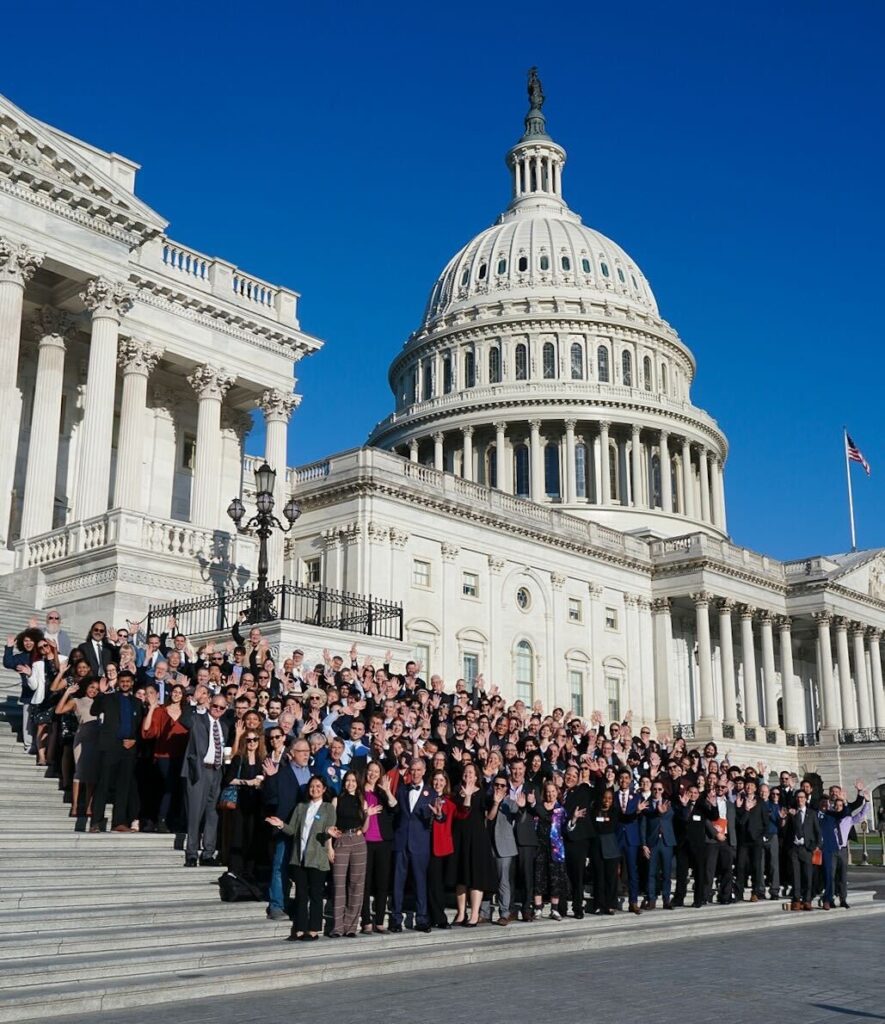
On Monday, Oct. 6, 2025, ESA Executive Director Catherine O’Riordan and Public Affairs Manager Mayda Nathan joined nearly 300 participants in Washington, D.C., for the Day of Action to Save NASA Science. Organized by the Planetary Society and supported by 20 partner organizations and science societies, including ESA, the event brought scientists, professionals and enthusiasts to Capitol Hill to discuss the critical role NASA science plays in advancing ecological research and understanding life on Earth.
ESA’s participation was driven by concern over the FY 2026 President’s budget request, which proposes unprecedented cuts to NASA’s Science Mission Directorate — nearly 47% overall, with Earth Science slashed by 53%. These cuts would severely impact programs that provide essential data for ecological research, like Landsat, which offers the longest continuous space-based record of Earth’s land in existence. Landsat data are foundational for monitoring land cover change, forest health, water use and ecosystem dynamics, among a myriad other uses beyond ecology. In our Hill meetings with congressional staffers, we drove home the message that the proposed restructuring of the next Landsat mission could disrupt this critical resource.
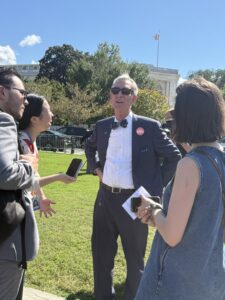
The Hill Day was also an opportunity to highlight the importance of funding for the National Science Foundation (NSF), whose mission complements NASA’s. Together, these agencies support fundamental research that informs policy, conservation efforts and our understanding of the planet’s biomes.
Despite the backdrop of the government shutdown, Hill day participants met with nearly 250 congressional offices, urging lawmakers to reject the proposed cuts. The good news is that the introduced appropriations bills from both the House and Senate largely do that, maintaining steady overall funding for NASA (though the House bill proposes a devastating 23% cut to NSF).
We are grateful to the Planetary Society and fellow partner organizations for making this event possible. ESA remains committed to advocating for robust federal support of ecological and Earth science research. NASA and NSF play vital roles in enabling the data, tools and discoveries that help ecologists explore the complex interactions shaping our planet — and informing decisions that affect its future.