Data and dialogue: ESA Graduate Student Policy Awardees describe their experience
ESA’s Katherine S. McCarter Graduate Student Policy Award (GSPA) recognizes graduate students who are passionate about science and policy. Since 2007, ESA has been bringing GSPA awardees to Washington, D.C. for policy and communications training, career development and meetings with policymakers. The 2025 cohort of ten students was divided into three teams; one team, composed of Pa-Shun Hawkins, Alison Robey, and Advyth Ramachandran, shares their perspectives on science policy and what it was like to participate in this year’s events. Their views are their own, and not necessarily those of ESA or their home institutions.

Photo courtesy of Pa-Shun Hawkins
Before the 2025 ESA Graduate Student Policy Award Event, the idea of talking one-on-one with policymakers felt terrifying. I am not the most outspoken person, and sometimes social engagement requires a great deal of mental fortitude. The thought of stepping into a space where I’d be expected to speak — to represent science, my research and other ecologists — felt like staring up at a mountain I wasn’t sure I could climb.
But I also felt consumed by constant stories of defunded programs. So, I stood at the edge of that contradiction: feeling burdened by fear and imposter syndrome yet driven to advocate for science.
Thankfully, I was not tossed into a senator’s office on day one. Our first day, the ESA team set up training sessions on science communication, federal budgets and the legislative process. We rehearsed how to translate our research to policymakers, how to capitalize on our position as constituents by relaying what science has done for our states and how to make the big ask: fund the National Science Foundation at $9.9 billion for Fiscal Year 2026.
The night before Hill Day, I rehearsed: thank them, introduce yourself, make the ask and share your story. Got it. On the big day, my team met in the hotel lobby, dressed in our coordinated business attire, our green and white ESA folders in hand.
Not every meeting I led went perfectly; my nerves got in the way at first. But each one got better. Staffers welcomed us and confirmed we’d come at the right time: budget decisions were being made. Surrounded by other advocacy groups, I remembered a message from training: decisions are made by those in the room. I left knowing presence matters and you don’t have to do it alone. To those considering engaging in science policy, don’t let imposter syndrome get in your way. If we don’t share our stories, we risk being left out.
– Pa-Shun Hawkins, California
To those considering engaging in science policy, don’t let imposter syndrome get in your way. If we don’t share our stories, we risk being left out.
– Pa-Shun Hawkins, 2025 GSPA Awardee
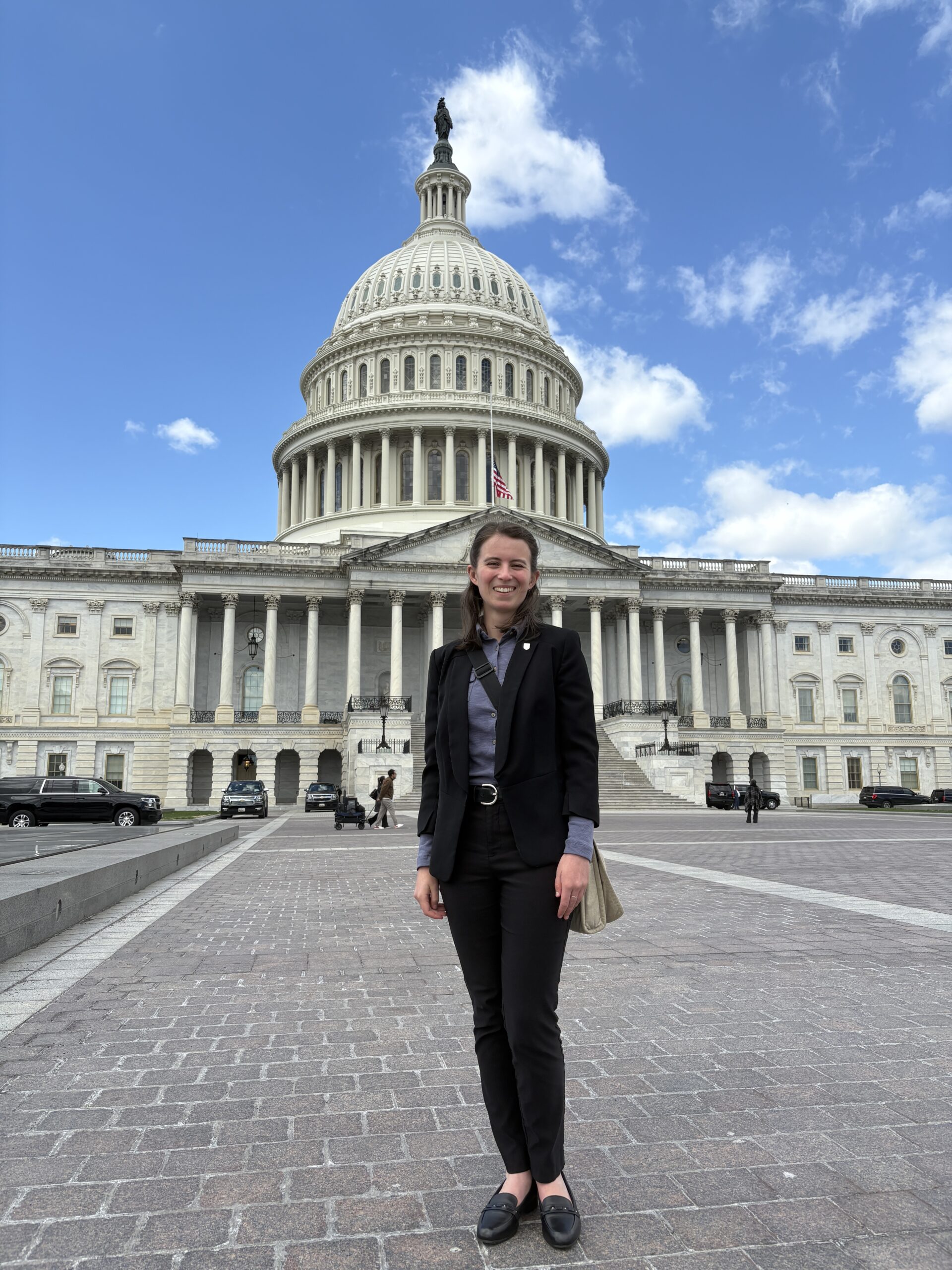
Photo courtesy of Alison Robey
Sitting in a cafeteria in the House of Representatives chatting with my congresswoman’s legislative aide about purple martin conservation was not on my bingo card for 2025. Like many ecologists, I’ve spent much of the year incredibly frustrated and sad about the ways people in power are devaluing natural environments and making it harder to be a scientist. Receiving the GSPA this year, of all years, felt disorienting; it’s a complicated time to visit Capitol Hill and advocate for science funding.
While 2025 feels in many ways like the worst time to care about science policy, the very forces driving that demoralization are what makes this the most important time of all. So many of the negative changes coming our way — from intensive budget cuts aimed at science, conservation and education, to policies that blatantly ignore rigorous, established scientific knowledge — are driven by misunderstandings of what science is and what scientists do. While there are plenty of people out there, some of them very prominent, who aren’t willing to have good-faith discussions with scientists, there are plenty more who simply do not realize the importance of our work.
Most people don’t think about the benefits of research as often as career ecologists do. By being in the room, I got to share with my representatives how a small amount of early-career NSF funding made it possible for me to become a scientist by supporting my first job out of college, and how federal investments for habitat restoration in my hometown translated to the local recovery of an endangered songbird and enhanced community recreation on our river. These direct conversations with policymakers about how federal funding for ecological research and restoration supports local communities and economies in their states demonstrate why our work matters.
Talking to people — our neighbors, our coworkers, our policymakers — about what we care about and why is the first step towards building support among voters and decision makers for policies that foster healthy ecosystems and support science education. If we don’t share these stories, then who will?
– Alison Robey, Connecticut
While there are plenty of people out there, some of them very prominent, who aren’t willing to have good-faith discussions with scientists, there are plenty more who simply do not realize the importance of our work.
– Alison Robey, 2025 GSPA Awardee
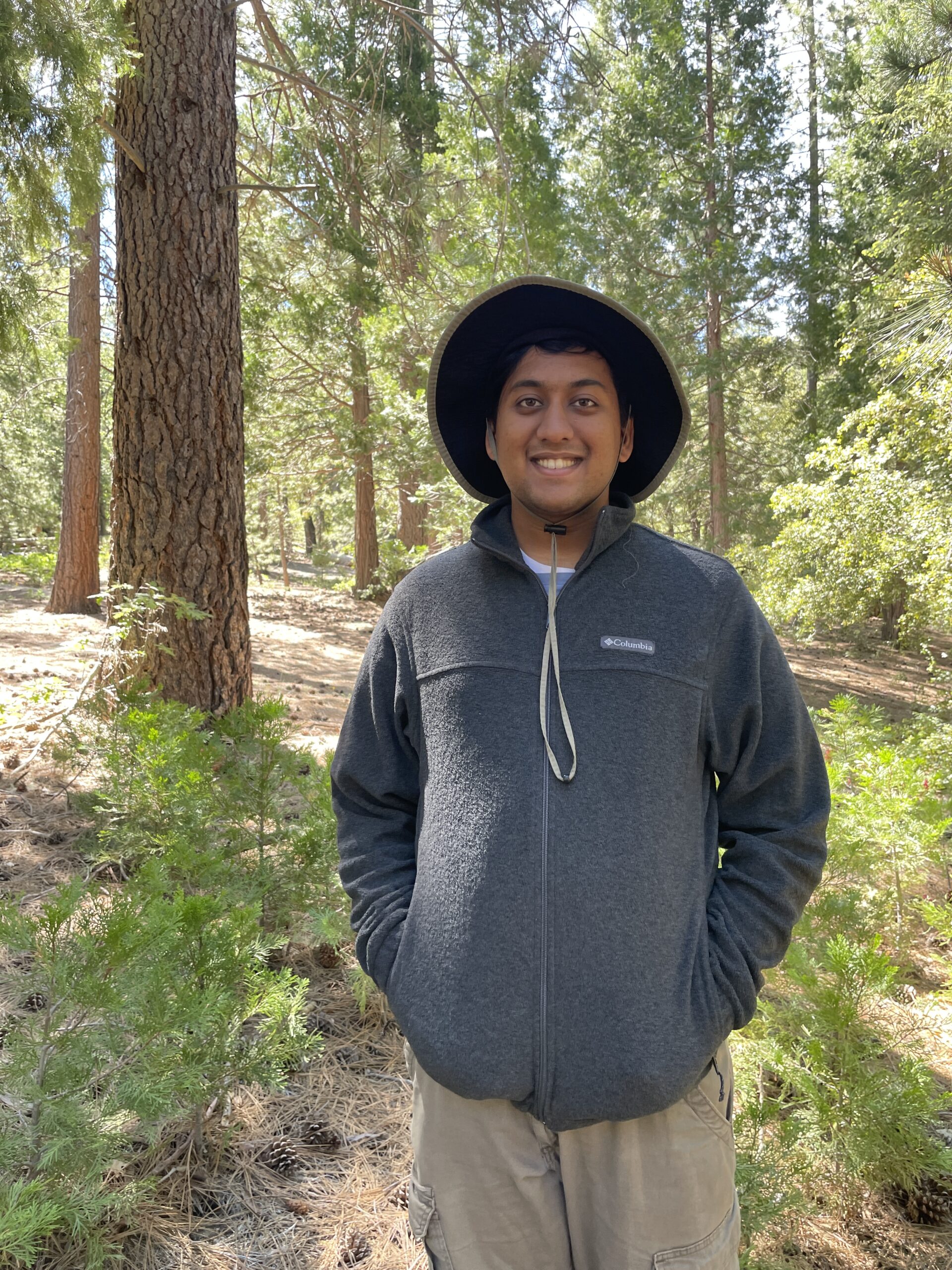
Photo courtesy of Advyth Ramachandran
As professional ecologists, we have many demands on our time. We are scientists, yes, but some of us are also teachers or advisers to agencies, nonprofits and businesses. We are mentors, researchers, programmers, writers and communicators. All these activities are crucial to the health of our discipline. However, the GSPA program highlighted that another urgent priority for ecologists today is engagement with policy makers.
Science funding ebbs and flows in every federal budget cycle, and priorities are redefined with every new administration. For decades, ecologists have advocated for funding research in our discipline. Today, however, we face a challenge greater than any before: now, the value, rigor and utility of our research for the public good is being questioned and misunderstood. As a result, we risk losing millions in congressionally appropriated federal funding for ecological research and education.
To ensure our discipline can continue producing knowledge for the benefit of humanity, we must outline to policymakers and the public why ecology is important.
We must do more than accompany papers with the occasional blog post or press interview: we must integrate science policy into our outreach, teaching and advocacy.
First, we must build sustained relationships with trusted organizations that can bring our science to the public and serve as ambassadors for our work. Improving scientific literacy and access is crucial for building public will to support science, which political leaders will respond to.
Second, those of us that teach must share with our students the role of federal funding in scientific research and the importance of using science to inform policy. Our students can take this understanding with them and serve as changemakers by sharing this knowledge with their own communities.
Finally, we must speak directly with political leaders about our work by explicitly stating how our research benefits their constituents. We must communicate the number of lives saved by using ecological knowledge to manage disease, the number of homes protected through ecologically informed forest fire management or the yield of fish catch made possible by scientific fisheries management. You don’t have to begin with a visit to Capitol Hill or inviting a legislator for a site visit: writing letters and making phone calls is a great place to start.
– Advyth Ramachandran, Colorado
The GSPA program highlighted that another urgent priority for ecologists today is engagement with policy makers.
– Advyth Ramachandran, 2025 GSPA Awardee
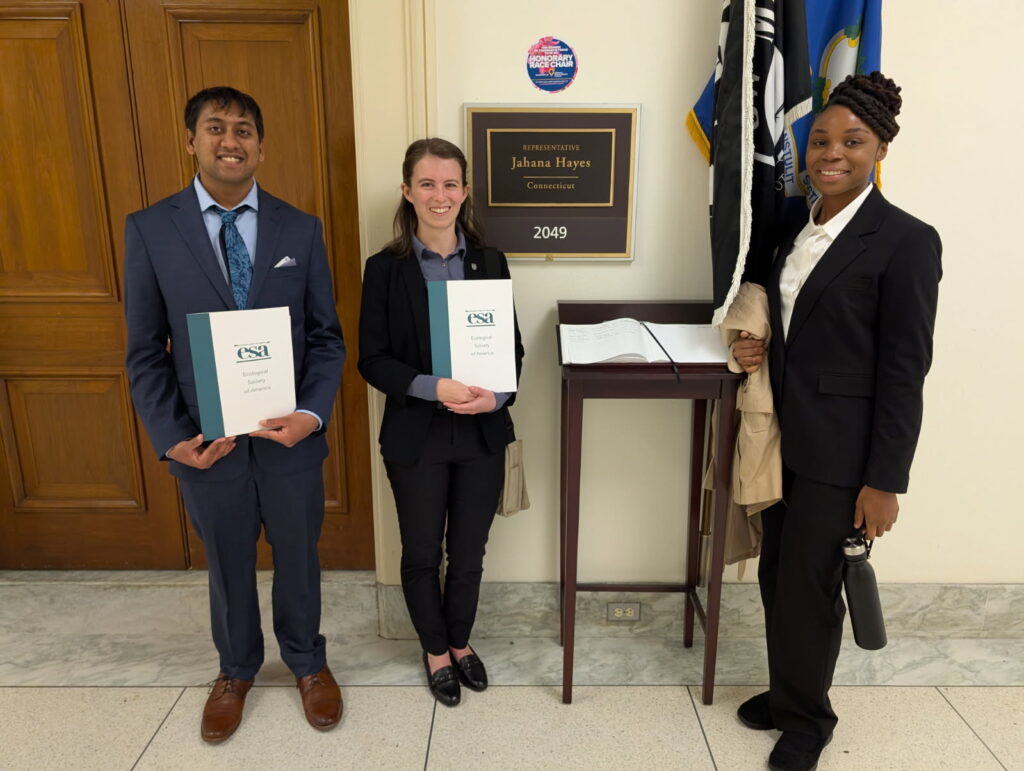
Photo courtesy of Alison Robey