SciComm Spotlights! Gina Errico
SciComm Spotlights February 2025
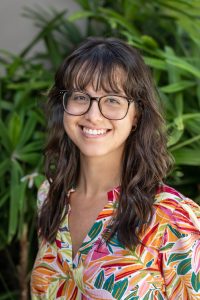
We’re starting our newest edition of C&E Section SciComm Spotlights with our fantastic co-chair, Gina Errico. Read on to find out how Gina engages with science communication on her day-to-day and the interesting projects she contributes to!
Gina is the Science Education and Engagement Coordinator at the Bishop Museum and a freelance science communicator. Gina received her M.S. in 2023 from Oklahoma State University in Plant Biology, where she investigated the effects of fungal spillover from coffee plantations onto tree seedlings in nearby forests. As a freelancer, Gina has expertise in science writing and graphic illustration, and works with institutions to help scientists engage and interact with the public about their research.
Gina’s Career Journey
Could you describe what your current position as a Science Education and Engagement Coordinator is like?
So, currently I work at the Bishop Museum in Honolulu, HI and I have the really cool opportunity of working closely with some of our natural science departments to create anything from social media posts to large scale community events. Every day at my job looks different, which is one of the reasons I love it so much. Recently, I’ve been running a native plant giveaway for the island of O’ahu as part of a larger, inter-island plant giveaway program, so I’ve been doing everything from coordinating online reservations, working with the botanists to decide on which plants are ready to be rehomed and running the pick-up event logistics–so that’s one part of it. Another project is just working to boost our natural science department’s presence on the museum’s social media channel, so we’re highlighting some native plants as part of the larger “Year of the Community Forest” campaign in Hawai’i, working on some video reels to promote the deep-sea diving that some of our researchers are doing, and just sharing the stories of some really cool things housed in our collections.
How did you start stepping into science communication?
I didn’t even know scicomm existed until I almost graduated college, and it wasn’t until after I graduated that I realized what it all entailed. After college I wanted to take some time off before graduate school, so I joined an AmeriCorps team in Iowa where I was helping coordinate outreach events for an environmental non-profit— that’s what really sealed it for me. Once I started graduate school I was taking every opportunity to get involved in science communication by running social media accounts, to orchestrating campus events with our botanical society. At some point I came across the Association of Science Communicators and was able to get some funding to attend their annual conference and that’s really when I learned what the world of scicomm really could be. I met so many inspiring people who were accomplishing incredible things in the field and that’s really what drove me to pursue a career in science communication.
What were your previous roles before the Bishop Museum?
After I completed undergrad I spent a year as a marketing and communications coordinator for Trees Forever as an AmeriCorps member, and then I got my master’s in plant biology. At the same time I was running a social media account for an environmental podcast and working as a fellow for Science Advocacy Institute. After graduating with my master’s I was a AAAS Mass Media Fellow where I wrote for the science and medicine column at the LA Times before moving to Hawai’i. When I first moved I was freelance writing and teaching at a local university before I was offered my current position at the Bishop Museum.
Diving into SciComm
What types of science communication do you focus on?
I do a lot of online/media communications like social media, journalism and graphic design but with my position at the museum I also get to do a lot of in-person outreach and development of exhibits and signage.
What was your first step into science communication and engagement? Do you have advice for beginners who are starting to dip their toes in?
Navigating scicomm as a beginner can be a bit scary and overwhelming. For me, I really pushed myself to reach out and meet people who were advanced in their career and just ask them a ton of questions about how they got to where they were. I’ve found this community incredibly rewarding and kind, so I would advise anyone who thinks they may be interested to just start by reaching out, saying hello, and letting someone know you admire their work and want to learn more about their career—and majority of the time people will love to help out and provide some insight (myself included).
You’ve published your work in some cool outlets like The Xylom, Civic Science Times, BotanyOne, and The Los Angeles Times. How did you get there and how do you continue pitching your work?
My time with the LA Times was through my AAAS Mass Media fellowship, and I would 100% recommend to anyone who is finishing their undergraduate degree or in a graduate program who is interested in science journalism to consider applying for it. It was a once-in-a-lifetime opportunity to learn hands-on from the experts about what it takes to be a science journalist and it gave me the tools I needed to be a freelance writer after the fact.
The other journals are merely just a matter of making connections and creating effective pitches. Make sure your pitch ideas align with the outlet you are pitching to, do your research into their recent stories— have they published something similar or related to your idea?— and again, ask for help! I usually ask a colleague or two to review my pitches before I send them in to make sure my ideas are coming across accurately in my pitch and I’m not missing anything important.
Additional Q&A for Gina
Do you work with other people on projects? If yes, what kind of work do you do?
Yes, all of the time! I work on a lot of social media campaigns and graphics about science and research, as well as working with sources and media outlets for any science journalism articles I’m writing.
To contact me about collaborating on a project, just shoot me an email. I love hearing about the awesome science people are exploring and the opportunity to help share their work with the world. My business email is gerricomedia@gmail.com.
What is your dream for our section as the co-chair?
I would love to have a real stake in ESA as a whole, and be able to really boost the scicomm opportunities and trainings for members. A real dream would be having a full-time staff member help coordinate larger events on behalf of the section during the year and at annual conferences, to increase our outreach within the communities we hold our conferences at.
Want to keep up with Gina’s work? You can visit her website https://www.ginaerrico.com or on Twitter/X @ErricoGina.
The SciComm Spotlight Series aims to bring C&E Section members (and other scicomm professionals) to the spotlight and showcase all the wonderful science communication work they do. If you’re interested in a feature, or would like to recommend someone to be featured, please contact us via our website’s Contact Form!