
2011 — Page 7

Floods and foods, dogs protecting cats and microbial munchers

This post contributed by Molly Taylor, ESA Science Writing Intern. Tiny critters: Though all smaller than a millimeter in size, four critters highlighted by Neatorama are much larger in effectiveness. When there is no oxygen around to speak of (or to breathe in), shewanella inhales the likes of uranium and chromium. The bacterium exhales the toxic metals with a few…
Read More

Policy News: June 3

Here are some highlights from the latest Policy News by Science Policy Analyst Terence Houston.  Read the full Policy News here. COMMERCE: FORMER ENERGY CEO, NRDC COFOUNDER, NOMINATED TO LEAD DEPARTMENT On May 31, President Obama announced his intention to nominate John Bryson to the post of Secretary of the Department of Commerce. Bryson would bring a lengthy resume working…

Read More

Romania’s traditional approach to agriculture is linked to wildlife abundance

This post contributed by Molly Taylor, ESA Science Writing Intern. Something is afoot in Romania’s province of Transylvania, and it has nothing to do with Twilight. In a paper published recently in Biological Conservation, researchers from Romania, Germany and the Netherlands spent nine years studying populations of various species of newts, frogs and toads in 54 ponds in the Saxon…

Read More

Extreme weather, campaigning honeybees and tracking whale sharks

This post contributed by Molly Taylor, ESA Science Writing Intern. Extreme weather: The rare multi-vortex that hit Joplin, Missouri on May 22 has claimed more than 100 lives and destroyed countless homes and buildings. Unfortunately, this is not the only natural disaster to devastate the U.S. this year. According to a recent Washington Post article, this storm season is turning…

Read More

Weighing potential costs of hydraulic fracturing

The recent expansion of hydraulic fracturing across the nation has set off a debate among oil and gas industry officials and conservationists and environmental scientists. During a recent House Space, Science and Technology Committee hearing, Congressman John Sarbanes (D-MD) outlined the points of contention: “You have one group that’s got long experience with hydraulic fracturing [contending] it’s very safe” and…

Read More

Policy News: May 20

Here are some highlights from the latest ESA Policy News by Science Policy Analyst Terence Houston. Read the full Policy News here. SENATE: GOP MEASURE TO EXPAND OFFSHORE DRILLING IS REJECTED On May 18, the U.S. Senate rejected S. 953 by a vote of 42-57.  The Offshore Production and Safety Act of 2011 sought to expedite and expand offshore oil…

Read More
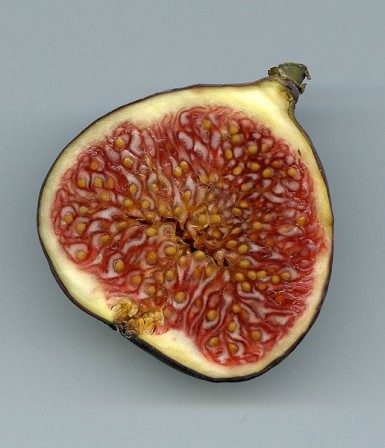
A bisection of a fig shows its internal structure.

The story of the fig and its wasp

Inside the rounded fruit of a fig tree is a maze of flowers. That is, a fig is not actually a fruit; it is an inflorescence—a cluster of many flowers and seeds contained inside a bulbous stem. Because of this unusual arrangement, the seeds—technically the ovaries of the fig—require a specialized pollinator that is adapted to navigate within these confined…

Read More

Mississippi floods out humans and wildlife

In late April, two major storm systems across the Mississippi River watershed brought about one of the most catastrophic floods upon the Delta region in generations. Thousands of homes have had to be evacuated and there have been a number of deaths. President Barack Obama has declared bordering counties in Mississippi, Tennessee and Kentucky as federal disaster areas. The flooding…

Read More

A science poster session for Congress

Last week, several hundred congressional staff and several Members of Congress mingled with over 30 scientists during an evening reception on Capitol Hill. While nibbling on finger food and sipping libations, policymakers and researchers chatted about the wide range of research and education projects supported by the National Science Foundation (NSF).  The event was the 17th Annual Exhibition and Reception…

Read More

The evolution of beer yeasts, seedy pants and vampire bat venom-turned medicine

Beer yeasts: Researchers at Lund University in Sweden tracked the history of two yeasts—Saccharomyces cerevisiae and Dekkera bruxellensis—used in alcohol fermentation to pinpoint their role in ethanol production. They found that, around 150 million years ago, competition with other microbes, and the overall increase in sugar-rich fruits, encouraged the yeasts to withstand high ethanol concentrations—an adaptation that would allow them…

Read More

Fungus makes zombie ants administer ‘death bite’ at noon

Researcher David Hughes has expanded research on a parasitic fungus and its carpenter ant host. As explained in an excerpt from a previous EcoTone post: Scientists have found that the parasitic fungus Ophiocordyceps unilateralis has possibly been invading carpenter ants (Camponotus) for 48 million years. The parasite not only infects the ant, but it manipulates the ant’s behavior, driving it…

Read More

Policy News: May 6

Here are some highlights from the latest ESA Policy News by Science Policy Analyst Terence Houston. Read the full Policy News here. MINING: COMMITTEE HEARING HIGHLIGHTS INDUSTRY CONCERNS OVER EPA REGS The House Transportation and Infrastructure Subcommittee on Water Resources and Environment met May 5 for the first in a series of hearings entitled “EPA Mining Policies: Assault on Appalachian…

Read More