ESA’s 2024 Year in Review
This letter to our members is by Past President Shahid Naeem

It’s my honor as 2024 ESA President to write a letter to the members, to sum up our accomplishments and introduce the full annual report. Since we realistically have to wait until the year is over to work on that, we typically don’t start until late in the winter and hope we can deliver it in spring. But as you can imagine, things in our world became rather tumultuous at that time, and it felt like an all-out sprint just to keep up with developments in the political realm, so we’re later than usual in pulling this report together.
But this isn’t normal, is it? Many of the things that really define us as a Society, and as scientists, are under direct threat. Talking about good things we’ve done without putting that into the right context feels empty. So let’s celebrate our successes, and put particular focus on those things that some are trying to take away.
Ecologists From Local to Global
I’ve been an active member of ESA for 41 years. Yes, that makes sense, I’m an ecology professor, but the thing that always appeals to me is really the people. It’s that opportunity to meet and understand other ecologists from across the country and around the world, and increasingly from communities in the United States that traditionally hadn’t been well-represented in the sciences. I’m proud to say that, while we didn’t have one of our most numerically significant years during my presidential tenure, we did manage to continue to develop our community:
- We continued our trend of building more gender equity in ESA, with self-identified men now only constituting 49% of the membership, while women and non-binary members make up 46%.
- Total minority participation in ESA increased to 32%, as self-reported by members; since 2020, Asian membership has grown by about 20%, Hispanic membership by a little over 25%, and Black membership by more than 50%. We also have all-time high participation by Native Americans since our TEK Section took the lead in engaging with Indigenous scholars and practitioners in 2022.
We continued to bring new areas of scientific research and practice into the Society as well, as we welcomed the Climate Adaptation and Coastal and Marine Ecology Sections, both of which made immediate impacts.
Serving Our Community
As the world’s largest community of ecologists, we also host the world’s largest gatherings of ecologists: more than 3,000 colleagues joined us in Long Beach last year. They presented 2,148 abstracts across nearly 300 invited and contributed sessions, plus posters, many of which were included thanks to $60,000 in registration and dependent care support, plus thousands more administered by the sections and chapters. We also included 47workshops and short courses, and the largest Career Central program to date. The whole thing was held up by several hundred volunteers, including many students who had their meeting registration reimbursed!
I was pleased to lead the Opening Plenary, welcoming first the new Editor In Chief (EIC) of Earth Stewardship, Elisabeth Huber-Sannwald, to the stage, and then introduce our opening lecturer, Executive Director Jackie Grant from Grand Staircase Escalante Partners.
The meeting was made possible, in large part, thanks to the attendees, exhibitors and sponsors who provided myriad resources to support to ESA.
Many students were able to participate last year as part of our award-winning SEEDS program, which ESA has always been so pleased to support. It’s been gratifying to see this campus network of future leaders in our field grow continuously in recent years. We added 19 active chapters alone in 2024, bringing the total to 49, 20 of which were awarded grants for programs to benefit their members. It was a special honor to join the SEEDS Leadership Meeting at Harvard Forest in the fall! Staff estimate that approximately 2,500 undergraduate students are currently associated with SEEDS chapters, with many more in the alumni network that provides mentorship and other guidance to the students who follow them. This program, founded and long supported by grants from the National Science Foundation, has been running continuously since 1997 but currently faces an uncertain future given budget cuts, reorganization, and reprioritizing of objectives at NSF under the current administration. While we hope some form of normalcy will return, we are focusing on looking to secure new funding sources.
One similar program, which we founded just a few years ago, is the ESA Excellence in Ecology Scholarship, which is annually given to four early-to-mid career researchers to assist their continued professional growth. I was pleased to welcome the 2024 cohort to the stage in Long Beach! While EEE was founded as a special project in the general operating budget of the Society, in 2023 we established the Equity & Excellence in Ecology Endowment to support programs like this one that broaden our community. In 2024 long-time donor Phil Taylor pledged to match $100K in contributions as we aim for our initial endowment goal of $400K. Thanks to our generous donors, we are more than halfway to fulfilling the match.
Review this page on our giving website for a full list of 2024 donors.
Another program that made a big impact on our work last year is our collaboration with the American Indian Science and Engineering Society, through which we brought 11 scholars to last year’s meeting, and participated in a strategic planning exercise with Advancing Indigenous People in STEM, the Botanical Society of America and Entomological Society of America to increase participation of Indigenous scholars in our sciences.
We’re broadening our professional horizons, too. You may have run into Society leaders or staff at other scientific societies’ conferences—we’re frequently at AGU and the British Ecological Society—but recent years have seen us look further abroad, like to the Oikos meeting in Sweden last March, and exhibiting at (Society for Advancement of Chicanos/Hispanics & Native Americans in Science (SACNAS) (including last year) and Minorities in Agriculture, Natural Resources and Related Sciences (MANRRS) to better connect with diverse communities of ecologists. We expanded our professional reach, too, by attending the National Adaptation Forum in May, the third Programme on Ecosystem Change and Society (PECS) event on sustainability and ecosystem services in Montreal, and then the UN’s Convention on Biological Diversity Conference of the Parties in Cali, Colombia, in November.
Serving Ecological Professionals
This outreach to other communities of practice that create and apply ecological knowledge is part of a deliberate effort to serve all ecologists. For instance, it’s been a pleasure to watch our certification program—our most tangible connection to applied ecologists across industries—mature and grow, reaching up to 900 certified ecologists after welcoming 128 more last year.
To better deliver value to our members and serve the entire community of ecologists with accessible professional development, we began holding more virtual events, and 2024 was the year that program began to mature. Staff report that we had nearly 1,400 total people register for those events! But beyond the paid opportunities, it was the dedicated career exploration opportunities provided by the Private & Public Sector Ecologists Section that really helped us continue to engage with ecologists across the professional spectrum. To that end, we also opened an organizational membership category, so private companies and NGOs (and university departments!) can join the Society as an entity and engage with us at a higher level.
The science of ecology is not just research; teaching and practice are as critical to our field as inquiry-driven research. Our long-running work to support high-quality ecology education continued throughout 2024. We leveraged funding from NSF to support 37 participants over three semester-long faculty mentoring network sessions to incorporate the Society’s Four Dimensional Ecology Education Framework, which led to the publication of 24 4DEE-aligned teaching resources. And, through our partnership with the National Park Service, we launched the Science Communication in the Parks program with an inaugural cohort of six fellows who developed high-quality science communication products for national parks in the Northeastern United States, and (along with Conservation Legacy) continued our Scientists in Parks program by engaging 229 participants spread over 104 parks.
Celebrating Scientific Excellence
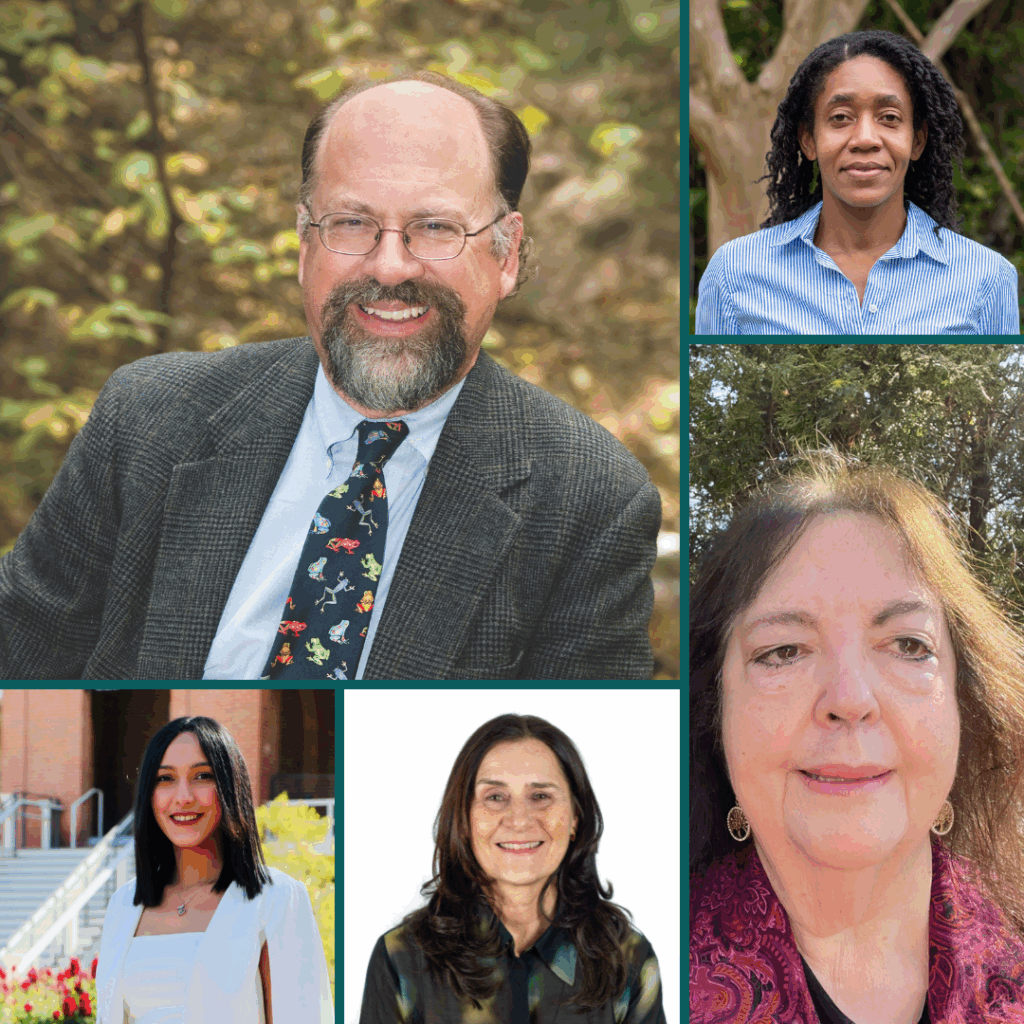
We like to think of ourselves as standard-bearers for the science of ecology, so it stands to reason that awards we give for contributions to the science and service to ESA and our community carry a great deal of prestige. It would take much space to even briefly list our award winners and 2024 class of fellows and their amazing achievements, so I encourage you to look into their work—and then make your own nominations for next year when they open in the fall!
Promoting the Science of Ecology
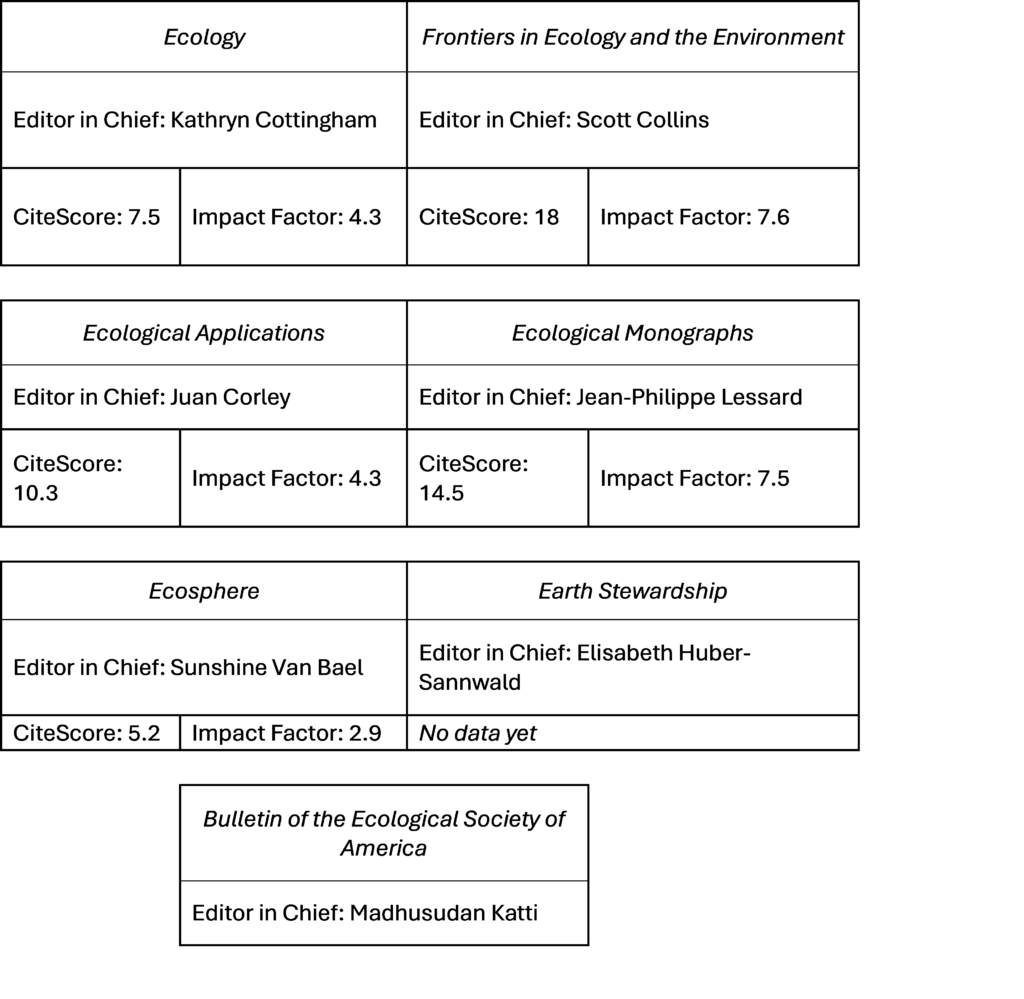
That excellence is particularly highlighted in our journals, which remain the world’s leading portfolio of published ecological science year in and year out. As is always the case, science published in our journals went on to be featured in such major media as the New York Times, the Guardian, Le Monde, National Geographic and Science, among many others.
The biggest highlight of all for 2024, though, was the official launch of Earth Stewardship with Elisabeth Huber-Sannwald at the helm as Editor in Chief. Already, its first articles have been published with along with its first special collection.
We were deeply involved in promoting good ecological science beyond the scope of our journals, too, though with a much less happy ending.
Our engagement with the National Climate Assessment goes back into the past decade, but in 2024 our members had occasion to provide substantive comment on the (very large!) draft version of the new Biodiversity & Climate Change Assessment, a continental effort in coordination with government officials and scientists in Mexico and Canada. The BCCA was intended to build on the global Intergovernmental Platform on Biodiversity and Ecosystem Services at a North American level and inform the draft National Nature Assessment from the U.S. Global Change Research Program, with many ESA members leading chapters! While the federal government ended its support of the program, it’s been great to see that the original authors have continued their path, led by Phil Levin, Jane Lubchenco and Heather Tallis in a new nonprofit called United by Nature, so this major contribution by ESA members will nonetheless be impactful and shared with the public.
From our own office, we remained focused on ensuring that sound science is employed in decision-making and public-facing discussions. Our policy highlight each year is the Graduate Student Policy Award event, and 2024 was no different. ESA hosted 12 graduate students who received the highly competitive award in DC as part of their day-long course in advocacy and additional day-long visit to Capitol Hill where they took the message of sound ecological science to their respective congressional offices.

Many other ESA members are involved in work to share and promote good ecology. For instance, our Rapid Response Team remained an active source for ecological expertise for legislative actions as well as news stories, and members were engaged at all levels of government. As an organization, we published 16 letters—official comments and requests—to decision-makers in government and civil organizations and issued 24 press releases on everything from new advances published in our journals to accolades of the innovators and leaders among us.
We do all this great work thanks to the contributions of our large community of volunteers, from peer reviewers to section leaders to committee members and the Governing Board, with many other roles in between, and with a highly talented, committed staff in our DC headquarters. (See the letter from Executive Director Catherine O’Riordan.) We succeed as a community of scientists, because of our dedication to each other and our work.
We’ve worked hard to get to where we are. We believe in this work. As 2024—and many years prior—showed, we can make a significant difference in the world. So, as I was pleased to say with current ESA presidential leaders in a recent letter: We remain steadfast in our support of ecology and ecologists. Let’s continue our great work in 2025 and in the years to come.