COP17 Dispatch 4: Finding Inspiration in Data, Collaboration, and Global Community
By Krista Romero-Cardenas, ESA Member, CAMBIUM NSF Fellow & PhD Candidate in Natural Resource Sciences, University of Arizona
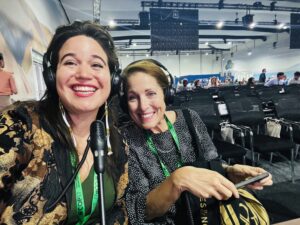
As a first-timer attending the Convention on Biological Diversity COP17 in Yerevan, Armenia, I am in awe of the magnitude of the conference. If I could describe the atmosphere of the first couple days of the conference I would summarize it as high-energy reunions, smiling faces, small group conversations finalizing PowerPoints and friendly COP volunteers ready to answer questions and point you in the right direction. There are many fantastic sessions that make one wish one could be in multiple places at once. As you walk through the conference center, you walk amongst a kaleidoscope of global faces and outfits.
As a PhD Candidate working in the intersection of Nature, Climate and Society, I have spent much of my first days focused on geospatial data in the “Data to Action” Pavilion, where I learned how we are applying GIS tracking, monitoring data, and global collaborations to identify migrations — from the Americas to across the world. These are not small efforts and take years of data to depict the routes and responses we see from wildlife due to land-use change. These efforts also aim to support Target 15 of the Kunming-Montreal Global Biodiversity Framework (KMGBF) to integrate biodiversity in decision making at every level. Sessions shared a multitude of successes and challenges that go along with integration of biodiversity data – however, there is a lot of excitement to encourage the science community to participate in the GEO Biodiversity Observation Network (GEO BON) or the UN Biodiversity Lab repositories to piece together the mass of ecological dimensions.
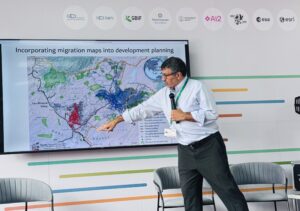
I also experienced some COP17 magic when attending a session and I recognized the data being presented! I came to find out that I have been emailing with the presenter for a year but never had the opportunity to put a face to the name. In Yerevan, we chatted and have future collaborations planned.
I thank the Ecological Society of America for this opportunity – it is truly a dream come true!
Disclaimer: Opinions are solely those of the guest contributor and not an official ESA policy or position.