ESA Policy News November 19: US, China reach emissions agreement, NSF ‘Truthy’ study scrutinized, House committee chairs named for 2015

Here are some highlights from the latest ESA Policy News by Policy Analyst Terence Houston. Read the full Policy News here.  FOREIGN AFFAIRS: US, CHINA REACH AGREEMENT ON CARBON EMISSION REDUCTIONS On Nov. 12, President Obama and Chinese President Xi Jinping announced an agreement that aims to set the US and China on a path to dramatically reducing their carbon emissions….

Read More

‘Threatened’ listing for Gunnison sage grouse rouses political scuffle

  A pair of Gunnison sage grouse. Credit/US Fish and Wildlife Service The recent US Fish and Wildlife Service (FWS) decision to list the Gunnison sage grouse (Centrocercus minimus) as “threatened” under the Endangered Species Act (ESA) has ignited a political fervor between the administration, environmentalists and Colorado and Utah policymakers. “While many people hoped that the extraordinary conservation efforts by our…

Read More
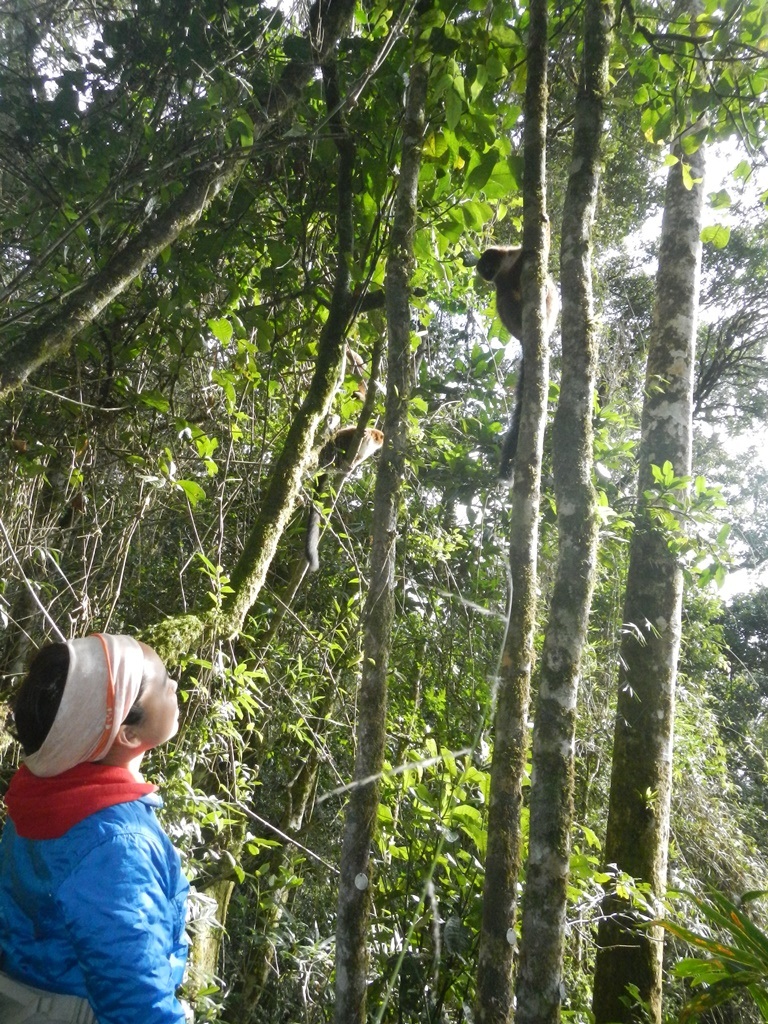
Onja Razafindratsima, a graduate student at Rice University, observes a lemur in a Madagascar rainforest. Razafindratsima led a three-year study to explore the relationship between lemurs and trees. Lemurs eat the fruit and spread its seeds far from the parent tree. Credit, Onja Razafindratsima/Rice University.

Madagascar team tracks lemurs as they spread the seeds of the rainforest

On the island nation of Madagascar, the long-limbed local primates, lemurs, are for some trees, essential helpers. It is advantageous for a tree to scatter its progeny not just to the wind and widely, but where they will find fertile ground and clement conditions for growth. Some trees recruit animals for this task by tempting them with delicious and nutritious…

Read More

Forest dance on wires depicts a creeping fungal multitude blown back by a tornado

Plant biology PhD student Uma Nagendra of the University of Georgia, Athens, wins the 2014 Dance Your PhD competion, sponsored by Science, AAAS, and HighWire Press. Floating on trapeze wires, young white pine seedlings unfurl and reach for light. But lurking in the roots of the parent tree are dangerous fungi that creep forth to strike at the young scions. The sprouts…

Read More

ESA Policy News November 5: Senate elections shake up committees, IPCC report finds climate change effects irreversible

Here are some highlights from the latest ESA Policy News by Policy Analyst Terence Houston. Read the full Policy News here.  SENATE: ELECTIONS, RETIREMENTS SHAKE UP KEY SCIENCE, ENVIRONMENTAL COMMITTEES On Nov. 4, Republicans decisively gained control of the US Senate for the first time in eight years. The party managed to hold onto all their incumbents while picking up seats…

Read More

Canopy in the Clouds development team analyzes its social outreach

A guest post by Greg Goldsmith, a tropical plant ecologist and part of the multitalented team behind Canopy in the Clouds. He describes methods he used to track and analyze audience engagement in the educational website with colleagues Drew Fulton, Colin Witherill, and Javier Espeleta in an article out today in Ecosphere. Cloud Forest Introduction from Colin Witherill on Vimeo….

Read More
A Japanese seaweed gains a holds on a mudflat in Charleston Harbor, S.C., by clinging to tube-building decorator worms (Diopatra cuprea) rooted firmly in the mud. The invasive Gracilaria vermiculophylla seaweed provides shelter for a small native crustacean. Credit, Erik Sorka.

Invasive seaweed shelters tiny native critters on Georgia mudflats

On the tidal mudflats of Georgia and South Carolina, the red Japanese seaweed Gracilaria vermiculophylla is gaining a foothold where no native seaweeds live. Only debris and straggles of dead marsh grass used to break the expanse of mud at low tide. Crabs, shrimp, and small crustaceans mob the seaweed in abundance. What makes it so popular? Not its food…

Read More
The tall, mature trees of a late-succession forest (right) stand next to the young regrowth of a clear-cut forest in central Pennsylvania. The deeper volume of organic matter on the floor of a mature forest can capture more of the nutrient nitrogen when it enters the forest than the clear-cut can. Credit, David Lewis.

Old forests store new nitrogen–and may soak up nutrient excesses

Ecologists working in central Pennsylvania forests have found that forest top soils capture and stabilize the powerful fertilizer nitrogen quickly, within days, but release it slowly, over years to decades. The discrepancy in rates means that nitrogen can build up in soils, David Lewis, Michael Castellano, and Jason Kaye report in the October 2014 issue of ESA’s journal Ecology, published…

Read More

ESA Policy News October 22: White House focuses on climate resiliency, NSF accepting Ebola research proposals, enviros sue to protect Wolverine

Here are some highlights from the latest ESA Policy News by Policy Analyst Terence Houston. Read the full Policy News here.  WHITE HOUSE: NEW CLIMATE STRATEGY PROMOTES NATURAL RESOURCE RESILIENCY The White House released a new resiliency-focused strategy to protect natural resources from threats posed by climate change. The “Climate and Natural Resources Priority Agenda” focuses on building climate change resilience…

Read More

The role of ecology in natural resource management decision-making

Science has an important role to play in helping to inform policy decisions that affect management of ecosystems and natural resources. In the most recent edition of the Ecologist Goes to Washington podcast, Amber Childress (Colorado State University) discusses her experiences informing natural resource management decisions with science. Childress’s ecological research focuses on how water providers have adapted to droughts in…

Read More