ESA’s 2025 Year in Review
This letter to our members is by Past President Stephanie Hampton.

Fellow ecologists, you may recall that our annual reports cover our major stories, successes and highlights, in a celebration of our community and our science. Historically, the Past President has taken this opportunity to comment on items in the report that have been especially noteworthy.
As 2025 Past President Shahid Naeem noted in his message last year, this has been an especially challenging time for science and scientists in the United States, especially in the broader environmental field. These challenges include funding for our critical work and for programs that societies like ours foster to create opportunity for everyone who would want to work in the field.
At ESA, we have met those challenges head-on. And while I would have loved for my term as President to have had less existential challenges to address, these times really showed what ESA is made of. I’m proud of the work that we accomplished during my term. We are a creative, strong, resilient and committed group of people. I think this report shows just how committed we remained to our mission.
Supporting All Ecologists in Our Membership
Supporting the professional aspirations of all ecologists has been a key pillar at ESA for years, and this commitment is reflected in our strategic plans. Programs we initiated or sustained in the areas of ensuring equitable pathways in ecology careers only grew despite challenging circumstances.
Together, these initiatives reflect a strategic approach to equity and inclusion that integrates workforce support, student engagement, and professional recognition into the core functions of the Society rather than treating them as standalone efforts.
Highlights:
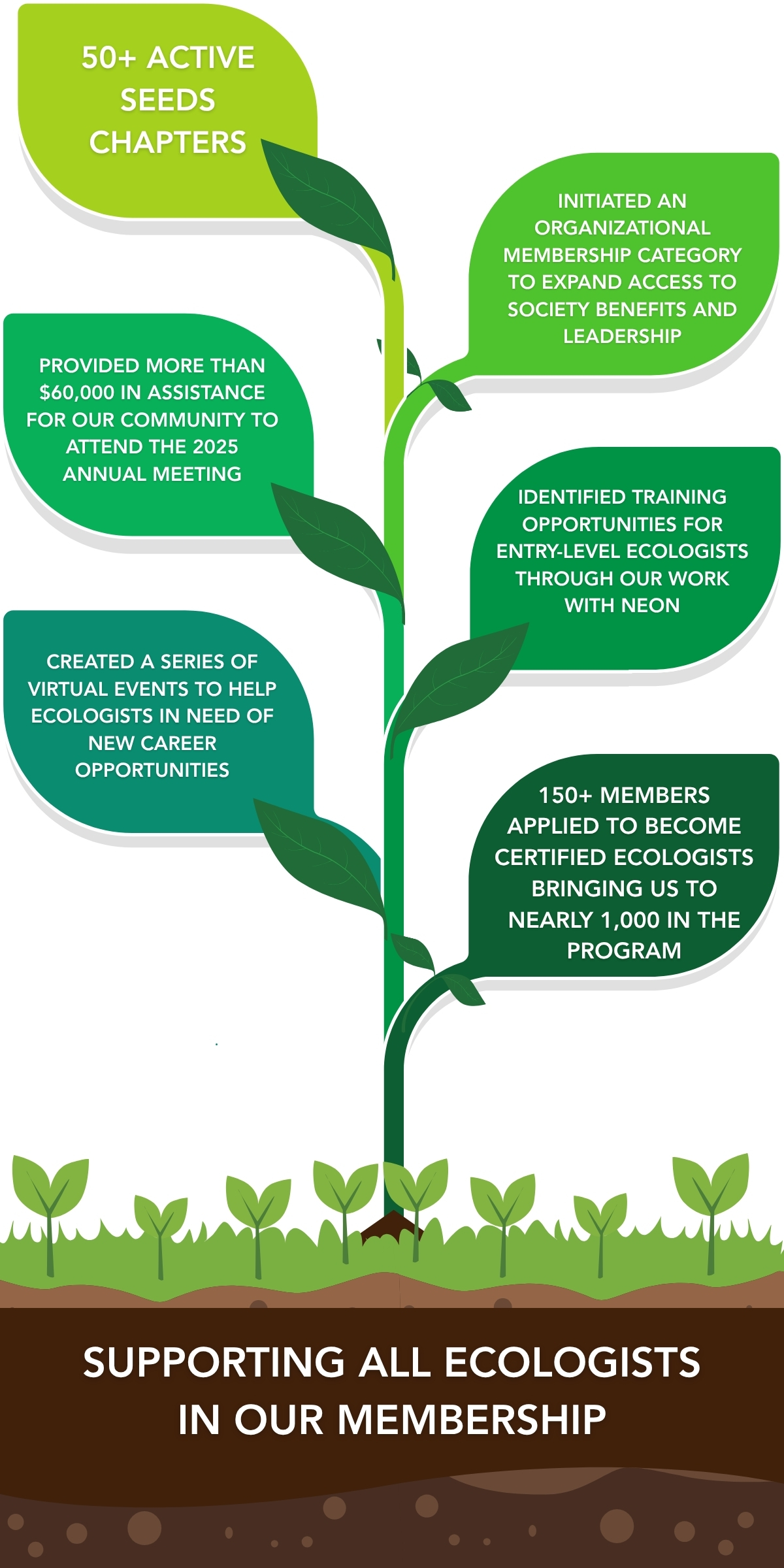
- More than 150 members applied for certification as professional ecologists, helping us near 1,000 total professionals in the program. We further reached out to practitioners by initiating an organizational membership category that allows companies, agencies, departments or other nonprofits to join the Society to enjoy bulk benefits and directly engage with our leadership.
- We provided more than $60,000 in assistance to students, early career scientists and professionals at under-resourced institutions to attend the 2025 Annual Meeting in Baltimore.
- For U.S. federal scientists who lost their jobs as well as researchers (including students) whose funding was terminated, we created free and low-cost ways to remain engaged with the Society. A series of virtual events in the spring that were designed to help ecologists in need of new career opportunities culminated in a career fair in Baltimore, with employers openly recruiting as part of Career Central.
- Our award-winning SEEDS program (Strategies for Ecology Education, Diversity and Sustainability) flourished, growing to more than 50 active chapters in good standing across the United States. In addition to programs they self-managed at their own campuses, SEEDS students joined a nationwide BioBlitz competition to apply more of their knowledge; were able to participate in field trips to the University of Virginia’s Coastal Research Center and University of Colorado Boulder’s Mountain Research Station; and leaders were invited to the annual SEEDS Leadership Meeting at the Cary Institute for Ecosystem Studies, where they were introduced to carbon credits and economic futures in the field.
- Our work with the National Ecological Observatory Network added a new dimension as we engaged with employers across industries to identify training opportunities for the entry-level ecological workforce.
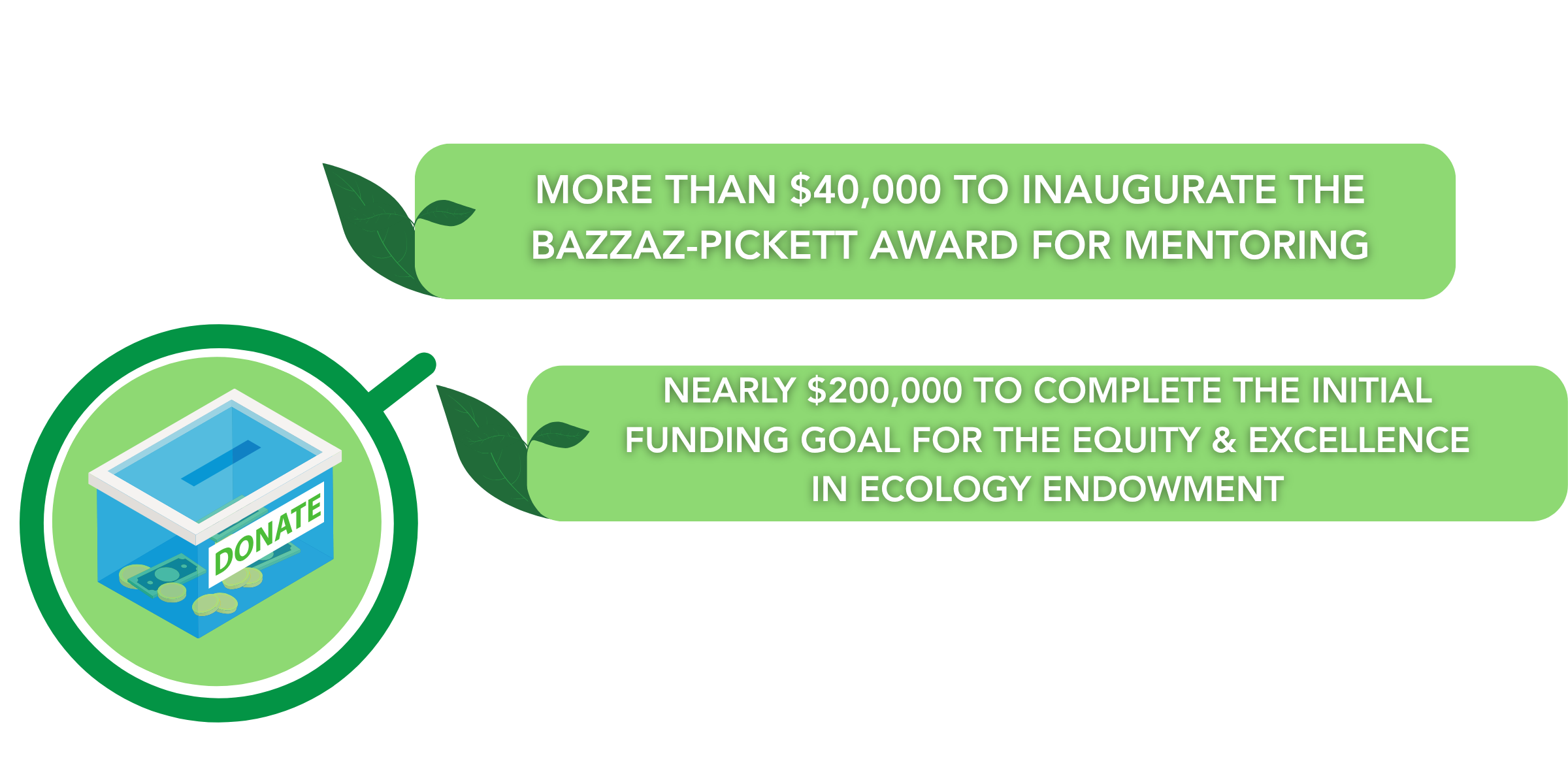
- The ESA community stepped up in a big way, raising more than $40,000 to inaugurate the Bazzaz-Pickett Award for mentoring, and nearly $200,000 to complete the initial funding goal for the Equity & Excellence in Ecology Endowment.
A Vibrant Community of Knowledge and Practice
We strengthen the science of ecology by supporting the ability of people to do the science of ecology, whether in research, education or practice, and by sharing their work publicly through traditional publishing, conferences, educational activities and media engagement. These ESA activities support career growth, develop leaders and build community.
Building this way resulted in a banner year: Submissions and published papers increased, manuscript turnaround times were reduced, regional meetings grew, and we officially launched the first collection in our newest journal, Earth Stewardship.
Highlights:
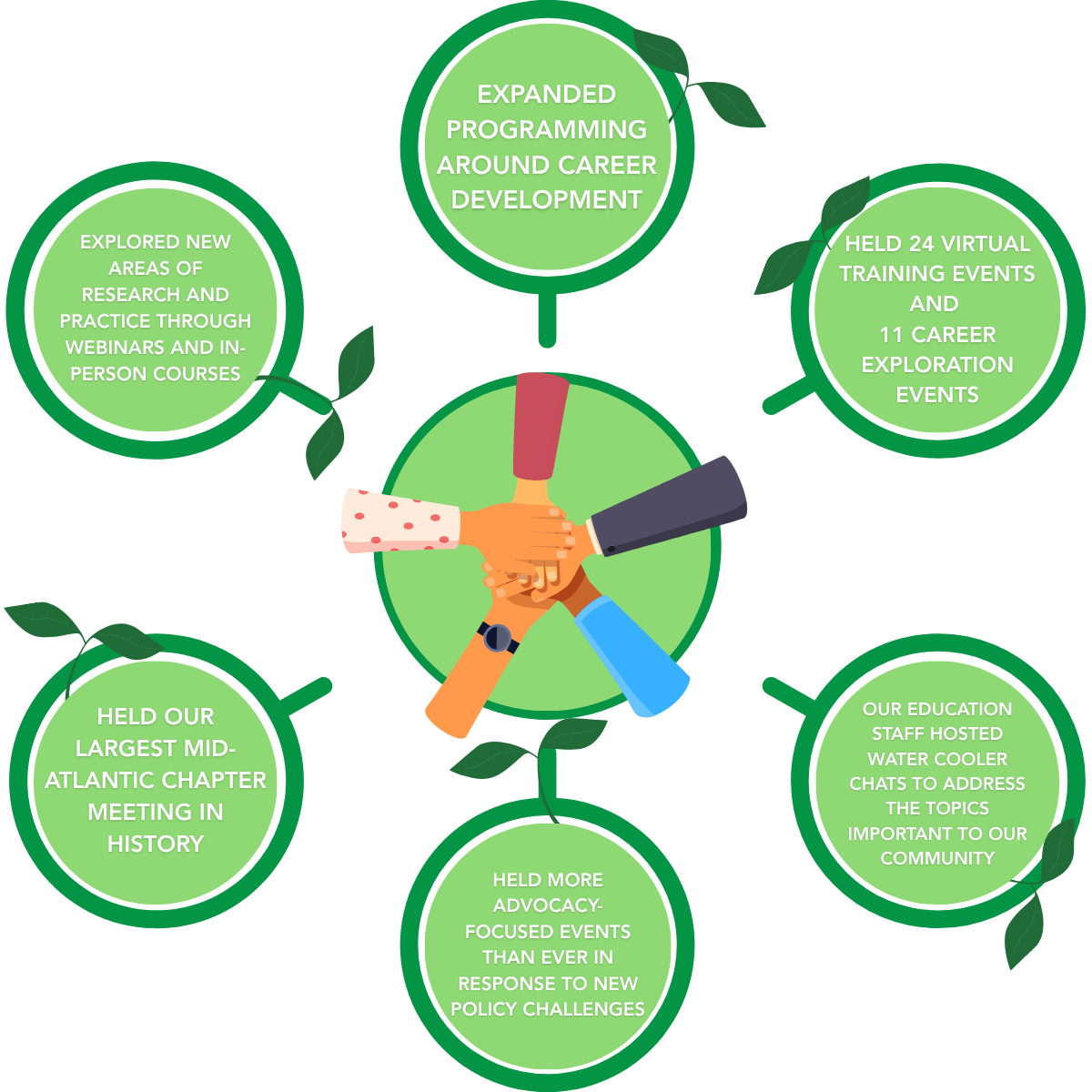
- In response to cuts by the U.S. federal government, we expanded programming around career development and funding for the 2,500 ecologists who joined us in Baltimore for the Annual Meeting.
- We held 24 virtual training events and 11 career exploration events, serving as many as 1,500 attendees. These included contributions from the membership, including a very popular workshop series on quantitative methods produced by the Black Ecologists Section, and regular research webinars by the Asian Ecology Section. The Statistical Ecology Section’s ongoing series with the Ecological Forecasting Initiative continued to support hundreds of scientists eager to work on their quantitative skills.
- Other events explored new areas of research and practice, like nature finance and biodiversity credit markets, through webinars and an in-person course. We also put focus on science communication and environmental humanities in addition to more traditional scientific and technical skills.
- Members responding to the needs of members and supporting the next generation of ecologists resulted in our largest Mid-Atlantic Chapter meeting in history (nearly 200 submitted abstracts).
- In response to new policy challenges, we held more advocacy-focused events than ever. For example, we welcomed the recipients of our 2025 Graduate Student Policy Award to ESA Headquarters in Washington DC to prep for a busy day on Capitol Hill, where they explained the importance of research funding and scientifically sound policy.
- Water cooler chats hosted by our education staff covered topics ranging from applications of the 4DEE Framework, to teaching at community colleges, to meeting the challenges posed by new government policies.
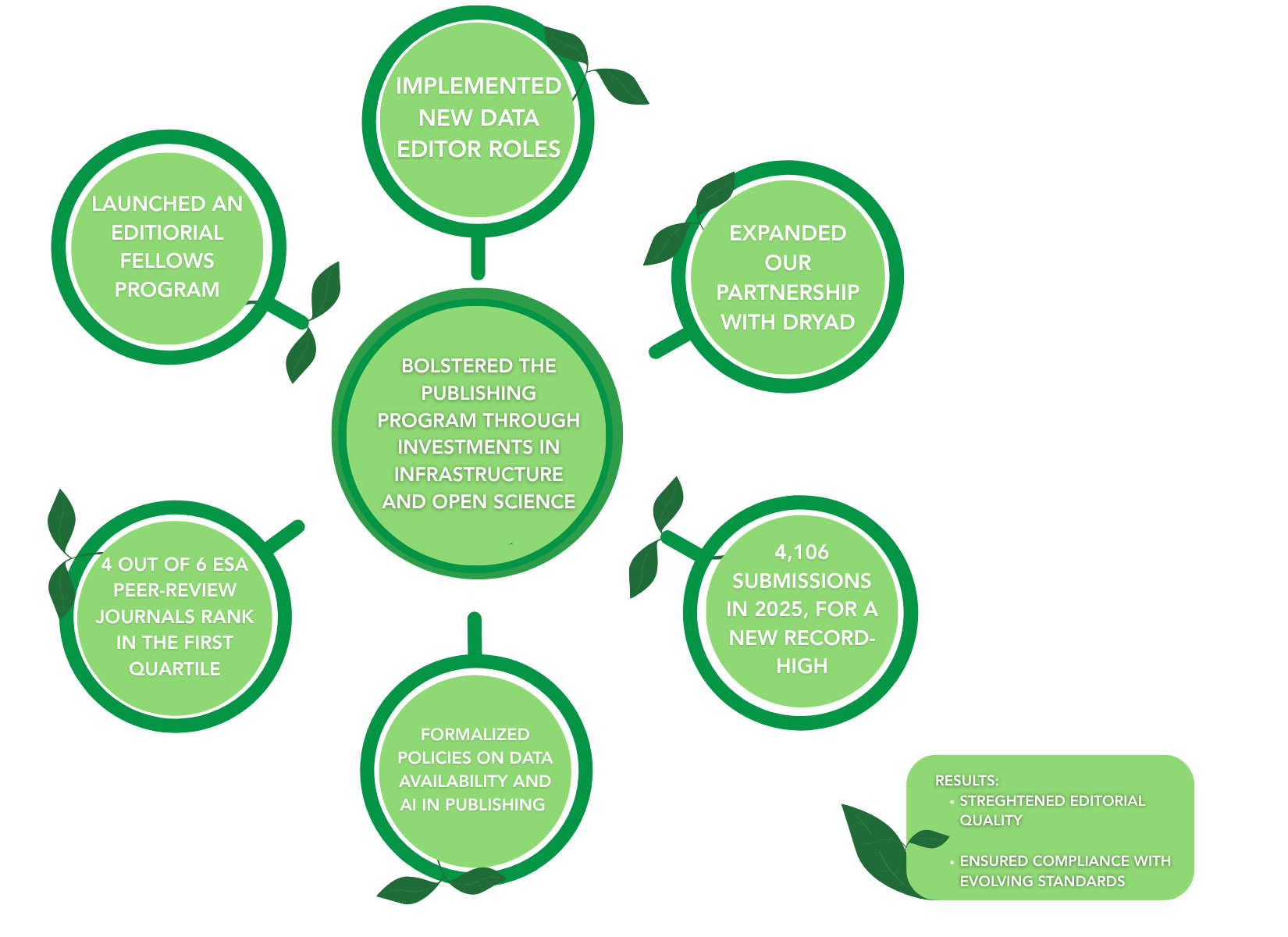
- We bolstered the publishing program through investments in infrastructure and open science. We implemented new data editor roles, launched an Editorial Fellows program, expanded our partnership with Dryad for data publication across the journal portfolio, and formalized policies on data availability and artificial intelligence in publishing. These actions strengthened editorial quality and ensured compliance with evolving standards while managing increased submission volume.
A Healthy, Stable Society
“Operational excellence” is an important priority for ESA, and you may have noticed the emphasis we have placed on sound governance and business management in recent years. In particular, one of the changes I have seen pay dividends is strengthening the voice of the sections and chapters through re-imagining of the ESA Council, and their inclusion in Governing Board meetings. This relatively new structure not only provides a more direct voice for members in Governing Board issues, but also provides a clearer pathway into a variety of ESA leadership positions. We seek to be responsible stewards through transparency, participatory leadership and relevant, meaningful engagement with our members.
Having initiated and nurtured many of these governance improvements, former ESA Executive Director Catherine O’Riordan also retired in 2025. Catherine joined us in 2018 and helped us navigate the challenges of the COVID pandemic in 2020 and 2021 while keeping us oriented toward a desired future state where all ecologists could find professional satisfaction with ESA. Catherine left us in a sound financial position, with new, growing programs and refined processes that will continue to serve us into the future.
Highlights:
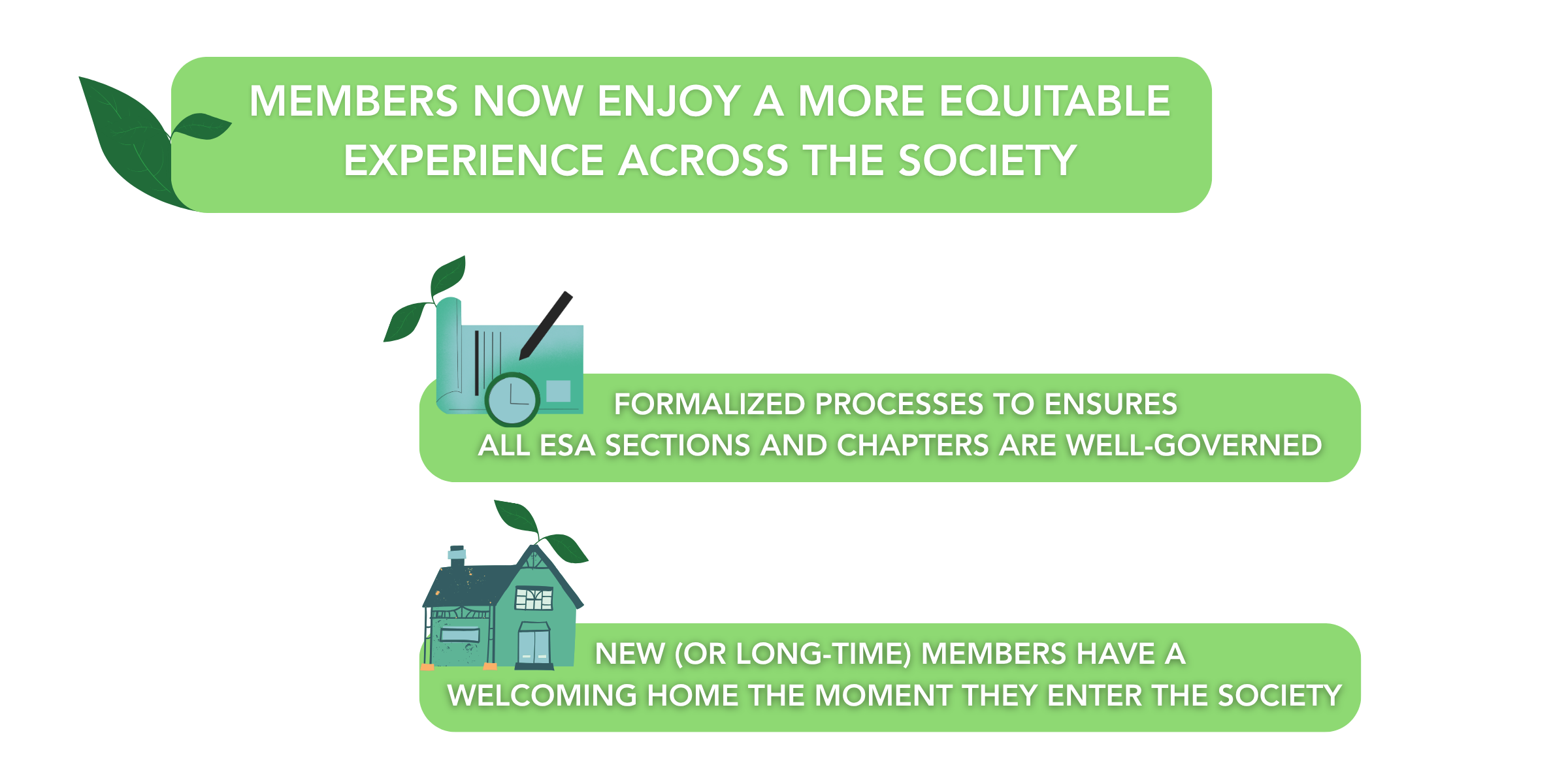
- Members now enjoy a more equitable experience across the Society; the ESA Council formalized processes that ensure every section and chapter meets minimum levels of activity every year, and is well-governed with clear roles for volunteer leaders. This change is important because the sections and chapters provide a gateway to the Society as a whole, and we want to ensure that any new (or long-time!) member has a welcoming home the moment they walk in the door.
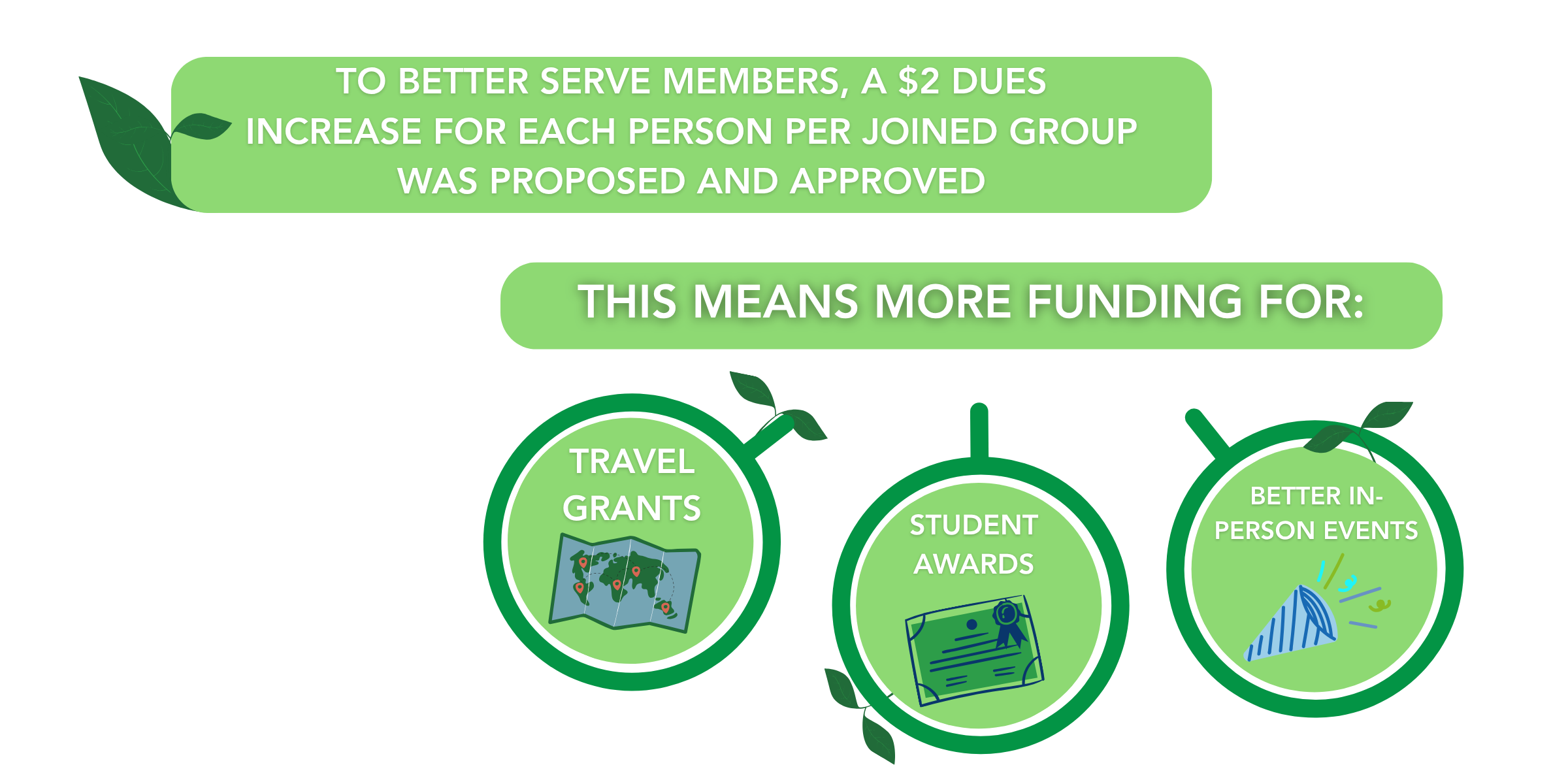
- And to help the sections and chapters better serve their members, the Council requested and the Governing Board approved raising the dues of each regular member by $2 per group they join. This means more travel grants, more student awards, and better in-person events.
- The Governing Board approved a change to our Bylaws to permit officers of the Society to be elected by a single slate, which allows the Governing Board to seek and rigorously vet candidates who best align with ESA strategic priorities. This change reflects a growing trend in professional societies’ selection of officers.
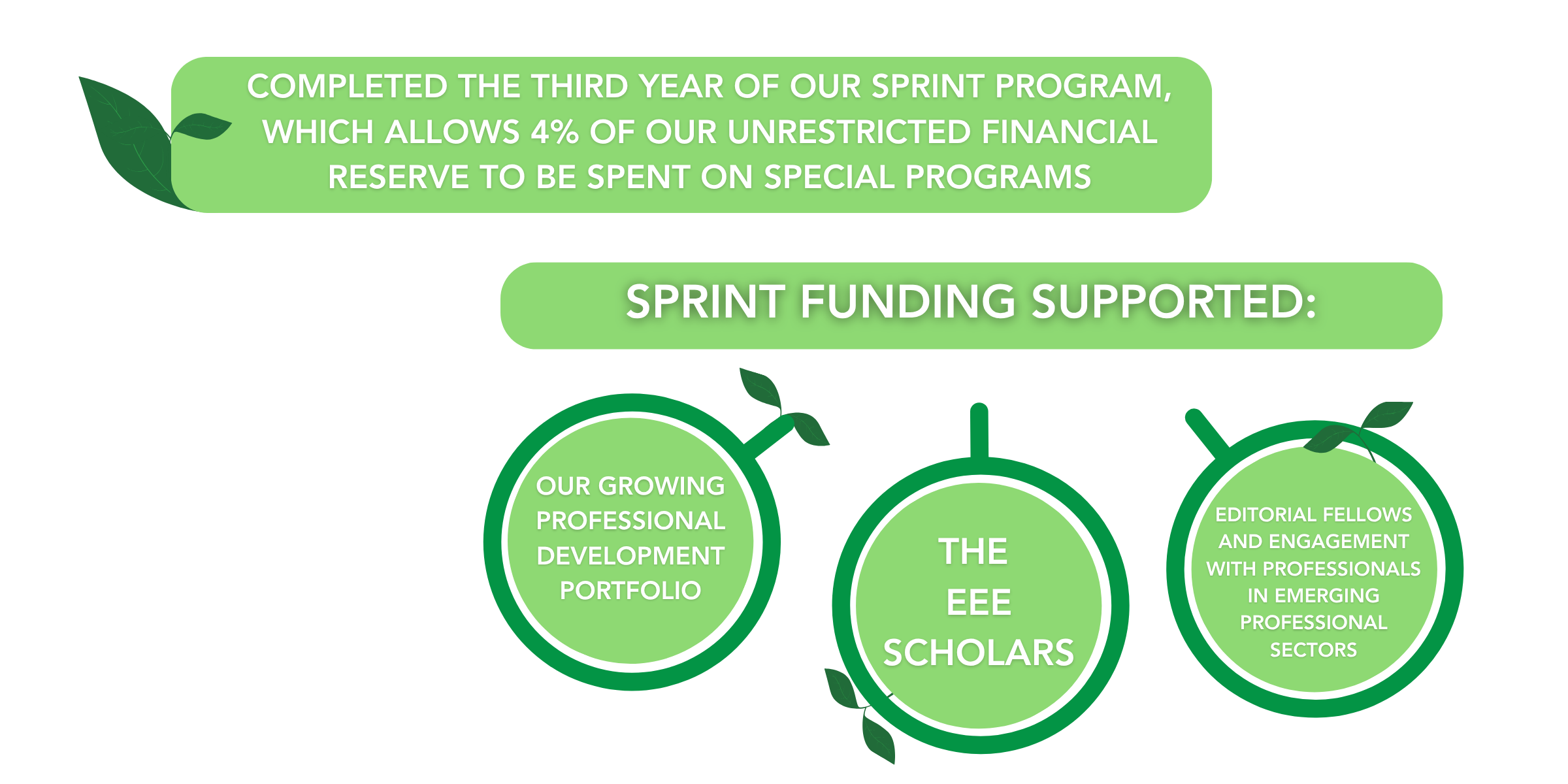
- We completed the third year of our SPRINT program, which allows 4% of our unrestricted financial reserve to be spent on special projects, with an emphasis on revenue generation. SPRINT funding supported the EEE Scholars, our growing professional development portfolio, the editorial fellows and engagement with professionals in emerging professional sectors.
- And we have been able to keep programs healthy despite losses in grant dollars: 2025 broke every previously existing fundraising record, with more than $300,000 raised, providing critical support to our programs.
Click images to view full size