
Canada under the influence of oil

Grave consequences for ecology, democracy, and environmental protection   This post contributed by Sean Hoban, a post-doc in conservation biology at the University of Ferrara, Italy The past year has seen some forward-thinking environmental policies in the US: pro-science budgets, automobile fuel efficiency standards, coal power plant and fracking regulations, a recent (though rough) climate commitment, and rejection (for now)…
Read More

Court upholds EPA climate rules

This post contributed by Terence Houston, ESA Science Policy Analyst  During a week of landmark (some might call “supreme”) judicial rulings at the federal level on issues concerning immigration and healthcare, another pivotal ruling was issued from the U.S. Court of Appeals for the District of Columbia Circuit that gave legitimacy to the Environmental Protection Agency’s (EPA) authority to regulate…

Read More

A marketplace for nature’s services

In the Willamette River watershed, an experiment in ecosystem economics is underway. Map of the Willamette River Basin; Temperature Effects of Point Sources, Riparian Shading, and Dam Operations on the Willamette River. Credit, Oregon Water Science Center, USGS. “What we want to do,” said Bobby Cochran, “Is take the money that we’re spending now and redirect it the way nature…

Read More

ESA Policy News: June 22

Here are some highlights from the latest ESA Policy News by Science Policy Analyst Terence Houston.  Read the full Policy News here. APPROPRIATIONS: HOUSE COMMITTEE MOVES AGRICULTURE, INTERIOR SPENDING BILLS  This month, the House Appropriations Committee has continued work on its Fiscal Year (FY) 2013 spending bills. Most recently, it has released legislation funding environmental and agricultural federal programs. On June…

Read More

Scientists discuss federal role in hydraulic fracturing research

This post contributed by Terence Houston, ESA science policy analyst   The issue of hydraulic fracturing, a fairly new energy production method, has spurred intense debate, in part due unfamiliarity with the overall process. Recently on Capitol Hill, a group of federal scientists discussed their research in an attempt to inform the ongoing policy debate by Republicans and Democrats in Congress….

Read More

Hidden Treasures

By Nadine Lymn, ESA director of public affairs Imagine you get up one morning and go outside to fetch your paper.  As you reach to pick it up, a strange spider bites you. Your neighbor is bitten too.  Now you’re both dying because no one can identify these spiders and therefore can’t administer anti-venom that might save you.  This was…

Read More

ESA Policy News: June 8

Here are some highlights from the latest ESA Policy News by Science Policy Analyst Terence Houston.  Read the full Policy News here. APPROPRIATIONS: HOUSE PASSES ENERGY AND WATER SPENDING BILL  On June 6, the U.S. House of Representatives passed H.R. 5325, the Energy and Water Appropriations Act for Fiscal Year (FY) 2013. The bill funds the Department of Energy, U.S. Army…

Read More

ESA2012 invitation to bloggers

Dear ecological bloggers, We know that there are many of you out there in the broader ecological community, blogging your impressions of ecology’s intellectual ecosystem. Are you planning to blog ESA’s annual meeting in Portland, Ore. this August? We would like to gather your varied commentary on the research, workshops, field trips, and symposia presented at #ESA2012. To create a…

Read More
landsat5 equipment failures

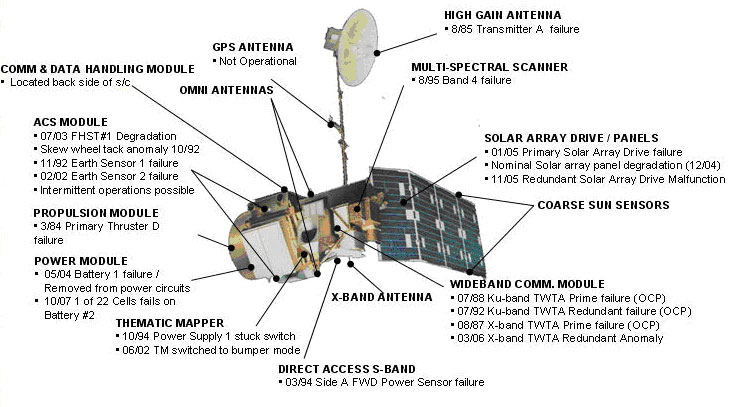
Landsat 5 update: Thematic Mapper incommunicado

End of routine acquisitions for the Thematic Mapper, secondary sensor is still sending data. [update, March 2014: the Landsat 8 mission launched successfully last year and the new satellite is sending great data back home. USGS decommissioned Landsat 5 in 2013.] By Liza Lester, ESA communications officer. The US Geological Survey’s Landsat 5 Thematic Mapper has been a faithful friend…

Read More

The American alligator and its importance to the Florida Everglades

This post contributed by Terence Houston, ESA Science Policy Analyst Critics of the Endangered Species Act have sought to brand it as unsuccessful saying that only one percent of species listed have fully recovered and been delisted since it was first enacted. In response, the Center for Biological Diversity (CBD) released a report entitled “On Time, On Target: How the…

Read More

How to encourage us to conserve energy

By Nadine Lymn, ESA director of public affairs Many of us recognize that a large part of the solution to environmental problems lies in getting people to change their behavior.  Unfortunately, altering the habits of the human animal can be especially challenging—we are intelligent but we can also be irrational and our age-old tendency to focus on immediate needs frequently…

Read More

Social immunity of bees

by Liza Lester, ESA communications officer A honey bee (Apis mellifera) afflicted with Varroa destructor, a parasitic mite that sucks away its vital, blood-like hemolymph, often passing along viruses in the process, and leaving open wounds. The mite spreads by bee-to-bee contact, accelerated by yearly circuits of agricultural bee broods transported to pollinate almonds and blueberries and other crops. Varroa…

Read More