
ESA2012 invitation to bloggers

Dear ecological bloggers, We know that there are many of you out there in the broader ecological community, blogging your impressions of ecology’s intellectual ecosystem. Are you planning to blog ESA’s annual meeting in Portland, Ore. this August? We would like to gather your varied commentary on the research, workshops, field trips, and symposia presented at #ESA2012. To create a…
Read More
landsat5 equipment failures

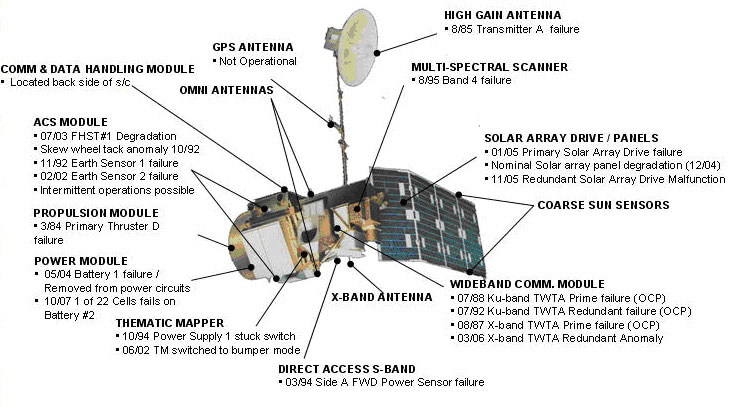
Landsat 5 update: Thematic Mapper incommunicado

End of routine acquisitions for the Thematic Mapper, secondary sensor is still sending data. [update, March 2014: the Landsat 8 mission launched successfully last year and the new satellite is sending great data back home. USGS decommissioned Landsat 5 in 2013.] By Liza Lester, ESA communications officer. The US Geological Survey’s Landsat 5 Thematic Mapper has been a faithful friend…

Read More

The American alligator and its importance to the Florida Everglades

This post contributed by Terence Houston, ESA Science Policy Analyst Critics of the Endangered Species Act have sought to brand it as unsuccessful saying that only one percent of species listed have fully recovered and been delisted since it was first enacted. In response, the Center for Biological Diversity (CBD) released a report entitled “On Time, On Target: How the…

Read More

How to encourage us to conserve energy

By Nadine Lymn, ESA director of public affairs Many of us recognize that a large part of the solution to environmental problems lies in getting people to change their behavior.  Unfortunately, altering the habits of the human animal can be especially challenging—we are intelligent but we can also be irrational and our age-old tendency to focus on immediate needs frequently…

Read More

Social immunity of bees

by Liza Lester, ESA communications officer A honey bee (Apis mellifera) afflicted with Varroa destructor, a parasitic mite that sucks away its vital, blood-like hemolymph, often passing along viruses in the process, and leaving open wounds. The mite spreads by bee-to-bee contact, accelerated by yearly circuits of agricultural bee broods transported to pollinate almonds and blueberries and other crops. Varroa…

Read More

Fed announces new summer job program for youth

 As part of a federal government initiative to create summer jobs for youth, the Department of Interior (DOI) recently announced a new competitive grant initiative to hire 20,000 young adults, ages 15-25 for summer jobs on public lands. In an attempt to expand work opportunities for young people, federal agencies have joined together in implementing Summer+, a program that calls…

Read More

ESA Policy News: May 18

Here are some highlights from the latest ESA Policy News by Science Policy Analyst Terence Houston.  Read the full Policy News here. APPROPRIATIONS: HOUSE CJS BILL CUTS NOAA, RESEARCH INITIATIVES On May 10, the House passed H.R. 5326, the Commerce, Justice and Science (CJS) Appropriations Act for Fiscal Year 2013, which includes funding for the National Science Foundation (NSF) and the…

Read More

Showcasing science on Capitol Hill

By Nadine Lymn, ESA Director of Public Affairs Last night was the 18th consecutive year that researchers and policymakers came together over finger food and beverages to talk about the science and education projects funded by the National Science Foundation (NSF).  “STEM Research and Education: Underpinning American Innovation” is sponsored by the Coalition for National Science Funding.  Its goal is…

Read More

Animal Jurisprudence

AFTER co-authoring a 2005 paper imagining “Re-wilding North America” with giant Bolson tortoises, camels, horses, cheetahs, elephants and lions, Harry Greene received a lot of hate mail. Corresponding ecologists hated the idea of deliberate transcontinental introductions of any kind.

Read More

Renewal after catastrophe

By Nadine Lymn, ESA Director of Public Affairs Extreme events such as the eruption of Mount St. Helens and the severe fires in Yellowstone National Park initially seemed to have left behind wastelands.  Yet ecologists and other researchers discovered that in both cases, plants and other life rebounded much more quickly than anticipated.  Now a new study of sandy beaches…

Read More
Raphael, School of Athens

Science Democracy

Is science the foundation of democracy? DICK Taverne is a career politician, currently a member of the British House of Lords, and champion of science in public life (married, perhaps not incidentally, to a microbiologist for over fifty years).  In a lecture at the Royal Society of Medicine in London last week, he explained why he believes “science has made…

Read More

ESA Policy News: May 4

Here are some highlights from the latest ESA Policy News by Science Policy Analyst Terence Houston.  Read the full Policy News here. SENATE: APPROPRIATORS APPROVE ENERGY AND WATER, AGRICULTURE SPENDING BILLS The week of April 26, the Senate Appropriations Committee marked up its Energy and Water Development and Agriculture Appropriations bills for Fiscal Year (FY) 2013. Energy and Water The Energy…

Read More