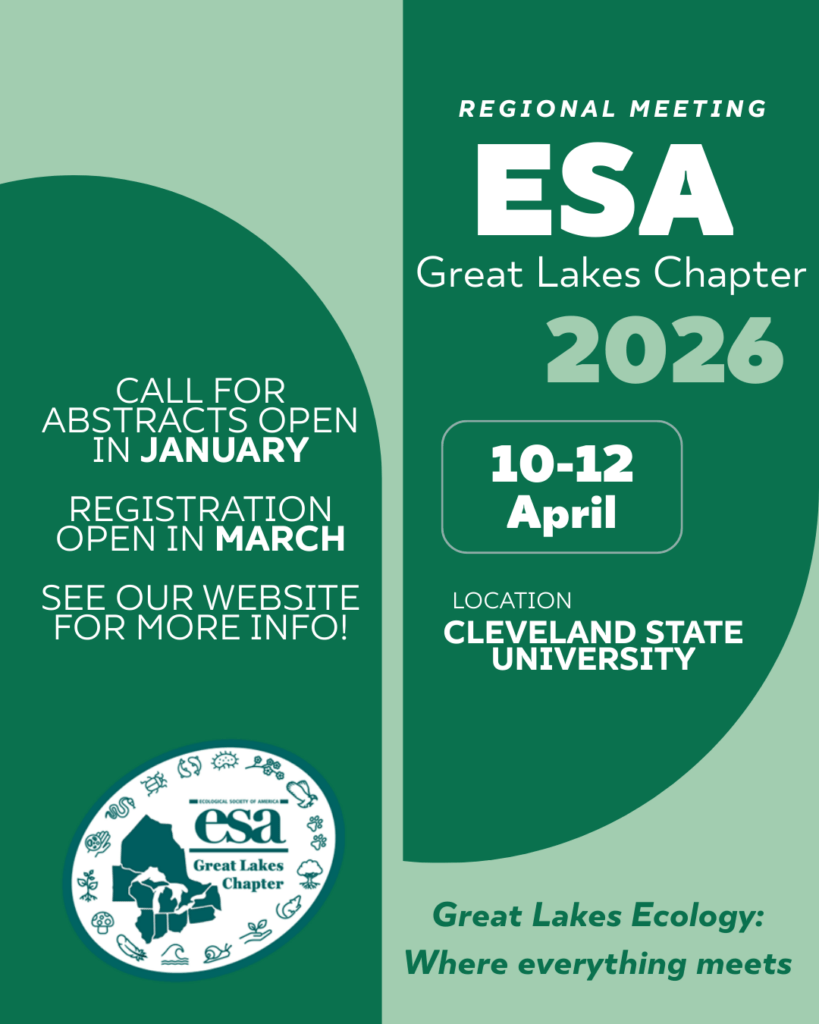
2026 Regional Meeting

Meeting Schedule
April 10-12, 2026
The Great Lakes/Midwest regional chapter meeting will bring together students, researchers, educators and practitioners from the region. The meeting offers an excellent opportunity for both undergraduate and graduate ecology students to present their research in all ecology-related topics, and for professionals to network with regional colleagues, potential employers and/or employees. All those studying, teaching and practicing ecology are welcome!
Keynote Speech
At the Crossroads: A Holocene Perspective on Environmental Change, Climate, and Culture in the Great Lakes Region
Albert E. Fulton II
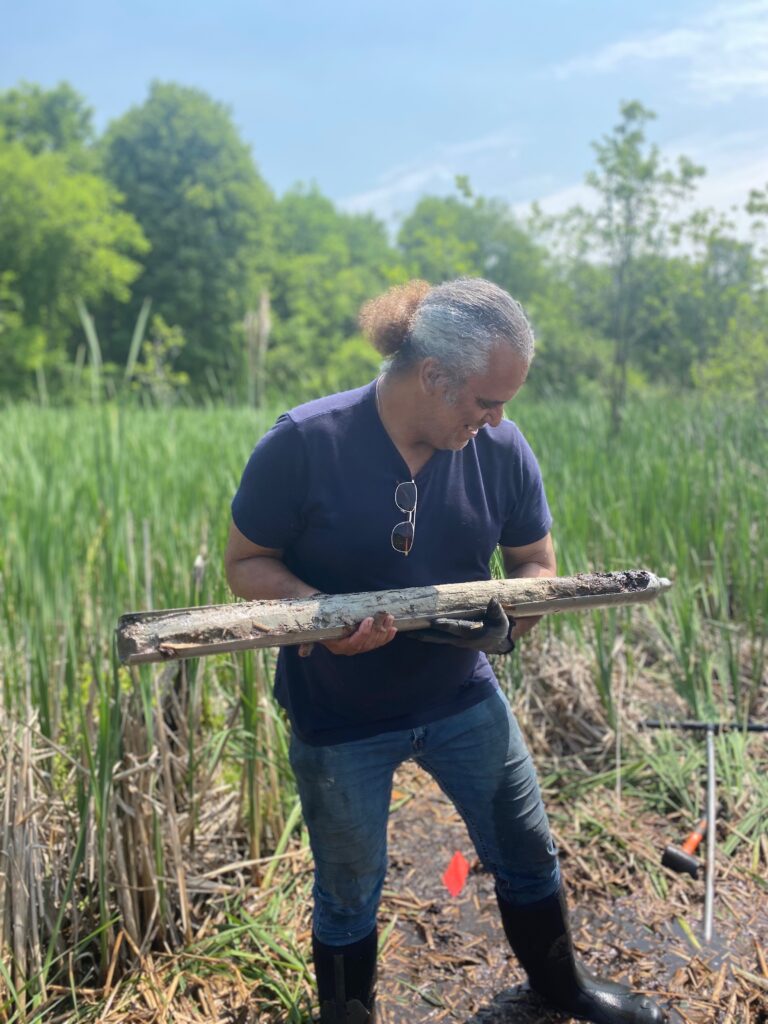
Albert Fulton, Ph.D. is an assistant professor in the Department of Anthropology and an affiliate faculty member in the Department of Environment and Sustainability at the University at Buffalo (SUNY). He runs the Quaternary Paleoecology and Pollen Analysis Laboratory (QPPAL) where he conducts research on paleoenvironmental change within the Great Lakes and Northeast regions of North America over the last 20,000 years. Dr. Fulton’s primary research interest centers on reconstructing the dynamic impacts of Holocene climate change and humans on the region’s natural and cultural landscapes. He holds a Ph.D. in Geography with a specialization in Quaternary paleoecology from Michigan State University (2019) and was the recipient of a National Science Foundation Doctoral Dissertation Improvement Grant for his Ph.D. research on past human impacts on the vegetation of Upstate New York. He has published research in journals including Annals of the American Association of Geographers, Quaternary Research, Vegetation History and Archaeobotany, The Holocene, and Transactions of the American Philosophical Society.
Abstract Submission
The theme of the Great Lakes Regional Conference is Great Lakes Ecology: Where Everything Meets. We welcome submissions on all research in, and applications of, ecology, including allied sciences. Students, practitioners and educators are strongly encouraged to submit to share their work. All we ask is that the submissions be written in clear English and show either quantitative or qualitative results.
Note that, due to space and time constraints, we may not be able to honor all preferences for a presentation format (talk or poster), though we will do our best.
Student submissions will be automatically included in consideration for our awards – including best undergraduate student talk, best undergraduate student poster, best graduate student talk and best graduate student poster.
Abstract submission closed on Tuesday, March 10, 2026.
Hotel Block
A block of rooms have been reserved at the Cleveland Crown Plaza at a rate of $137 per night. Please make your reservations online at CSU Great Lakes. Reservations must be made by March 20th for the preferred rate.
Other nearby hotes are available here.
Registration
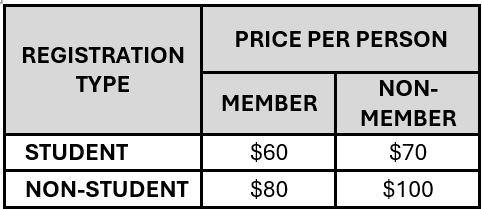
Tabletop Exhibit $500
Display and promote your products, services, technology, equipment and literature on Saturday, April 11th at Cleveland State University. $500 includes a tabletop display on Saturday and 1 full registration that includes the Friday evening social, Saturday program, morning refreshments, lunch and the Sunday field trip.
Book Share
NEW for 2026 – an expanded book exchange table!!If you have ecology related books that you are ready to let go of and would love to see them go to a good home, bring them to our regional meeting! We’ll have a free exchange table that anyone can drop off or pick up books from. *If any of your books are left at the end of the day, please take them home with you!
Awards Sponsor $500
Be recognized as the Awards Sponsor at the Keynote Address on Saturday. This sponsorship supports the presentation winner selected from submissions received on all research and applications of ecology and show quantitative and qualitative results.