ESA Student Section Awardees
2026 Awardees
Trailblazing Diversity and Inclusion
Manish Sarkar, Case Western Reserve University
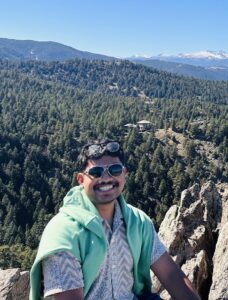
Manish Sarkar a fourth-year Ph.D. candidate in Dr. Karen Abbott’s lab at Case Western Reserve University. As a theoretical ecologist, he uses mathematical and computational models to investigate ecological questions and better understand the mechanisms that shape natural systems. His dissertation research is broadly on understanding competition and facilitation-mediated coexistence in ecological communities. Beyond research, he is passionate about education, mentorship, and making STEM fields more accessible and inclusive. He strongly believes that scientific progress is strengthened by diversity of backgrounds, perspectives, and experiences. He enjoys mentoring students, communicating complex ideas in approachable ways, and encouraging others to see that science can be both meaningful and accessible. Professionally, he hopes to continue working at the intersection of quantitative modeling and impactful problem-solving, whether in academia, industry, or interdisciplinary research environments. Outside of work, he enjoys learning new skills, traveling, and engaging in conversations that connect science with society.
Trailblazing Community & Outreach
Sarah Delgado, University of Houston-Clear Lake
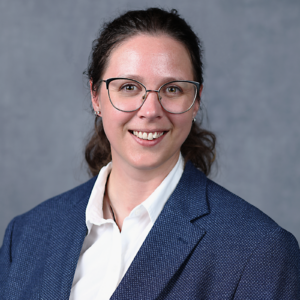
Sarah is an Environmental Science student at the University of Houston–Clear Lake specializing in geology and geospatial analysis. Her work focuses on combining environmental research, remote sensing, and science communication to make complex Earth science topics more accessible and engaging to broader audiences.
Her current research centers on land use change, forest stability, and ecological resilience in the central Brazilian Amazon using satellite-based analysis and field observations. Through this work, she has explored how remote sensing can be used to better understand environmental disturbance, vegetation recovery, and long-term landscape change.
Outside of research, she is deeply involved in science outreach and media-based education. She runs the educational platform “Geology in 5″ on youtube where she creates accessible Earth and environmental science content focused on geology, planetary science, and environmental systems. She has also authored 3 books with Rocky the Rock goes on an Adventure being her favourite – a picture book that blends adventure, friendship, and geology for children. Her goal is to bridge the gap between scientific research and public understanding through storytelling, visual communication, and digital media.
As an undergraduate, she hopes to continue expanding both her research and communication work while pursuing opportunities that allow her to contribute to environmental science, education, and public outreach in meaningful ways.
Trailblazing Ecology Publication Award
Qianru Liao, University of Maryland, College Park
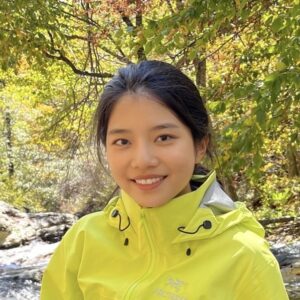
Qianru Liao is a spatial ecologist and Ph.D. candidate in the Marine Estuarine and Environmental Sciences Graduate Program and the Department of Biology at the University of Maryland, College Park, working with Dr. William F. Fagan. Trained at the interface of geography and biology, she integrates movement ecology, remote sensing, and quantitative modeling to understand how environmental change shapes animal movement, connectivity, and ecological dynamics across landscapes.
Using Arctic barren-ground caribou as a model system, she examines how dynamic landscape features, including melting lake ice, seasonal barriers, and shifting landscape permeability, shape animal movement, migration, and functional connectivity across scales.
Her first-author and corresponding-author paper in Global Change Biology, “Dynamic Lake Ice Conditions Shape Caribou Water-Crossing Behavior in the Arctic,” integrates 20 years of GPS tracking data from 406 adult caribou with daily MODIS satellite observations to examine how changing lake ice conditions influence migratory water-crossing decisions. This work identifies a quantitative behavioral threshold during spring melt and introduces the Albedo Percentile Rank, a satellite-based metric for comparing ice-melt progression across years. It demonstrates that lake ice can act as a seasonal behavioral filter, shaping when and where caribou move across Arctic landscapes.
Across her dissertation, Qianru examines how dynamic landscape features shape Arctic caribou movement decisions, from lake-ice crossing behavior during migration to the structure and reuse of summer movement routes under population decline. Her broader goal is to develop transferable spatial frameworks linking environmental dynamics to animal decision-making and functional connectivity under global change.
Trailblazing Education Award
Jack Sytsma, Kansas State University

Jack Sytsma is an ecologist and educator passionate about connecting students and communities to ecology through research, teaching, and field experiences. He recently completed his PhD in Ecology and Evolutionary Biology at Kansas State University May 2026, where his research focused on local adaptation and drought response in dominant prairie grasses across precipitation gradients in the Great Plains. His work integrates plant physiology, ecological genomics, and restoration ecology to better understand how grassland ecosystems may respond to climate change.
In addition to research, he is deeply committed to ecology education and mentorship. He has taught and developed courses in organismic biology, ornithology, and environmental ecology, with a focus on inquiry-based and experiential learning. Beginning in 2026, he will continue this work as an Assistant Teaching Professor of Biology at Kansas State University.
His broader interests center on making ecology accessible and inclusive through teaching, outreach, and public engagement. He has worked to promote ecological literacy and connect diverse audiences with prairie ecosystems and biodiversity conservation.
Outside of academia, he enjoys birding, prairie restoration, hiking, and sharing the ecological importance of grasslands with others. Through both research and education, he hopes to inspire greater appreciation for ecological systems and support the next generation of scientists and environmental stewards.
Trailblazing Graduate Research Award
Sydney Rae Stephens, Università di Trento
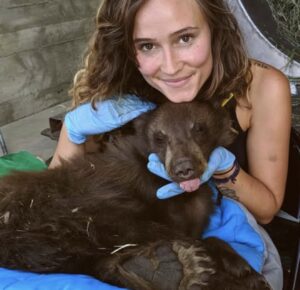
Sydney Stephens is a PhD student in animal ecology at the University of Trento, working in collaboration with WWF, the USGS Interagency Grizzly Bear Study Team, and partners across Europe and North America. Her research focuses on improving ecological models of large carnivore persistence, movement, and coexistence by integrating quantitative ecology with human dimensions, historical landscape change, and cross-regional collaboration.
Her dissertation spans two major systems. In the Greater Yellowstone Ecosystem, she develops spatial survival and state-estimation models for grizzly bears that account for changing behavioral risk states, nonrandom observation, and the effects of management intervention on survival and movement. In the European Alps, she studies brown bear habitat suitability and range expansion by combining animal movement data, ecological covariates, and spatial patterns of human acceptance. This work also incorporates historical records and map-based landscape reconstruction to better understand how past ecological and cultural conditions continue to shape present-day coexistence.
Beyond her dissertation, Sydney continues collaborative work in the red rock deserts of the Utah, where she is helping develop long-term monitoring efforts focused on large mammal dispersal, climate-linked habitat use, and student field training opportunities. Across projects, she is especially interested in building interdisciplinary and data-sharing frameworks that connect ecology with tools and perspectives from other fields.
Sydney holds a bachelors in Wildlife Biology and a masters in Wildlife Conservation and Management. Her background includes field and laboratory research, stable isotope analysis, GIS, camera trapping, and applied conservation work with agencies and nonprofits. She hopes to build a career at the intersection of quantitative ecology, collaborative conservation, and mentorship, producing research that is both scientifically rigorous and directly useful for coexistence in human-shaped landscapes.
Trailblazing Work in Science Policy
Arush Shangari, St. John’s Preparatory School
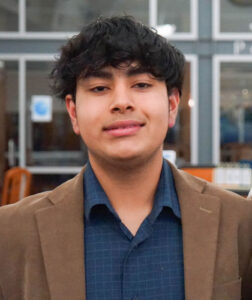
Arush is a student at St. John’s Preparatory School with a strong interest in using artificial intelligence to address real-world environmental challenges. He is especially fascinated by climatetech, meteorology, and how AI can be applied to improve our understanding of natural systems and strengthen community resilience.
His work focuses on developing Project IRIS (Integrated River Intelligence System), an AI-driven tool designed to help communities better understand and respond to flooding risks. Through this project, he has explored how environmental data and machine learning can be used to support more effective water management and decision-making.
He has also collaborated with the Ipswich River Watershed Association, where he has worked on connecting technical modeling with practical applications in environmental monitoring and risk awareness. This experience has strengthened his interest in bridging the gap between scientific research and real-world implementation.
Overall, he is motivated by the idea of using AI for a better world—especially in areas like climate science, meteorology, and environmental protection. His goal is to continue building tools that not only advance technical innovation but also create meaningful, positive impact for communities facing environmental challenges.
Trailblazing Undergraduate Research:
Adrián Y. González Rivera, University of Puerto Rico, Cayey
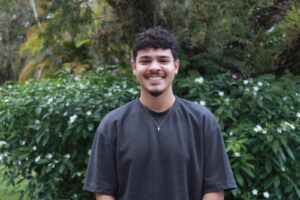
Adrian Gonzalez Rivera is an undergraduate student in Natural Sciences with a concentration in Biology at the University of Puerto Rico at Cayey. He has a strong interest in ecology, biodiversity conservation, and the small organisms that often go unnoticed in nature. Arthropods, especially insects, are the groups that spark the most curiosity in him, although his interests are not limited to them.
Currently, he conducts undergraduate research in the Cáceres Lab under the mentorship of Dr. Rita Cáceres, where his research focuses on how citizen science and academic initiatives contribute to documenting Puerto Rico’s biodiversity through iNaturalist. His work explores how students, professors, and community participation can collectively generate valuable biodiversity data and contribute to ecological knowledge across the island.
He has also developed experience in butterfly husbandry, nursery management, bat monitoring, water quality monitoring, coastal resilience, and bird census efforts. In addition, he works at the Center for Ecological Education at UPR Cayey, supporting environmental education and conservation activities. He is also the founder and president of T.A.I.N.A. SEEDS at UPR Cayey, the ESA SEEDS chapter he helped establish in 2025 and where he will continue serving as president during the 2026–2027 academic year.
During summer 2026, he will participate in the Harvard Forest Summer Research Program in Ecology, where he will work on a salamander ecology sub-project within the “Wildlife Dynamics in Changing Forests” research group. He will also be attending the Ecological Society of America Annual Meeting, where he will share his work and passion for ecology by giving an oral presentation.
He aspires to become an ecologist committed to research, education, and biodiversity conservation. His next goal is to continue developing academically through graduate studies in ecology to further contribute to ecological research and ecosystem conservation.
2025 Awardees
Trailblazing Diversity and Inclusion

Qingyu Gan, University of Wyoming
Qingyu is a third-year Ph.D. student in the Program in Ecology and Evolution at the University of Wyoming. Her research integrates microcosm experiments and theoretical modeling to understand how eco-evolutionary processes shape species range shifts under climate change. By combining experimental and theoretical approaches, she seeks to uncover the mechanisms driving biodiversity responses to rapidly changing environments, to better inform conservation planning.
Beyond her research, she is passionate about making ecology more accessible and inclusive for students from underrepresented backgrounds. Drawing from her own experiences navigating academia, she actively shares research opportunities, funded graduate positions, postdoctoral openings, workshops, volunteer opportunities, and professional resources through a personal social media platform with more than 6,500 followers. She also provides mentorship and guidance to women and queer students pursuing careers in ecology, helping applicants navigate graduate school and other professional opportunities.
To further support community building, she founded the Chinese Women in Ecology Community, which has grown to more than 1,100 members. The community provides a safe and open space for women at all career stages—from students to researchers and practitioners—to ask questions, exchange resources, build professional networks, and support one another in navigating careers in ecology.
Through both her research and outreach, she hopes to advance ecological science while fostering a more supportive and inclusive community for the next generation of ecologists.
Trailblazing Community & Outreach:
Abby Robinson, Boston University
Abby is a PhD Candidate at Boston University advised by Dr. Sean Mullen. Her PhD work leverages field and rearing experiments, chemical ecology, and hierarchical models to understand ecological mechanisms that maintain mimetic phenotypes in natural butterfly populations. Before her PhD, she completed a B.Sc. in Biology and Environmental Science at Creighton University. She is broadly interested in the effects of climate change on spatial and temporal patterns of butterfly occurrence and understanding how we can use citizen science to improve butterfly conservation and promote community engagement in scientific research.
Trailblazing Ecology Publication Award:
Amanda Rawstern, University of Miami
Amanda Rawstern is a 5 th year Biology PhD candidate at the University of Miami mentored by Dr. Michelle Afkhami. Her research brings together integrative approaches from ecology, microbiology, and molecular biology to better understand environmental microbiomes. Her paper recognized for this award is titled “Central Taxa Are Keystone Microbes During Early Succession” published in 2025 in Ecology Letters. This work experimentally demonstrated for the first time that highly connected central taxa within soil microbiome networks are keystone species in their natural environments where they enhance biodiversity, recruit other highly connected taxa, and influence the trajectory of microbiome composition during early succession. In addition to research, Amanda also enjoys organizing outreach experiences for middle school students through the programs BioReach and Science Made Sensible.
Trailblazing Education Award:
Cody Pham
As a first-generation college graduate from a Vietnamese refugee family, Cody’s six years as a wildlife researcher have revolved around core themes of environmental justice and equitable teaching in ecology. Their current projects as a graduate student are focused on 1) working with communities to understand how nature-based community education can facilitate the mental health benefits of urban gardens, 2) illuminating how shifting patterns of inequitable urban green space distribution shapes access to bird diversity and ecosystem services, and 3) developing equitable teaching practices that promote the well-being and success of minoritized students.
Trailblazing Graduate Research Award:
Chloe Yi-Luo Cho, Cornell University
Chloe Yi-Luo Cho is an Entomology Ph.D. candidate in the Poveda Lab at Cornell University. Her research focuses on understanding how local farm management practices and surrounding landscapes impact insects in agricultural ecosystems. More broadly, she is interested in understanding the ecological consequences of changing agricultural practices and how this knowledge can be used to build risk assessment tools for growers and other stakeholders. Outside of research, Chloe enjoys making art and spending time outdoors hiking, trail running, and backpacking.
Trailblazing Work in Science Policy:
Eva Legge, Syracuse University
Eva Legge is a Ph.D. student at Syracuse University in the Department of Biology, a National Science Foundation Graduate Research Fellow, a 2024-2025 Molly Beattie Visiting Scholar with the Society of American Foresters, and recipient of the 2025 Katherine S. McCarter Graduate Student Policy Award (GSPA) with ESA. Her research aims to bridge the gap between basic research on mycorrhizal symbioses and applied forest management for climate change. She is also an avid science communicator, a practice which was inspired by her science writer grandfather. As such, she has published in a number of popular outlets about her research, but also has written about salamanders, aquifers, gardening, women in science, and other living things that thrive under the sun, or in the depths of our oceans. She is also the student coordinator for the Hubbard Brook Research Foundation’s Young Voices of Science program where she mentors other students on science communication, outreach, advocacy and policy. She takes every opportunity to share her research findings with landowners, forest managers and policymakers in order to help us manage our forests to be more resilient to global change. Legge received her B.A. in Biology from Dartmouth College.
Trailblazing Undergraduate Research:
Teo Cooper, Harvard University
Teo Cooper (they/them) is a post-baccalaureate scholar in the Kramer Lab at Harvard University, where they study plant morphology in Aquilegia flowers to investigate adaptive plant-pollinator interactions—particularly pollinator syndromes. Their research focuses on the evolutionary and developmental processes that shape floral traits. Originally from Oakland, California, Teo was inspired by the region’s botanical diversity and hopes to encourage others from nontraditional academic paths to pursue their own scientific passions. Aspiring to earn a PhD in Botany, they are dedicated to both advancing expertise in the field and making scientific knowledge accessible to diverse communities.
2024 Awardees
Trailblazing Diversity and Inclusion:

Evald Maceno, University of Puerto Rico
Evald Maceno, a PhD Candidate in Environmental Science at the University of Puerto Rico studies seasonal and interannual patterns of reproduction in tropical forests in relation to hurricanes, drought, and mast reproduction. His research has three primary objectives: (1) Determine the influence of plant functional traits associated with seasonal timing of flowering and fruiting and (2) Determine the proximate environmental cues that trigger flowering and control timing of reproduction in tropical forests and (3) Assess masting behavior in tropical forests. Each of these objectives will enhance our understanding of the ecology of tropical forest reproduction and its sensitivity to climate change. He works with large data sets gathered from large forest dynamics plots in the tropical regions. He focuses on multi-decadal data sets of tropical tree reproduction, especially 30+ years of phenological records from Luquillo in Puerto Rico, Barro Colorado Island (BCI) and Yasuni in Ecuador. He is testing a few quantitative methods on mast reproduction and conducting cross-sites analyses as an innovative approach in this field. He is currently conducting phenological sampling for a large plant community in Luquillo Experimental Forest in Puerto Rico to contribute to our long-term dataset. Luquillo has spent more than 30 years studying phenology in the forest. Maceno was one of the awardees of the 2023 J&J Ruinen fellow in tropical forestry with ForestGEO. He is a current fellow at Long-Term Ecological Research Program (LTER) and was a recipient of JT Callahan Memorial Student travel award from the Ecological Society of America (ESA) last year. In recognition of his contributions and unwavering dedication in his field he is honored with the student Trailblazing Award.
Trailblazing Community & Outreach:
Abigail Lewis, Virginia Tech
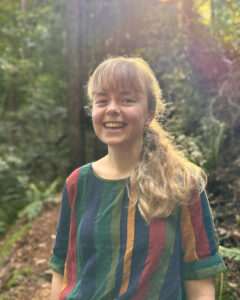
Abigail Lewis is an ecosystem ecologist working to forecast future changes in the biogeochemistry of lakes and wetlands. She received her Ph.D. from Virginia Tech in May 2024 and has recently begun a postdoctoral Climate Change Fellowship at the Smithsonian Environmental Research Center. Abby’s dissertation research assessed the causes and consequences of changing oxygen dynamics in the bottom waters of lakes, with analyses including whole-ecosystem experiments in a single lake and data analysis across >600 lakes worldwide. Her research is made actionable through science outreach over local to global scales. As one notable example, Abby co-led the development of a successful Flipped Science Fair outreach program, where children judged 27 graduate student science fair posters. Her work is supported by fellowships and awards including the National Science Foundation Graduate Research Fellowship Program, the ESA Katherine S. McCarter Graduate Student Policy Award, and the Virginia Tech College of Science Outstanding Doctoral Student Award.
Trailblazing Ecology Publication Award:
Joanna Tang, University of California Santa Barbara
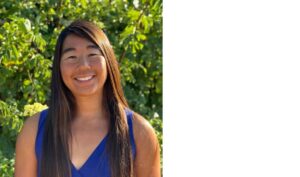
Joanna is finishing her PhD at University of California, Santa Barbara, this summer! She studies habitat restoration under Dr. Carla D’Antonio. Her research uses ecological theory to develop innovative restoration methods, specifically for urban vernal pool wetlands. To this end, she collaborates with local restoration organizations and land managers to develop restoration techniques that can be tested and then implemented directly on local ecosystems. Her research focuses on long-term monitoring and management strategies, and her first paper, “Reinvasion of restored California vernal pools reveals the importance of long-term restoration planning”, was published in Restoration Ecology last year. Her research advances the field of ecology by supporting a paradigm shift away from viewing restoration as a short-term intervention and toward viewing restoration as an ongoing symbiotic relationship between humans and plants. She believes this relationship is for everyone at any age, which is why she includes undergraduate students and community members in her research, started an ESA SEEDS chapter, and also launched a science research podcast called “The Environment of it All”.
Trailblazing Education Award:
Ashmita Das, State University of New York
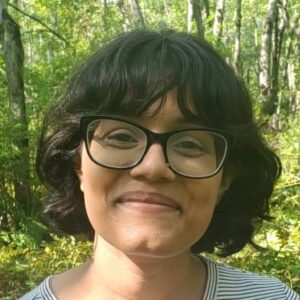
Ashmita Das is a Ph.D. candidate in the Department of Environmental Science at SUNY College of Environmental Science and Forestry (SUNY ESF). Broadly, her research interests revolve around exploring the interrelationships between social and ecological dimensions of sustainable agriculture, including how key stakeholders’ values, worldviews, and epistemologies influence what, where, how, why, and by who particular crops are cultivated. Her current dissertation research, supported by funding from the National Science Foundation, investigates how narratives around the potential complementarity of gene editing tools like CRISPR-Cas9 and the goals of alternative food movements like agroecology are constructed, communicated, and contested by different networks of actors. Ashmita is also interested in ecological pedagogy, especially strategies for incorporating experiential learning and interdisciplinarity into how we communicate about complex environmental issues. One example of how she has worked towards this is by co-designing a freely available board game called “Companion: An Agroecological Adventure”, which aims to teach players about the social and ecological characteristics of sustainable agroecosystems in
an accessible and engaging way. Ashmita holds an M.S. in Environmental Science from SUNY ESF and a B.S. in Environmental Science from SUNY Binghamton. Prior to beginning graduate school, Ashmita also worked as an urban environmental educator at Cornell Cooperative Extension of Onondaga County.
Trailblazing Graduate Research Award:
Anna Crofts, University of Sherbrooke
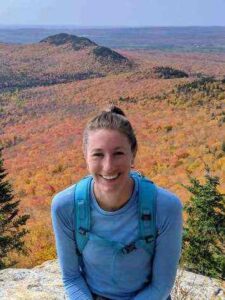
Anna Crofts is a PhD candidate at the University of Sherbrooke, Quebec, Canada. Her research applies imaging spectroscopy to examine the organization and functioning of tree communities in the Northern Temperate forest. She demonstrates that this emerging technology can be used to quantify tree community properties continuously across large spatial extents – opening the door for the broader application of this novel data. Her research then applies imaging spectroscopy data to examine fundamental community ecology questions. Check out her website and ResearchGate
2023 Awardees
Trailblazing Diversity and Inclusion
Marianne Bello, Rio de Janeiro State University

Marianne Bello is a Ph.D. candidate at the State University of El Rio de Janeiro and is being recognized for her Trailblazing Work in Diversity & Inclusion. Her efforts focus on identifying affirmative actions and Brazilian narratives of Black representation in Science. Bello co-created the Odu initiative, a mentoring program that provides emotional and practical support to black studies in science. The initiative also invites communities to reflect on building science with greater diversity, equity, and inclusion. Her current research is focused on understanding the behaviors, vulnerability, and effects of the southern howler monkey, an endangered primate species susceptible to the yellow fever virus using populational techniques. She is currently active on Instagram, LinkedIn, and Twitter.
Trailblazing Community & Outreach
Ellen Danford, Ohio State University

Ellen Danford is our Trailblazing Work in Community Outreach and Science Communication Awardee. She is currently a Master’s Student at Ohio State University. Throughout her research of urban pollinator ecology, she has been able to effectively communicate to different people the science and behavior behind pollinators and how to recognize them in their urban surroundings. In addition, her research on income-based plant communities is pivotal to understanding that plant communities can be a proxy of wealth in cities, an area where greenery is so crucial. Moreover, Ellen is an avid educator, she has sought to teach different stakeholders how to maintain green spaces in cities and how to use that as an instrument for fostering community and education. Ellen is active on LinkedIn and her website.
Trailblazing Ecology Publication Award
Nikunj Goel, University of Texas-Austin

Nikunj Goel is a Ph.D. candidate at the University of Texas-Austin and was awarded our Trailblazing Ecology Publication Award. Throughout his undergraduate studies, Nikunj was able to co-author various publications, allowing him rigorous experience in effectively communicating science. The publication that allowed Nikunj to be recognized for this award is titled Dispersal Limitation and Fire feedbacks maintain mesic savannas in Madagascar (2020). He is socially active on Twitter and you can find his publication here.
Trailblazing Education Award
Taylor Zallek, University of Pittsburg

Taylor Zallek, Ph.D. candidate at the University of Pittsburgh, is recognized for his Trailblazing Work in Education. Taylor’s research is focused on invasion ecology, which is a very misunderstood science from a stakeholder perspective. His work includes contributing a laboratory experience for all ages called Duckweed Survivor, developing curricula for high school students, and co-authoring Open Educational Resource Textbook– a free book that incorporates coding exercises, spotlights different ecologists, and works on environmental justice. Taylor can be found on Twitter.
Trailblazing Graduate Research Award
Arthur Lamounier-Moura, Auburn University

Arthur Lamounier Moura is a Ph.D. candidate at Auburn University, where he focuses on forest species composition in fire-based ecosystems in the southern United States. Arthur’s academic career has spanned almost a decade. Throughout this time, he participated in Science Without Borders, interned at the Museum of Chicago, and completed a Master’s degree at the Federal University of Minas Gerais, among others. He has been awarded our Trailblazing Award on Graduate Research for his research at Auburn University which evaluates the effects of increasing fire frequency on plant communities of the Cerrado biome. He is currently active on Researchgate.
2020 Awardees
Trailblazing Undergraduate Research
Ajisha Alwin, University of Florida

Through her research, she has contributed to the need for research to be done on careers in field research by exploring the alignment between employer expectations and the skills of incoming graduates. And she hopes that the study will serve as a reference for educators, students, and employers by offering insight into the relationship between student skills and employer expectations within the framework of workforce preparation.
“As a student who is undergoing the same process trying to navigate a research career, my aspiration is to research and educate students of the expectations, qualifications, and availability of research opportunities in the field of ecology”
Trailblazing Graduate Research
Mauna Dasari, University of Notre Dame

My research will contribute the first prospective longitudinal data set able to test how gut microbial dynamics vary between individuals and what consequences this variation may have for host development and fitness. This contribution will be significant because it will provide foundational knowledge for understanding what features define healthy microbiomes as well as how these features predict biodemographic markers of host health, including the timing of development, fertility, and survival.
“As a woman in science and women of color underrepresented in ecology and evolution, I have strived to be a relatable role model working to create a more inclusive environment for the next generation of scientists at every level of my community, and beyond”
Trailblazing Ecology Publication
Chuliang Song, Massachusetts Institute of Technology

His publication focuses on Modern Coexistence Theory (MCT) which is a leading theoretical framework for studying the coexistence of competing species.
“We present an overlooked but important property of MCT, along with two key new results and their consequences. The overlooked property is that stabilizing mechanisms (increasing species’ niche differences) and equalizing mechanisms (reducing species’ fitness differences) have two distinct sets of meanings within MCT: one in a two-species context and another in a general multispecies context. We demonstrate that the two-species framework is not a special case of the multispecies one, and therefore these two parallel frameworks must be studied independently”.
Trailblazing Work in Diversity Inclusion
Micah Miles, University of Georgia

“In my diversity and inclusion work, I broadly seek to connect insights and opportunities within ecology and scientific community at large to the marginalized communities that have been systematically underserved. From fine-scale engagement with youth and local community members to science communication content creation and dissemination on widely accessible social media platforms, I strive to develop and deliver the kind of inclusive ecological outreach that might inspire the next generation of environmental stewards. To this end, my work ultimately supports the impact of ecological research, by navigating through the paywalls and jargon of publications, to stimulate interest in and appreciation for the field of ecology across a wider and more diverse spectrum of potential future-ecologists”
Trailblazing Work in Science Communication
Mia Howard, Cornell University

Her main outreach activity has been a distance-learning science education program that she created for people incarcerated in prisons across the United States through the Prisoner Express Program at Durland Alternatives Library.
“While science communication is a useful skill in and of itself, I think that actually being able to share students’ writing with an audience that is hungry to learn about science is not only great motivation for students but also teaches them the importance of scientific outreach, especially with nontraditional audiences”.
Trailblazing Work in Education
Kabryn Mattison, Appalachian State University

Her most recent work in the field of Ecology Education is investigating eco-grief within learning environments, and advocating for structural changes within my university, community, and eventually the ecological field as a whole.
“I want to use my voice to open up the conversation around mental health in STEM and the impacts of eco-grief on working scientists and students alike. I am unafraid of sharing my work and experiences vulnerably in order to better support those who may not be able to speak about their experiences for various structural and personal reasons. Through my own personal experiences navigating eco-grief felt due to ecological education and work within the Anthropocene, I hope to shed a much-needed light on an issue currently hidden in the darkness of taboo and shame”