2025 Candidate Denis Valle
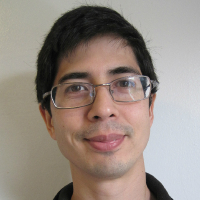 Denis Valle (CV)
Associate Professor
University of Florida
Candidate for: Member of the Governing Board
I have a BS degree in Forestry from the University of Sao Paulo (Brazil), a MS in Forestry from the University of Florida (UF; USA), and a MS in statistics and PhD in Ecology from Duke University (USA). I am currently an associate professor at the School of Forest, Fisheries, and Geomatics Sciences at UF. My work is focused on developing and using novel quantitative methods to applied ecological problems and questions. In terms of volunteer and leadership positions within UF, I have been a member of the Tropical Conservation and Development Steering Committee and a mentor at the University Minority Mentor Program. Within ESA, I was vice-chair (2019-2020) and then chair (2021-2023) of ESA’s Statistical Ecology section. Finally, I have been a Guardian ad Litem volunteer in Alachua county, helping to look after and protect the interests of children in the foster care system.
What interests, experience or skills would you bring to this position?
I believe that my experience leading a highly successful initiative through the Statistical Ecology section (i.e., a webinar series) can be useful in helping ESA increase its outreach, potentially leading to greater membership. Similarly, my experience with different scientific journals as an author, reviewer, and editorial board member, might be useful in helping to improve ESA’s publications. Finally, I am originally from Brazil and most of my work is focused on Latin America. For this reason, I think that I can help bring perspectives from this region to ESA, ultimately helping ESA better reach and serve Latin American students, researchers, and working professionals.
How would you support ESA’s mission, including the career aspirations and full inclusion of all ecologists?
I believe that, to support ecologists throughout their careers, it is critical for ESA to better identify the needs of the community and explore non-traditional strategies to address these needs. Examples of potential approaches/strategies include providing more online resources (e.g., webinars) and promoting smaller regional workshops and conferences that enable greater interaction between participants. In particular, I believe that an important task for ESA is to develop resources that will be useful for a wide range of ecologists, particularly those outside academia and those from outside the United States. For example, while ESA’s journals do a great job in advancing the science of ecology, I think that ESA’s journals could be improved in terms of their accessibility, the fostering of the practice of ecology, and the support that these journals provide for the career aspirations of ecologists.