2025 Candidate Serita Frey
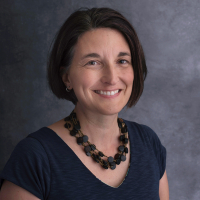 Serita Frey (CV)
Professor
University of New Hampshire
Candidate for: ESA Vice President for Finance
Serita Frey is a microbial ecologist with over 30 years of experience studying microbes in the environment. She received her Ph.D. in Ecology from Colorado State University and is currently a professor in the Department of Natural Resources and the Environment at the University of New Hampshire where she where she is Co-Director of the Center for Soil Biogeochemistry and Microbial Ecology (Soil BioME). Her research examines how environmental change is altering the structure and function of forest ecosystems, with an emphasis on soil microbial communities and nutrient cycling processes. She is specifically interested in how anthropogenic stressors (e.g., climate change, nitrogen deposition, invasive species) affect the composition and diversity of soil microbial communities and microbial-mediated carbon and nitrogen cycles. Her research group works at the interface between ecosystem science, microbial ecology and global change biology, combining microbiological and -omics tools with stable isotope analysis and a variety of soil physical and chemical approaches to examine structure-function linkages. Her research team maintains five long-term global change experiments at the Harvard Forest Long-term Ecological Research site. She works with modelers to link across scales from genomes to the globe by incorporating microbial genomic, physiological, community, and ecosystem-scale processes into Earth system models. Dr. Frey is a Fellow of the American Association for the Advancement of Science and the Ecological Society of America. Awards include Eminent Ecologist (Kellogg Biological Station), Pettingill Endowed Lectureship in Natural History (University of Michigan Biological Station), Distinguished Ecologist Alumna (Colorado State University), Associate Professor of the Year (UNH), a Bullard Fellowship (Harvard University), and a National Science Foundation Early Career Development Award. She currently sit on the boards of two non-profit organizations and has chaired the Conservation Commission in her town for the past ~17 years. For more information: https://colsa.unh.edu/soil-biome
How would you support ESA’s mission, including the career aspirations and full inclusion of all ecologists?
ESA has been my professional home for nearly 30 years, and I’ve been actively engaged throughout—from serving on the Board of Editors for Ecology and Ecological Monographs, to leading as Editor-in-Chief of Issues in Ecology. I’ve contributed to awards committees, organized symposia, judged student presentations, and served on the Fellows Selection Subcommittee. As a professor and research scientist, advancing inclusion in ecology is central to my work. I bring the perspective of a woman in STEM and a first-generation college student from a rural, working-class background. These experiences shape my commitment to creating inclusive learning and research environments. I redesigned my teaching to support diverse learning styles and co-developed a course on anti-racism in science, guiding students in exploring systemic racism in STEM. Beyond the classroom, I advise many first-generation undergraduates and have mentored students in programs like the Harvard Forest Summer Research Program in Ecology. At the institutional level, I chaired the first DEIJ committee in my college, where we assessed climate, developed an action plan, and collaborated on a university land acknowledgment statement. I will bring this perspective, experience, and deep commitment to ESA’s Governing Board to help ensure the full inclusion and success of all ecologists.