

Biography
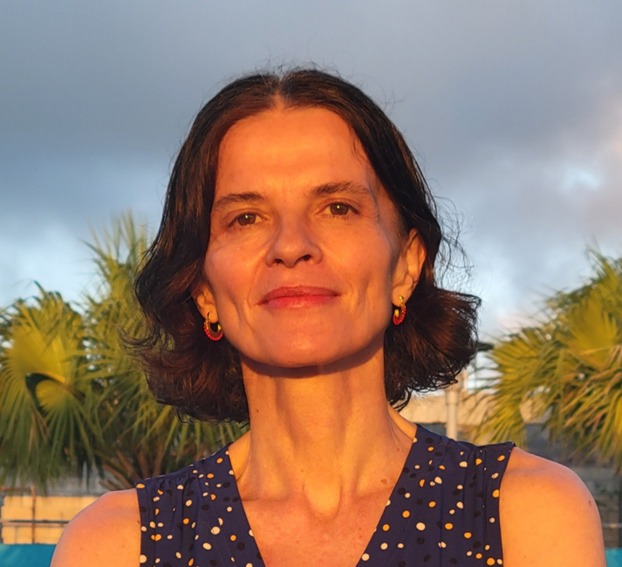
María Uriarte is Professor of Ecology, Evolution, and Environmental Biology at Columbia University and an affiliate of the Department of Statistics and the Earth Institute. Her research addresses one of the central challenges of contemporary ecology: how ecosystems respond to intensifying disturbances in an era of accelerating environmental uncertainty.
Monday, July 27, 10:30-11:30 AM
Grand Ballroom, Salt Palace Convention Center
Working primarily in tropical forests of Puerto Rico and across the Neotropics, Uriarte integrates long-term forest monitoring, remote sensing, and advanced statistical modeling to understand how hurricanes, drought, and land-use change interact to reshape forest structure, composition, and carbon dynamics. Her work has shown that severe disturbances can fundamentally alter forest trajectories, leaving decades-long legacies on biomass, species composition, and ecosystem resilience. By combining field data with mechanistic and Earth system models, her research bridges scales, providing critical insights into how disturbance regimes are shifting under climate change.
Uriarte has been a principal investigator in the Luquillo Long-Term Ecological Research (LTER) program and has led major NSF- and DOE-funded efforts to quantify ecosystem resilience under compound disturbance. Her scholarship has been featured in leading journals including Science, Nature, and PNAS and mainstream news outlets such as NY Times and NPR, and she is widely recognized for advancing the integration of demographic, functional, and spatial approaches in ecology.
Abstract
Disturbance interactions in tropical forests: Conceptual underpinnings, emerging tools and research gaps
Natural disturbance regimes in tropical forests are being reshaped by the combined effects of climate change and land use, leading to an increase in the frequency, intensity, and co-occurrence of hazards such as drought, fire, and windstorms. While disturbance ecology has traditionally focused on individual events, growing evidence shows that disturbances increasingly interact across space and time, producing ecological responses that cannot be understood from single disturbances alone. Here, we synthesize current understanding of interacting disturbances in tropical forests and propose an integrative framework linking hazard exposure, ecosystem susceptibility, and resilience. We show that disturbance interactions operate through both changes in hazard likelihood and through state-dependent effects on recovery, mediated by ecological memory and disturbance sequence. These dynamics generate non-linear and path-dependent responses that often lead to slowed recovery or long-term ecosystem reorganization, rather than simple return to pre-disturbance conditions. We illustrate these processes through key disturbance pathways and review emerging tools for their detection and prediction. We further evaluate emerging tools, including remote sensing, long-term plot networks, paleo-records, and process-based models, and assess their ability to detect disturbance interactions, resolve ecological memory, and predict recovery trajectories across scales. Despite rapid methodological advances, key limitations remain in quantifying disturbance sequences, linking hazard exposure to ecological response, and scaling mechanisms from individuals to regions. Finally, we identify critical research gaps and propose priorities for advancing the field, including the development of standardized frameworks for studying disturbance, explicit quantification of ecological memory, improved integration of multi-scale observations, and incorporation of interacting disturbances into predictive models. Addressing these challenges will be essential for anticipating how tropical forests respond to increasingly complex disturbance regimes and for informing management strategies to maintain resilience under global change.
New Phytologist Foundation Keynote
María Uriarte, Laura Boeschoten, Paulo Brando, Thomas Ibanez, Chris Smith-Martin, Masha T. van der Sande, and Xiangtao Xu
Session Information
Monday, July 27, 10:30-11:30 AM
Grand Ballroom, Salt Palace Convention Center