

Biography
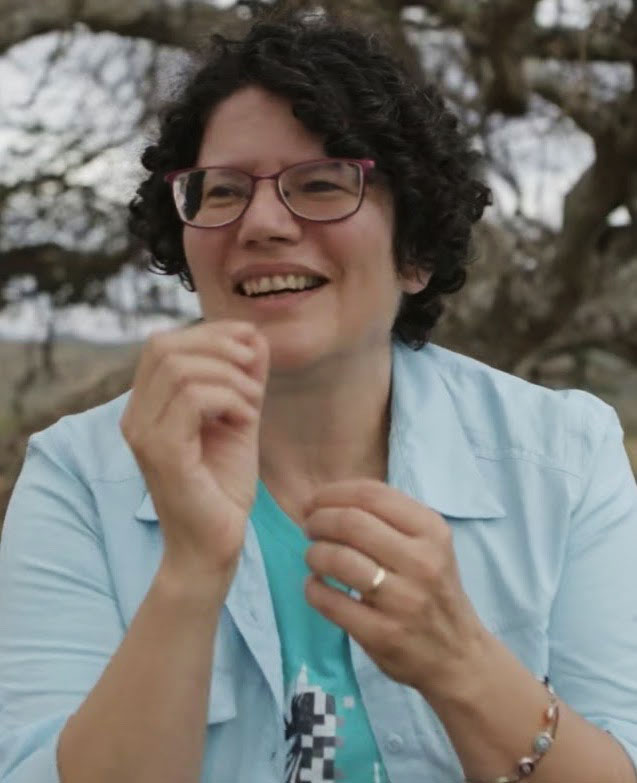
Dr. Tanya Berger-Wolf is a Professor of Computer Science Engineering, Electrical and Computer Engineering, and Evolution, Ecology, and Organismal Biology at the Ohio State University, where she is also the Director of the Translational Data Analytics Institute. A pioneer in AI for ecology, biodiversity, and conservation, she leads the NSF-funded Imageomics Institute and the US-Canada co-funded AI and Biodiversity Change (ABC) Global Center.
Monday, July 27, 8:00-10:00 AM
Grand Ballroom, Salt Palace Convention Center
Dr. Berger-Wolf serves on advisory and governance bodies including the US National Academies Board on Life Sciences, the Global Partnership on AI (GPAI)/OECD, National Ecological Observatory Network (NEON), and The Nature Conservancy. She co-led Wild Me (now part of Conservation X Labs), one of the first AI conservation nonprofits, where she co-created Wildbook, recognized by UNESCO for advancing the UN Sustainable Development Goals. Her contributions have earned numerous honors, including recognition as the AI 100 Global Thought Leaders by H20.ai. She is an elected Fellow of the Association for the Advancement of Artificial Intelligence (AAAI) and the American Association for the Advancement of Science (AAAS).
Abstract
AI for Nature: From Science to Impact
The capacity to generate data about the natural world has outpaced our capacity to understand it. Over the past two decades, technologies such as autonomous vehicles, acoustic sensors, camera traps, environmental DNA, GPS, and citizen science platforms have transformed ecological data collection, generating observations across taxa, geographies, and timescales at a richness and resolution previously impossible. Yet the fundamental questions of ecology remain difficult to answer from these data alone.
Artificial intelligence offers a path forward, but realizing that potential requires moving beyond current applications. AI has demonstrated real value in automating species identification, population tracking, and habitat mapping. The harder and more important frontier is interpretable, hypothesis-generating AI: systems that can integrate heterogeneous data streams, incorporate ecological theory and biological knowledge, detect structure in complex multivariate systems, and surface testable predictions about ecological processes and dynamics. This is the shift from AI as a high-throughput data processing engine to AI as a genuine partner in scientific reasoning.
This talk will present progress and a vision for that frontier. It will introduce imageomics, a new field that uses AI to extract biological traits and ecological signals directly from imagery at scale, and discuss advances in multimodal foundation models, knowledge-guided machine learning, and interpretable AI methods designed specifically for ecological inference. It will also address the methodological challenge of validating AI systems in real field conditions, where data are sparse, heterogeneous, and collected under constraints that benchmark datasets do not capture. The talk will also touch on what AI-ready data infrastructure for ecological research might look like and how do we get there.
The goal is AI that advances ecological understanding, a trustworthy partner in scientific discovery.
Scientific Plenary and Awards Ceremony
Tanya’s Session Information
Monday, July 27, 8:00-10:00 AM
Grand Ballroom, Salt Palace Convention Center