
Study finds health trade-offs for wildlife as urbanization expands
Research on tree swallows suggests city living may offer advantages, but not without risks.
Research on tree swallows suggests city living may offer advantages, but not without risks.

A study published in Ecological Applications suggests that nature around one’s home may help mitigate some of the negative mental health effects of the COVID-19 pandemic.

Long-term biodiversity data from 12 immense forest study plots spanning 1,500 miles point to maple trees – long appreciated for their autumn foliage and the syrup that graces our tables – as potential foundation species in both China and North America.

Groundbreaking research conducted by Dr. Kevin Stokesbury of SMAST appears as this month’s cover story in the Ecological Society of America’s journal Frontiers in Ecology and the Environment.

Agriculture is eating into areas that are important in protecting some of the most biologically diverse places on the planet. Most of this new agricultural land is being used to grow cattle feed.

New research shows the glaring light in human-altered landscapes, such as livestock pastures and crop fields, can act as a barrier to big-eyed birds, potentially contributing to their decline.

Researchers at the Pacific Northwest National Laboratory’s Marine and Coastal Research Laboratory developed a predictive framework of ecological indicators and analyses for estuarine–tidal river research and management.

New research from Portland State University found that while increased wildfire activity is causing widespread changes in the structure and composition of Pacific Northwest forests, the new landscapes are likely to be more resilient to projected upward trends in future fire activity and climate conditions.

Researchers from Simon Fraser University’s Salmon Watershed Lab have found when salmon returns are high, smaller and less dominant fishes get a chance to feast on their eggs.

A team of researchers led by Imperial College London and the National University of Singapore studied 19 streams in Borneo, in an area with a variety of land uses, and found that top predators were disproportionally affected by deforestation, with fewer predator links in the food chain in oil palm plantation streams.

Biology graduate student Alexandra Gulick, with co-authors from the National Park Service and the UF Archie Carr Center for Sea Turtle Research, recently published a paper in Ecology. Results of the study show that grazing by recovering green turtle populations stimulates seagrass productivity, and that grazing intensity has a relevant role in regulating the productivity of Caribbean seagrass meadows.

Assistant Professor Scott Stark in the Department of Forestry at Michigan State University is tackling a worldwide environmental concern: what’s happening in the Amazon?

Environmental conditions such as sea surface temperature and the occurrence of cold water upwelling events drive the structure of interaction networks in marine intertidal communities via their effects on species richness, according to new research.

Researchers from La Trobe University have found that, in the absence of natural predators such as bilbies, native scorpions are thriving in Australia’s damaged sandy landscape.

Researchers studying the chemical defenses of a neotropical shrub at La Selva Biological Station in Costa Rica have discovered 10 previously undocumented alkenylphenol compounds.

University of Exeter researchers surveyed UK cat owners and found they ranged from “conscientious caretakers” concerned about cats’ impact on wildlife and who feel some responsibility, to “freedom defenders” who opposed restrictions on cat behaviour altogether.

Current forest management in northern temperate regions like the Centre-du-Quebec is not suitable to maintain the resilience of the forest under future climate change, shows a study published in Ecological Applications.
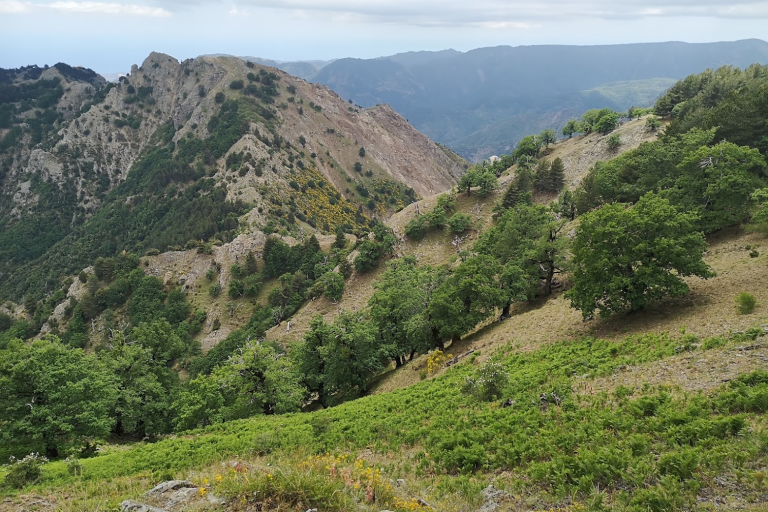
Radiocarbon dating of five large and potentially old sessile oaks from Aspromonte National Parks revealed a long lifespan ranging from 934 ± 65 to 570 ± 45 years.

Meals are typically family affairs for zebras, gazelles, cape buffalo and other grazing species in the African Serengeti, but in one of the first studies of its kind, ecologists have found grazing species can be more willing to share meals in areas frequented by lions.

A new study suggests that future reductions in seasonal snowpack as a result of climate change may negatively influence forest growth in semi-arid climates, but less so in wetter climates.