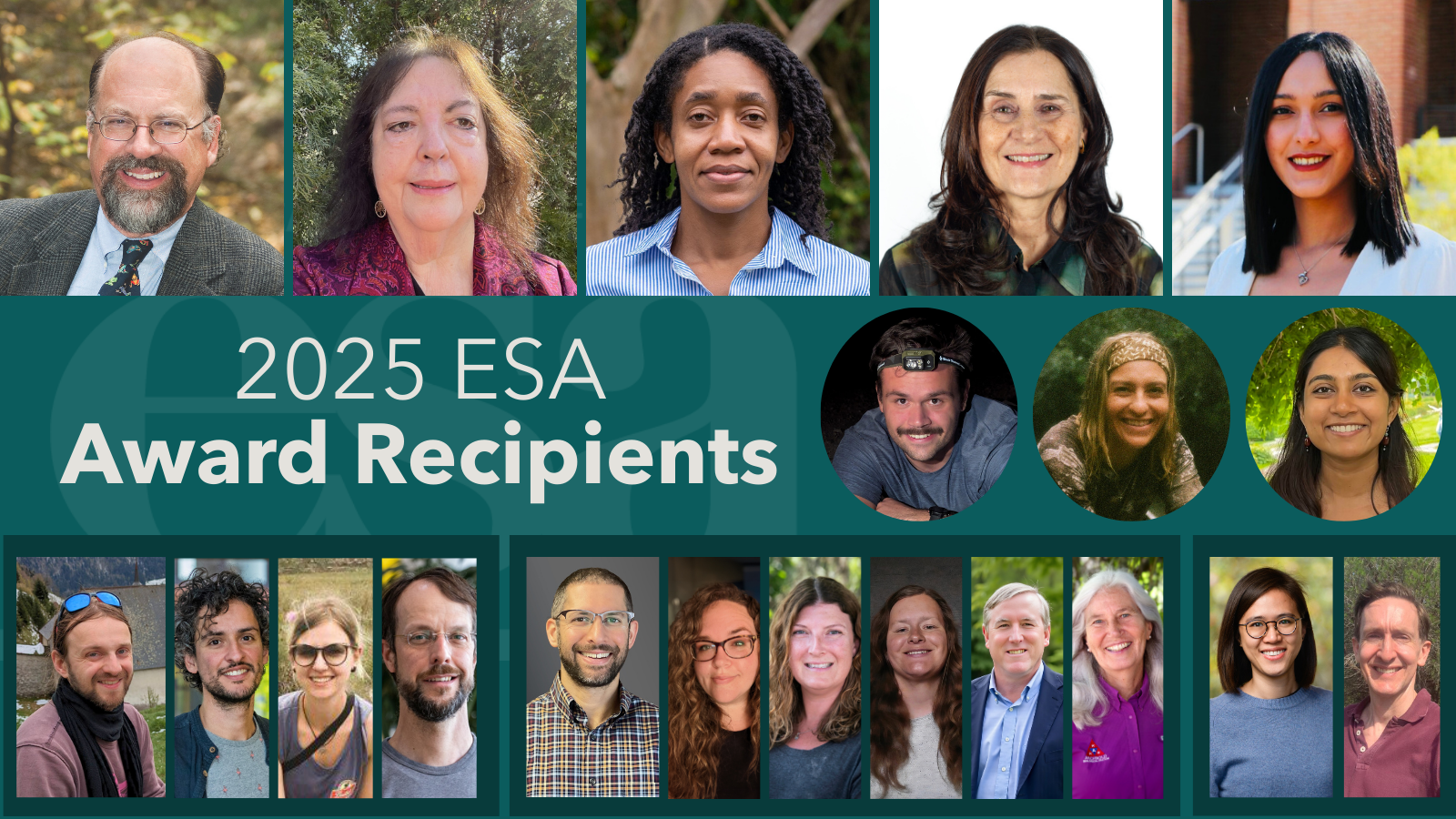
Hoctor Receives Sustainability Science Award from Ecological Society of America
The award recognizes a groundbreaking contribution to sustainability science.
The award recognizes a groundbreaking contribution to sustainability science.
First place was awarded in a tie to two Stockbridge students presenting their respective research projects in the graduate student poster competition at the Mid-Atlantic Ecological Society of America annual meeting.

A new article argues that despite growing awareness, scientific research collaborations continue to underrepresent many regions of the world.

A pandemic of lianas is sweeping through tropical forests, reducing their ability to store carbon and limiting their role in mitigating climate change. Two recent studies highlight the issue.
Interim director for the Natural Resource Ecology Laboratory and research scientist Dennis Ojima was elected as a 2025 fellow by The Ecological Society of America.
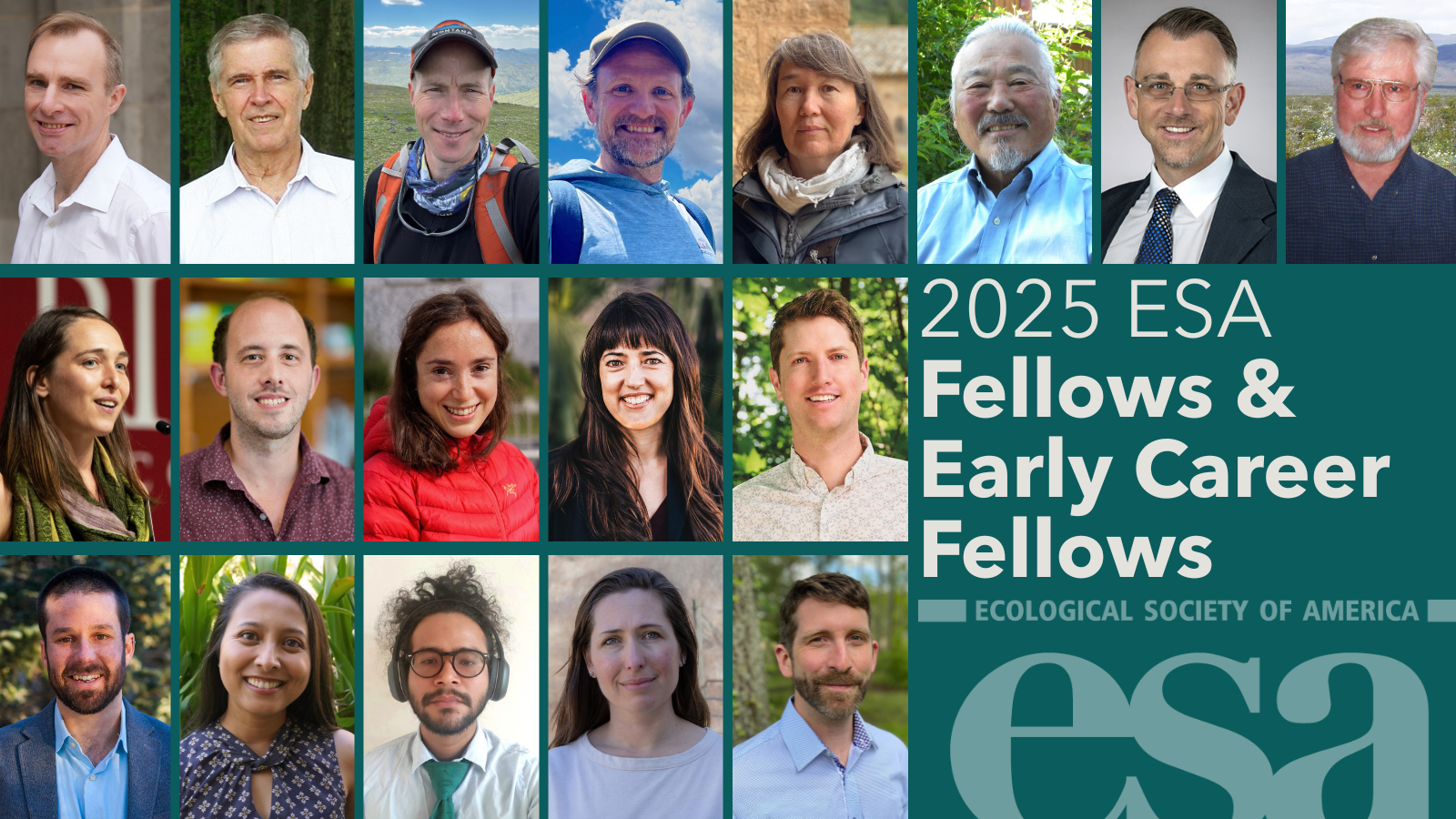
This recognition honors his outstanding contributions to ecological science, particularly at the intersection of ecology and public health. Rohr is one of just eight Fellows confirmed this year.
Daniel Laughlin, a University of Wyoming professor in the Department of Botany, has been selected as a Fellow of the Ecological Society of America.
Benjamin Freeman, assistant professor and Elizabeth Smithgall-Watts Endowed Faculty in the School of Biological Sciences, has been named a 2025 Early Career Fellow by the Ecological Society of America (ESA).
University of Hawaiʻi at Mānoa’s Lisa McManus is recognized for notable efforts to investigate how climate change impacts coral reef ecosystems.
University of Cambridge, Department of Zoology Professor Robert Fletcher has been made a Fellow of the Ecological Society of America.
The Ecological Society of America announced Professor Paul Armsworth, of the University of Tennessee, Knoxville, among its cohort of 2025 ESA Fellows.
Joan Dudney studies the impacts of global change on forests to develop science-based management strategies.
Tagged fish reveal juvenile salmon search for habitat in varied watersheds.
New research reveals how Saharan mustard, a nonnative species, disrupts desert plant diversity and weakens recovery from climate swings.
A research team with the South China Botanical Garden of the Chinese Academy of Sciences found that trees in subtropical forests are better at coping with soil acidification (and the nutrient deficiency it causes) than herbs.
Six Stevenson students and three faculty members attended the annual meeting of the Mid-Atlantic Chapter of the Ecological Society of America held April 4-6 at Longwood Gardens in Kennett Square, PA.

The award helps graduate students bridge science and policy by providing training in communication and advocacy before they meet with lawmakers.
A research team uncovered the ecological forces that drive remarkable chemical diversity of trees in the Andes Mountains.
A new study reveals overnight flights over the Gulf of California and migrations of over 1,000 miles.
Researchers seek to understand the environmental factors that influence the distribution of hantavirus in rodent populations across the United States.