2014 Earth Stewardship Initiative Demonstration Project: sustaining and enhancing Earth’s life-support systems
The American River Parkway at the nexus of ecological science and design
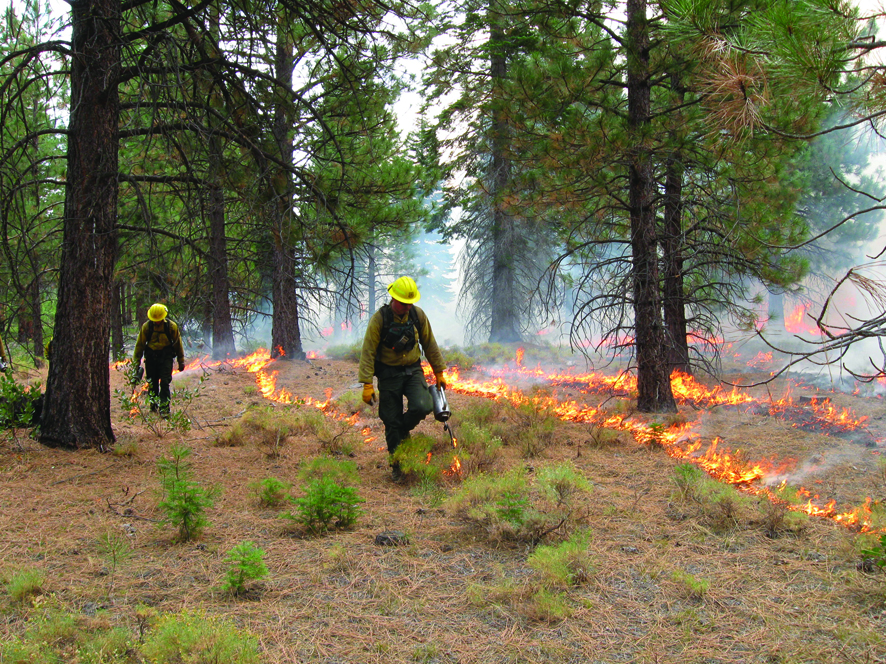
Before the colonial era, 100,000s of people lived on the land now called California, and many of their cultures manipulated fire to control the availability of plants they used for food, fuel, tools, and ritual. Contemporary tribes continue to use fire to maintain desired habitat and natural resources.
FOR IMMEDIATE RELEASE: Tuesday, July 15, 2014 Contact: Alison Mize (703) 625-3628; alison@esa.org On Sunday, August 10, 2014, the Ecological Society of America (ESA) will present its seventh annual Regional Policy Award to California Senate President Pro Tem Darrell Steinberg during the Society’s 99th Annual Meeting conference in Sacramento, CA. The ESA award recognizes an elected or appointed local…
The Ecological Society of America (ESA) will present ten awards recognizing outstanding contributions to ecology in new discoveries, teaching, sustainability, diversity, and lifelong commitment to the profession during the Society’s 99th Annual Meeting in Sacramento, California. The awards ceremony will take place on Monday, August 11, at 8 AM in the historic Memorial auditorium near the Sacramento Convention Center.
When it comes to bee tongues, length is proportional to the size of the bee, but heritage sets the proportion. Estimating this hard to measure trait helps scientists understand bee species’ resiliency to change. Ecologists will report on this and other pollination research news at the Ecological Society of America’s 2014 Annual Meeting in Sacramento, Cal., August 10-15.
FOR IMMEDIATE RELEASE: Monday, June 16, 2014 Contact: Liza Lester (202) 833-8773 x 211; llester@esa.org The Ecological Society of America’s 99th Annual Meeting “From Oceans to Mountains: It’s all Ecology” will meet in Sacramento, Cal., from Sunday evening, August 10, to Friday morning, August 15, at the Sacramento Convention Center. ESA invites press and institutional public information officers to…
For immediate release: 11 June 2014 Contact: Alison Mize, Alison@esa.org 202.833.8773, ext. 205 The Ecological Society of America (ESA) is pleased to announce its 2014 fellows. The Society’s fellows program recognizes the many ways in which our members contribute to ecological research and discovery, communication, education and pedagogy, and to management and policy. ESA fellows and early career fellows…
Risk analysis finds savings for homeowners and local governments of excluding invasive pests like the emerald ash borer outweigh added cost to imported goods FOR IMMEDIATE RELEASE: May 23, 2014 Contact: Liza Lester (202) 833-8773 x 211; llester@esa.org The emerald ash borer (Agrilus plantipenis), a recent insect immigrant to North America carried in with the wooden packing material…
Today, the US Global Change Research Program released its Third National Climate Assessment (NCA) of the impacts of climate change on biodiversity and ecosystems.
EMBARGOED until: 12:01 am EDT on Thursday, May 1, 2014 Contact: Liza Lester (202) 83308773 x211; llester@esa.org The butterfly (Dryas iulia) and the bee (Centris sp.) were most likely seeking scarce minerals and an extra boost of protein. On a beautiful December day in 2013, they found the precious nutrients in the tears of a spectacled caiman (Caiman crocodilus),…
Post-wildfire stabilization treatment has not aided habitat restoration for the imperiled Great Plains birds. FOR IMMEDIATE RELEASE: Wednesday, 2 April 2014Contact: Liza Lester (202) 833-8773 x 211; llester@esa.org As fires sweep more frequently across the American Great Basin, the US Bureau of Land Management (BLM) has been tasked with reseeding the burned landscapes to stabilize soils. BLM’s interventions…
WASHINGTON, DC – The Ecological Society of America has selected the 2014 recipients of its annual Graduate Student Policy Award: Sarah Anderson (Washington State University), Andrew Bingham (Colorado State University), Amber Childress (Colorado State University), Brittany West Marsden (University of Maryland) and Johanna Varner (University of Utah). The five students will travel to Washington, DC in April to participate in policy…
The November 2013 issue of Frontiers in Ecology and the Environment is devoted to an assessment of climate change effects on ecosystems, and the consequences for people. Impacts on natural systems have direct consequences for food production, water, storm damage, and fire intensity. Working with, rather than against, ecosystems may help society to adapt to changes that threaten lives and property. Adaptation efforts may need to think beyond the preservation of historic natural communities.
Jill Baron, an ecosystem ecologist with the United States Geological Survey and a senior research ecologist with Colorado State University’s Natural Resource Ecology Laboratory, has been named President of the Ecological Society of America.
A quarter of the mature female tiger sharks plying the waters around the remote coral atolls of the Northwestern Hawaiian Islands decamp for the populated Main Hawaiian Islands in the late summer and fall, swimming as far as 2,500 kilometers (1,500 miles).
The September 2013 Frontiers in Ecology and the Environment is an open access special issue on Earth Stewardship.
Inaugural online-only Special Issue of Frontiers in Ecology and the Environment showcases prescribed burns around the globe.
Presentations on species interactions figure large at ESA’s 2013 annual meeting.
Agriculture alters the landscape more than any other human activity, with trickle-down effects on water, soil, climate, plant and wildlife diversity, wildfire, and human health. Multiple sessions at ESA’s 98th Annual Meeting in Minneapolis will will examine routes to improved soil, water, and nutrient retention, and opportunities to increase biodiversity alongside food production.
ESA established its Regional Policy Award in 2008 to recognize an elected or appointed local policymaker who has integrated environmental science into policy initiatives that foster more sustainable communities.