Project Descriptions
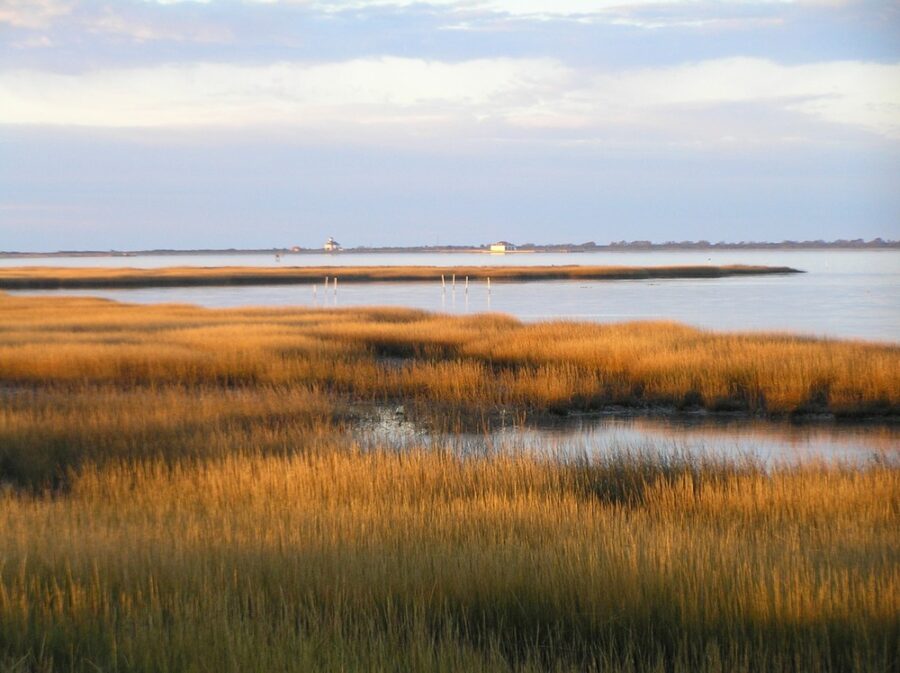
Assateague Island National Seashore
This page lists six (6) projects that NPS Science Liaisons have identified as priority science topics for the SCIP project. Applicants will be asked to identify their top 2 projects of interest to them for their sci-comm products. Fellows will be able to learn more about their selected projects and work with the Science Liaisons during the Fellowship.
- Vulnerability Assessment and Adaptation Planning at NPS Mid-Atlantic Battlefield Parks
- Reverse Seagrass Meadow Decline: Identify Heat-Tolerant Variants, Seed Sources and Outplanting Sites
- Building Resilience in Coldwater Ecosystems across Eastern Parks
- Forest Restoration Protects Stream Health where Insects are Impacting Park Forests
- Eastern Grasslands Restoration Project
- Estimating White-tailed Deer Numbers to support Deer Management and Forest Resiliency in Northeast Region NPS Units
Topic: Vulnerability Assessments and Planning
Project 1: Vulnerability Assessment and Adaptation Planning at NPS Mid-Atlantic Battlefield Parks
Park Unit/s: VAFO, GETT and RICH. (Potential for additional parks to be involved.)
Abstract: This project assesses vulnerability of cultural landscapes for mid-Atlantic battlefield parks. An integrated geospatial database that crosswalks existing data to understand cultural and natural resource vulnerabilities will be used to develop cultural landscape assessment methods. Then the vulnerability info will support site-specific adaptation approaches for cultural resources for battlefield landscapes.
Keywords: Cultural landscapes, vulnerability assessments, adaptation, battlefield parks
1. Description: This project provides vulnerability assessments for mid-Atlantic Battlefield parks and develop needed cultural landscape-specific methods. By taking a cultural landscape approach, this work will consider natural and cultural resources as integrated resources. The results will inform development of adaptation strategies, using the Resist-Accept-Direct (RAD) decision framework.
Battlefield landscapes possess interrelated cultural resources, however, baseline data on cultural resources are siloed by disciplines. A cultural resource GIS database will be developed that integrates cultural resource data (including archeology, cultural landscapes, and historic structures), with data on natural resources, starting with three pilot parks: Richmond National Battlefield Park, Gettysburg National Military Park and Vally Forge National Historical Park. Lessons learned from the pilot parks will be structured into a reproducible framework to inform a landscape scale vulnerability assessment for the mid-Atlantic region. Results will be used for planning cultural landscapes treatments, informing adaptation planning at a site scale, and supporting planning with a range of partners.
Highest Priority Audience for Sci-comm Products: NPS regional program park and staff, Academic partners
Objectives for Selected Audience:
NPS Regional Program and Park Staff: Support conversation and method development for working across data silos and considering climate stressors at multiple spatial scales (features, cultural landscapes, landscape matrix and regional landscape scale).
Academic partners: Cultural heritage academic communities have been actively involved in adaptation planning, but since so many vulnerability assessment methods were developed for natural resources or facility goals, the specific needs of cultural heritage have been underserved; sharing methods targeted to cultural landscapes and their particular data challenges will be of particular interest to these academic audiences. This project involves collaboration with interdisciplinary partners including researchers affiliated with North Carolina State University who specialize in analytics and modeling, archeological and cultural resource surveys and assessments, landscape design, and stakeholder-informed cultural resources adaptation planning frameworks.
Website/URL: https://www.nps.gov/articles/000/ira-projectprofile-ner-military-battlefield.htm
Topic: Seagrass Restoration
Project 2: Reverse Seagrass Meadow Decline: Identify Heat-Tolerant Variants, Seed Sources and Outplanting Sites
Park Unit/s: Cape Cod, Fire Island, Assateague Island, Cape Hatteras, and Cape Lookout National Seashores, as well as Boston Harbor Islands NRA and Acadia NP
Abstract: The National Park Service is developing scientific information through field studies to support resilience decisions to halt declining seagrass trajectories across 7 coastal parks from ME to NC. This effort will identify optimal areas for seagrass recovery and genetically appropriate populations to serve as seed sources for future restoration.
Keywords: Native plant species restoration and rehabilitation, seagrass, habitat conservation
2. Description: Seagrass meadows are a valuable and biodiverse habitat that serves as nurseries for commercially important fish, reduces coastal erosion, improves water clarity, and captures carbon. Eelgrass (Zostera marina), the main seagrass species in the northeast and MidAtlantic, is declining at an alarming rate. Parks along the East Coast have lost thousands of acres since the 1990s and rising temperatures may drive it to extinction in many places. The NPS is embarking on an effort to build climate resilience into eelgrass meadows and buffer them against future loss through the application of innovative approaches adapted from coral, oyster, and terrestrial restorations. This effort will leverage recommendations from a recent multi-institutional workgroup to move eelgrass seeds from resilient populations to restoration sites (i.e., “assisted gene flow”), and evaluate their success using pilot restoration techniques. Specifically, NPS will mobilize seven academic institutions to:
- Identify potential seed sources through genomic surveys of eelgrass meadows across the region
- Test the suitability of seed sources through field studies in parks
- Identify target locations for future restoration and rehabilitation through habitat suitability modeling
These methods yield the best chance to halt or even reverse seagrass decline, and the benefits of the project will extend beyond target meadows as these resilient populations spread into adjacent waters in the coming decades.
Highest Priority Audience for Sci-comm Products: NPS leadership, Other government agencies
Objectives for Selected Audience:
NPS leadership: Increase NPS leadership awareness and knowledge of seagrasses in general, their status and trends in parks and management opportunities to effectively preserve and restore seagrass habitat.
Other government agencies: Inform other government agencies of project goals/objectives to garner support and collaboration.
Website/URL: N/A
Topic: Vulnerability Assessments and Planning
Project 3: Building Resilience in Coldwater Ecosystems across Eastern Parks
Park Unit/s: SHEN, GRSM, CATO, KAWW, ACAD
Abstract: The National Park Service is working to build resilience of cold-water ecosystems and brook trout in particular by identifying stressors, assessing vulnerability, and developing priority actions to improve habitat quality and support these important ecosystems.
Keywords: Streams, fish, resilience, vulnerability
3. Description: Coldwater streams are important ecosystems that support high biodiversity along with culturally important species, such as brook trout. The National Park Service is collaborating with U.S. Geological Survey scientists to develop an understanding of the important stressors that have caused major brook trout declines in some parks and determine what management actions are most likely to prevent, stop, or reverse these trends. The project focuses on developing tailored actions for specific locations to ensure that the ecological context is appropriately considered. These actions will help the National Park Service protect and restore cold-water ecosystems and the biodiversity they harbor and maintain recreational fishing opportunities for park visitors.
Highest Priority Audience for Sci-comm Products: Non-Government Organizations and Park Visitors
Objectives for Selected Audience:
Increase awareness of declining brook trout populations in some parks and of the efforts that the National Park Service is undertaking to address the declines.
Website/URL: https://home.nps.gov/articles/000/brook-trout-on-the-brink.htm
Topic: Forest Resilience
Project 4: Forest Restoration Protects Stream Health where Insects are Impacting Park Forests
Park Unit/s: DEWA, MORR
Abstract: Resilient forest management in eastern national parks also benefits stream health. Hemlock forest restoration in the Delaware Water Gap National Recreation Area will improve visitor experience surrounding iconic waterfalls, as well as protect over 13 miles of cold-water stream habitat critical for native brook trout. In Morristown National Historical Park, we will restore forests that are threatened by beech leaf disease by removing invasive shrubs and planting a diversity of climate-adapted and pest resistant trees along Primrose Brook, a high-quality stream in New Jersey.
Keywords: Resilient forests, Stream Health, Forest Restoration, Invasive Insects,
Invasive Plants
4. Description:
See the links below for project background:
- Resilient Forest Initiative landing page
https://www.nps.gov/im/resilient-forests-initiative.htm
- BIL-funded RFI work in Appalachia web article
https://www.nps.gov/articles/000/nps-resilient-forest-initiative-restoresforest-
ecosystems-in-appalachian-national-parks.htm
- Park Science article on RFI
https://www.nps.gov/articles/000/eastern-parks-reduce-herds-to-benefitforests-
deer-and-people.htm
Highest Priority Audience for Sci-comm Products: NPS leadership, Park visitors
Objectives for Selected Audience:
Within NPS, share the objectives and approaches for these projects to communicate to leadership that this important work should continue to be funded, and to communicate to NPS practitioners the actions we are taking.
Outside NPS, we would like to share stories from the Resilient Forest Initiative to communicate to partners, other agencies, and the public that we are stewarding park resources to be more resilient in a changing world.
Website/URL: https://www.nps.gov/im/resilient-forests-initiative.htm
Topic: Grassland Resilience
Project 5: Eastern Grasslands Restoration Project
Park Unit/s: APPA, BOWA, CEBE, DEWA, FLNI, FONE, FRSP, FRHI, GATE, GEWA, GETT, MABI, MIMA, NERI, PETE, RICH, SAGA, SARA, SHEN, VAFO, WEFA
Abstract: The Eastern Grasslands Restoration Project is a large landscape multi-regional initiative led by the National Park Service to restore remnant and degraded grasslands across 39 parks in 16 states. This ambitious project integrates ecological restoration with cultural landscape stewardship to convert fields dominated by non-native species into vibrant, resilient native grasslands supporting pollinators, grassland birds, and human health.
Keywords: Grassland, Restoration, Cultural Landscapes, Human Health, Ecosystem Services
5. Description: Grasslands are crucial habitats that support a diverse array of flora and fauna, but they are under threat due to habitat fragmentation and invasive species. The National Park Service is embarking on a significant initiative to restore and reconstruct native grasslands across eastern National Park sites. This effort, in collaboration with the Southeastern Grasslands Institute, the University of Delaware, and other partners, will remove invasive species and plant native species to revitalize and preserve remnant grasslands. The restored grasslands will promote biodiversity, ecological resilience, and cultural landscape integrity. By restoring and conserving grassland habitats, the National Park Service is not only safeguarding critical ecosystems but also promoting health and wellbeing in communities by providing enhanced recreation opportunities. This project will directly enhance the ecological value, ecosystem functioning, and resilience of grasslands throughout the eastern United States that will serve as potential seed sources for future restoration efforts. This project supports ecological resilience through the creation of natural buffers that protect our communities, wildlife, and ecosystems. It will enhance habitat for wildlife and preserve opportunities to experience the park and its cultural landscape.
Highest Priority Audience for Sci-comm Products: Non-Government Organizations, Park Visitors
Objectives for Selected Audience:
Non-Government Organizations: Increased engagement and awareness of long-term management challenges and opportunities for investing in continued work throughout the NPS.
Park Visitors: Gain a better understanding of the restoration process and the ecological, community and human health benefits of native grasslands.
Website/URL: https://www.npca.org/articles/7340-greener-acres
Topic: Forest Resilience
Project 6: Estimating White-tailed Deer Numbers to support Deer Management and Forest Resiliency in Northeast Region NPS Units
Park Unit/s: FRSP, HOFU, MORR, RICH, ROVA, SAGA, SARA, WEFA, WEPA parks (FLNI, FONE, FRHI)
Abstract: Resilient forest management in many eastern national parks requires responsible deer management to reduce impacts from their overabundance and achieve sustainable forest regeneration. NPS is working with West Virginia University to develop cost-effective and reliable methods for estimating deer populations from wildlife camera and spotlight data.
Keywords: Resilient forests, deer monitoring, wildlife cameras, spotlighting, vegetation management
6. Description: Forests are a fundamental habitat of eastern parks. They are facing many stressors, including overabundant white-tailed deer populations. High deer densities diminish forest resilience, hampering the ecosystem’s ability to recover from disturbance with similar functions, structure, and composition. Overabundant deer impair or eliminate tree regeneration, which can lead to forest loss and replacement by thickets of invasive shrubs. To address this threat to forests in northeastern national parks, the NPS Resilient Forests Initiative (RFI) aims to restore the regeneration potential of forests via a combination of deer management, invasive species control and native forest restoration. Effective deer management requires reliable, quantitative estimates of deer numbers that in many cases are not currently available. NPS is working with West Virginia University to develop cost-effective and reliable methods for estimating deer populations from wildlife camera and spotlight data. The current focus is on using wildlife camera data in conjunction with artificial intelligence image classification tools and spatial capture modeling to estimate deer populations. The science communication fellow will convey the methodologies and science of these surveys to resource managers at the parks and region as well as others working on estimating deer populations to support resource management.
Highest Priority Audience for Sci-comm Products: NPS regional program park and staff, Other government agencies
Objectives for Selected Audience:
For both audiences, we want to clearly convey both methodologies, their advantages/disadvantages/biases, and compare results obtained for the parks in order to have a scientific basis for managing their deer numbers.
Website/URL: https://www.nps.gov/im/resilient-forests-initiative.htm