Project Descriptions
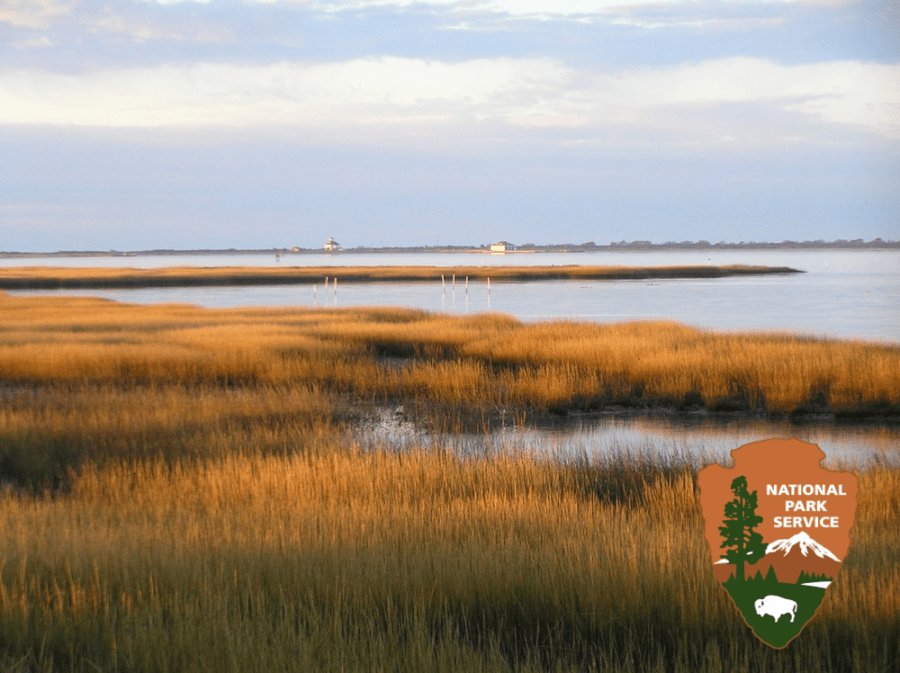
Assateague Island National Seashore
This page lists six (6) projects that NPS Science Liaisons have identified as priority science topics for the SCIP project for 2026-27. Applicants will need to identify their top 2 projects of interest for their SciComm products. Fellows will learn more about their selected projects and work with the Science Liaisons during the Fellowship.
- Visualizing Salt Marsh Restoration Monitoring Images
- Inspiring NPS Parks to Help Reduce Bird-Window Collision Risk: A Case Study at Katahdin Woods and Waters National Monument
- GATE Sandy Hook Deer Management Plan Public Communication Strategy
- Invasive Plant Management in the Northeast
- Great Lakes Restoration Initiative Science Communicator
- Youth Crew Gains Career Skills While Saving the Forest
Topic: Salt Marsh Restoration
Project 1: Visualizing Salt Marsh Restoration Monitoring Images
Park Unit/s: ASIS, COLO, FIIS, GATE, maybe ACAD
Abstract: Salt marsh restoration monitoring across five parks includes annual photo points and time lapse images from trail cameras. Setting up compelling ways to share and manage these images will improve the project effectiveness. Through monitoring, we aim to learn from these restoration strategies and inform salt marsh adaptation.
Keywords: Salt marsh, Restoration, Monitoring, Photo Points
1. Description:
As part of a salt marsh resilience regional initiative, monitoring across five parks that are planning or implementing restoration projects includes photo points and trail cameras. During the year of the fellowship, there will be four parks with two years of monitoring and one park with the first year. There are systems to manage the data and to take the trail camera footage into time lapse videos. Developing ways to share these images in compelling ways, such a dashboard or improved visualizations of the videos would increase the communication benefits of the project.
As restoration projects are implemented, having before and after images will contribute to documenting the restoration benefits. With extensive data across multiple parks with varying restoration techniques, having a dashboard or other systems to share the extensive monitoring data will support the understanding in the field of coastal adaptation of different restoration strategies. We seem creative communication ideas along with technical skills in handling large numbers of images, in both still and video formats.
Highest Priority Audience for Sci-comm Products: NPS regional program park and staff, Other government agencies
Objectives for Selected Audience:
NPS regional program park and staff- There are nine parks involved in this regional initiative, five of which are part of the monitoring component. We’re looking to share extensive images across these parks, with particular interest to the five parks on easy access to their own data. We are looking for a system that future images can be easily added to and continue to be useful to the park managers. Having ways to share images of how different strategies change through time will be valuable across the nine parks for planning future restoration projects.
Other government agencies- These case studies are of interest to other government agencies involved in salt marsh restoration and monitoring, with active collaboration with federal and state agencies along the east coast through the Salt Marsh Collaborative. As we evaluate salt marsh restoration strategies, having compelling ways to share monitoring results will support adaptive management of marshes throughout the region.
Potential Products: Dashboard; Time-lapse video system.
Website/URL: N/A
Topic: Other
Project 2: Inspiring NPS Parks to Help Reduce Bird-Window Collision Risk: A Case Study at Katahdin Woods and Waters National Monument
Park Unit/s: Katahdin Woods and Waters National Monument
Abstract: Over 1 billion birds are killed annually from bird-window collisions. Reflection-reducing dots or exterior coatings on windows can virtually eliminate this mortality. SCIP will develop a short film for NPS park staff and leadership documenting use of bird-friendly window coatings in KAWW to motivate NPS parks to reduce bird-window collisions.
Keywords: Bird-Window Collisions, Incidental Take, Migratory Birds, Park Facilities
2. Description:
Our project will address the important issue of bird-window collisions resulting in the loss of over 1 billion birds per year. Observed long-term declines of bird populations are due to a complex suite of global change factors, including loss of birds from collisions with human-built structures. Preventing bird-window collisions is perhaps the simplest and most effective conservation action that has immediate population-level benefits for birds. We are working to encourage NPS parks to address bird-window collisions by retrofitting existing windows on buildings and by using bird-friendly designs in new construction.
We plan to deploy a survey tool for parks to evaluate facilities and buildings by the end of FY26, which will allow us to prioritize park-level needs for bird-friendly retrofits. While many parks are involved and actively working on this, we are hoping to standardize NPS efforts. As an example, we are working with Katahdin Woods and Waters National Monument (KAWW) to address bird-window collisions at a new visitor center. A SCIP would be ideal to document this project by developing an inspirational and educational short film aimed at NPS park, regional, and national staff and leadership to motivate other NPS park units to take action to mitigate bird-window collisions.
Highest Priority Audience for Sci-comm Products: NPS regional program park and staff, NPS leadership, Park visitors
Objectives for Selected Audience:
NPS regional program park and staff: A short (3-min) film to showcase the process of retrofitting an existing NPS park building (i.e., Visitor Center at KAWW). The film will provide the high-level overview to educate viewers on 1) bird-window collision risk, 2) effective solutions, and 3) storytelling showcasing the process of retrofitting and the work in action at KAWW.
NPS leadership: The short film (3-min) will also be designed to educate and inspire NPS leadership, to help garner institutional support for engaging all NPS parks in the effort to 1) use the survey tool (once deployed) to evaluate bird-window collision risk, and 2) think systematically about addressing this concern (through funding and guidance) in an NPS-wide coordinated effort.
Park Visitors: Develop informational/educational materials (e.g., physical and/or digital) to complement existing information at the visitor center to further educate visitors on NPS’ efforts to reduce bird-window collisions within parks, and empower the public to take actions to reduce bird-window collisions at their homes.
Potential Products:
Product 1: A short film produced by the SCIP that will include interviews, filming project progress, editing, and production for use internally (NPS), and with approval externally to share with partners to help inspire and garner funding for retrofitting NPS facilities.
Product 2: Develop physical and/or digital communication tools for external use for park visitors to educate them on bird-window collision risk, actions NPS is taking to mitigate those risks, and empower the public to take actions to reduce bird-window collisions at their homes.
Website/URL: https://doimspp.sharepoint.com/sites/nps-avifauna-toolkit/SitePages/Bird-Collisions–Make-Windows-Safer,-Day-and-Night.aspx
Topic: Other
Project 3: GATE Sandy Hook Deer Management Plan Public Communication Strategy
Park Unit/s: Gateway National Recreation Area Sandy Hook Unit (SAHO)
Abstract: The adaptive white-tailed deer management plan seeks to reduce risks to human health and safety, restore native habitats, and protect culturally significant resources. Engaging park visitors, local stakeholders and GATE staff will play a central role in fostering shared ownership and consistent messaging.
Keywords: Natural and Cultural Landscapes, White-tailed Deer, Public Stakeholders, Gateway NRA, Adaptive Management
3. Description:
The National Park Service (NPS) is preparing a White-tailed Deer Management Plan and Environmental Assessment for the Sandy Hook Unit (SAHO) of Gateway National Recreation Area (GATE). SAHO is a 4,688-acre coastal peninsula that preserves beaches, maritime forests, waters, scenic views, and open space offering resource-based recreational opportunities to a diverse public. An overabundance of white-tailed deer within SAHO has resulted in significant over-browsing of native vegetation, disrupting forest regeneration, degrading wildlife habitat, and facilitating the spread of invasive species. These impacts threaten critical habitats, including maritime holly and red cedar woodlands, as well as state and federally listed T&E species.
SAHO’s cultural landscape has been affected by limiting the park’s ability to restore and preserve cultural resources (e.g., earthworks, landscape tree canopy). The adaptive deer management plan aims to reduce risks to human health and safety, protect and restore native habitats, and preserve culturally significant landscapes and resources. The NPS will engage park visitors and local stakeholders throughout the development of the deer management plan, to ensure public input fosters shared stewardship. This project could provide updates on the deer management plan to GATE staff, translate science-based decision-making for broader audiences, and clearly communicate the park’s management objectives.
Highest Priority Audience for Sci-comm Products: NPS regional program park and staff, Park visitors
Objectives for Selected Audience:
Park visitors and local stakeholders – GATE will be asking for public input throughout the process. We hope to clearly communicate the purpose of the management plan, its development process, and the ways in which public input is incorporated.
GATE Regional and Local Staff – GATE would like to standardize information and provide park employees with the necessary tools to effectively communicate the program to the public. Information could be crucial since the program has potential legal implications; staff should be fully informed.
Potential Products: Social media campaign, public facing newsletter, internal staff resource briefs
Website/URL: N/A
Topic: Forest Resilience
Project 4: Invasive Plant Management in the Northeast
Park Unit/s: Multiple units
Abstract: Invasive plant management is critical to the National Park Service’s efforts to protect Forest and Grassland Resilience. Invasive plants can displace native species, reduce biodiversity, disrupt plant-pollinator networks, and threaten public safety and historic structures. Outreach and education on non-native invasive plants is a key to reducing their spread.
Keywords: Invasive species, Grassland, Forest, Resilience, OneHealth
4. Description:
Preservation of natural landscapes is fundamental to the mission of the National Park Service. Park lands support diverse plant and animal species, provide essential ecosystem services, create foundational cultural landscapes, and provide recreational and educational opportunities to the public. Many of these landscapes are impacted by non-native invasive plant species, which can displace native plant assemblages and have broad consequences to ecosystem health, historic viewsheds, and visitor safety. Some of these species are spread by human activity that could be prevented through education and outreach.
The two Northeast Regional Invasive Plant Management Teams (IPMTs) work collaboratively with Park staff and Regional partners to promote resilience of Forest and Grassland ecosystems of high ecological and cultural value that are at risk due to the encroachment and establishment of invasive plant populations. Through strategic treatment of invasive plants, this work has the capacity to reverse trends in biodiversity and habitat loss and promote resilience in these high priority ecosystems. IPMT projects benefit natural and cultural resources by directly enhancing the ecological value, ecosystem functioning, and climate resilience of Forest and Grassland communities in NPS landscapes such as hemlock ravines and historic battlefields, ensuring they persist for generations to enjoy.
Highest Priority Audience for Sci-comm Products: Park visitors
Objectives for Selected Audience: Park visitors: Increased awareness and knowledge of invasive plant species including why we should care about their impacts, and ways in which individuals can help prevent their spread.
Potential Products: Informational signage for worksites/trailheads (could be adapted to flyers for distribution); a Storymap showing distribution of top invasive species with ways to prevent spread.
Website/URL: N/A
Topic: Other
Project 5: Great Lakes Restoration Initiative Science Communicator
Park Unit/s: Multiple; PIRO, CUVA, APIS, ISRO, INDU, IATR, NOCO, GRPO
Abstract: This project will develop compelling, timely communication products that document and elevate Great Lakes Restoration Initiative (GLRI) accomplishments across NPS parks over the next 12 months. Under oversight of the GLRI Program Manager, the communicator will capture field activities, highlight outcomes, and strengthen NPS visibility across interagency GLRI forums.
Keywords: Invasive Species, Great Lakes, Forest Health
5. Description:
Over the next year, NPS will implement numerous GLRI‑funded actions—including invasive mussel detection and removal, terrestrial and aquatic invasive species treatment, wetland and hydrologic restoration, and pollinator habitat establishment. These projects represent critical contributions to Great Lakes ecosystem resilience, yet their impact is often under‑communicated across the interagency partnership and to the public. This proposal supports a dedicated science communicator who will translate these ongoing restoration efforts into clear, compelling stories that amplify NPS accomplishments and strengthen understanding of GLRI’s value.
Working under the direct oversight of the NPS GLRI Program Manager, the communicator will collaborate closely with park staff, project leads, and partner agencies to gather field documentation, interview subject‑matter experts, develop accessible narratives, and produce communication products tailored for priority audiences. The work will improve real‑time visibility of NPS restoration leadership, support interagency coordination, and provide parks with high‑quality materials that convey progress, outcomes, and partner contributions.
Expected impacts include better-informed interagency decision-makers, enhanced transparency in GLRI implementation, and expanded storytelling capacity for NPS. The project directly supports GLRI management priorities by elevating restoration successes, increasing program accountability, and showcasing the breadth of ecosystem benefits generated by NPS actions throughout the Great Lakes basin.
Highest Priority Audience for Sci-comm Products: NPS regional program park and staff, NPS leadership, Other government agencies
Objectives for Selected Audience:
Other government agencies: Improve interagency understanding of NPS GLRI activities by providing timely, digestible success stories that strengthen collaboration, support shared decision‑making, and demonstrate NPS progress toward Action Plan IV priorities.
NPS regional program, parks, and staff:
Enhance internal awareness of cross‑park restoration efforts, provide sharable communication assets for park outreach, and support staff in telling consistent, high‑quality stories about GLRI accomplishments.
NPS leadership: Strengthen leadership’s ability to communicate NPS contributions to the Great Lakes Restoration Initiative by providing clear, timely, and high‑quality success stories that illustrate program impact, highlight cross‑park achievements, and support strategic messaging in interagency settings. These products will help leadership demonstrate accountability, justify program investments, and showcase NPS restoration outcomes across the Great Lakes region.
Potential Products: Visual publications, video experiences
Website/URL: N/A
Topic: Forest Resilience
Project 6: Youth Crew Gains Career Skills While Saving the Forest
Park Unit/s: NERI
Abstract: As part of the Resilient Forest Initiative, New River Gorge National Park and Preserve is partnering with the Forest Stewards Guild to promote oak regeneration in biodiverse oak forests in the park. Youth crews conducting this work gain valuable career skills and experience through the project.
Keywords: Forest Resilience, Oak Forest, Youth Crews, Appalachian Biodiversity
6. Description:
Oak forests cover tens of thousands of hectares across ridge tops in Appalachia, supporting regionally important biodiversity, including more than 100 animal species that rely on acorns as crucial food sources. In addition, oaks are home to more than 500 species of butterflies and moths which in turn provide food needed for nesting songbirds to feed their young. Over time, however, maple trees have been replacing oaks, due to decades of fire suppression, increasing regional precipitation, losses in keystone animal and plant species, and less flammable leaf litter on the forest floor.
As a result, there aren’t enough oak saplings and seedlings to replace the mature oak trees as they die. In West Virginia’s New River Gorge National Park and Preserve, young maple trees create dense shade in oak forests, preventing oak seedlings from thriving. This project aims to thin subcanopy maples to promote oak forest regeneration. Thinning small-diameter maples will provide needed light to oak seedlings, as well as create snags and coarse woody debris for wildlife habitat. Youth crews conducting this work will gain valuable skills and experience that will further their careers in natural resources management.
Highest Priority Audience for Sci-comm Products: NPS regional program park and staff, Park visitors
Objectives for Selected Audience:
Within NPS, share the objectives and approaches for this project to communicate to leadership that this important work should continue to be funded, and to communicate to NPS practitioners the actions we are taking. Outside NPS, we would like to share stories from the Resilient Forest Initiative to communicate to partners, other agencies, and the public that we are stewarding park resources to be more resilient in a changing world.
Potential Products: Web article, Video, Social Media Posts
Website/URL: https://www.nps.gov/articles/000/nps-resilient-forest-initiative-restores-forest-ecosystems-in-appalachian-national-parks.htm;%20https://www.nps.gov/articles/000/protecting-oak-forests-in-national-parks.htm