August research news from the Ecological Society of America
August 27, 2026
For Immediate Release
Contact: Mayda Nathan, mayda@esa.org
The Ecological Society of America (ESA) presents a roundup of five research articles recently published across its esteemed journals. Widely recognized for fostering innovation and advancing ecological knowledge, ESA’s journals consistently feature illuminating and impactful studies. This compilation of papers explores monarch conservation in rangelands, the mishmash of regulations for controlling invasive species, what happens when flagship species are lost from protected areas, the importance of partnership when life gets stressful and bee-boosting strategies on urban farms.
From Ecosphere:
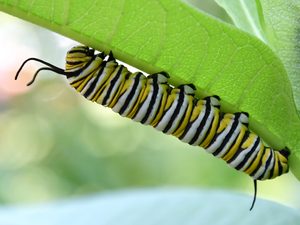
Image credit: Jim Hudgins/USFWS | Public Domain
No home on the range for monarch butterfly larvae
Author contact: Grace Thomas (gracethomas@unomaha.edu)
Contrary to a common conservation belief, rangelands grazed by cattle may not protect milkweed, the host plant for monarch butterfly caterpillars. That belief stems in part from the assumption that livestock avoid eating the toxic plants, leaving them abundant in grazed grasslands where they can support monarchs, which have suffered steep population declines in recent decades. In fact, a new study conducted in rangelands across the U.S. Great Plains indicates that ungrazed and bison-grazed sites support more than five times as much milkweed as cattle-grazed sites. Moreover, ungrazed pastures were found to contain upward of six times as many monarch eggs and caterpillars as grazed sites. Given that rangelands extend over one-third of the continental U.S., the study demonstrates the enormous potential for monarch conservation these landscapes represent. Yet the story is not quite so cut and dried; as the authors point out, grazing indirectly benefits monarchs by preventing tree encroachment and maintaining the open grassland conditions that their milkweed hosts depend on. This trade-off underscores the need for more selective approaches to monarch conservation in rangelands, for instance by altering cattle-grazing patterns and timing to maximize the value of pasturelands as prime monarch habitat.
Read the article: Cattle and bison grazing decreases monarch egg and larval abundance in the Central United States
From Ecological Applications:
Invasive species meet a patchwork of state laws
Author contact: Jacob N. Barney (jnbarney@vt.edu)
Management actions for controlling the establishment and spread of invasive species in the U.S. are subject to a hodgepodge of state regulations that greatly complicate eradication efforts. Focusing on 21 contiguous eastern states, researchers identified 1,117 different policies on biological invasions, 448 of which covered specific species or groups of species. But the provisions of these statutes varied significantly; in many cases, even neighboring states had markedly different approaches to regulating the same organisms. Feral pigs, for instance, are a growing problem throughout the eastern U.S., yet only 12 of the 21 states included in the analysis have control regulations in place, and these range from promotion of hunting to outright hunting bans (meant to reduce incentives to transport pigs to new areas for sport). The study also found that invasive animals received considerably less attention in state policies than invasive plants, despite the substantial ecological and economic damage these species can cause. As plants and animals stubbornly refuse to respect geographic boundaries and routinely cross state borders, sorting through the jumble of laws, directives, guidelines and programs poses a potential nightmare for managers trying to limit the spread of invasive species and puts further strain on already limited resources and budgets. Moreover, the lack of consistency in control policies between states penalizes proactive states — those that have taken steps to address an invasive species before it has become established in that state — if their neighbors have weaker regulations. The wide discrepancy in control measures highlights the need for greater coordination among states or federal policies that standardize regulatory approaches nationwide.
Read the article: State lines and species divides: Inconsistencies and opportunities in invasive species policies across the eastern United States
From Frontiers in Ecology and the Environment:
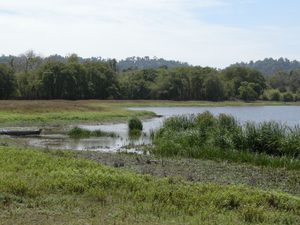
Image credit: Vyacheslav Argenberg | CC BY 2.0
Lions and tigers and bears, bye-bye
Author contact: Rachakonda Sreekar (sreekar.rachakonda@uq.edu.au)
Many protected areas around the world were originally designed to provide safe harbor for a particular species, typically iconic animals like elephants or pandas. What happens, then, when that flagship species no longer inhabits the park? In Southeast Asia, researchers observed no perceptible change in rates of forest loss following the disappearance of the Javan rhinoceros from Vietnam’s Cat Tien National Park and tigers from Laos’s Nam Et-Phou Louey National Park. However, there were significant differences in the degree of deforestation prior to extirpation of the parks’ flagship animals. In Nam Et-Phou Louey, agriculture and other human actions were carving out huge chunks of the national park long before the last tiger was recorded. By contrast, such human impacts were far less apparent in Cat Tien before the rhinos were gone. In both cases, these trends continued apace after rhinos and tigers disappeared from their respective parks. The comparison suggests that the robustness of the underlying management capacity, including strength of governance, enforcement and funding, has a stronger influence on the performance of protected areas built around flagship species than does the presence or absence of the beloved beast itself.
Read the article: Legacy effects of locally extinct flagship species on protected areas
From Ecology:
High on the mountain, cooperation takes root
Author contact: Cole J. Doolittle (cole.doolittle@marquette.edu)
What determines which tree species can live together in a forest? New research suggests part of the answer lies in how environmental conditions shape trees’ relationships with soil fungi. Using detailed inventories of every tree in large forest plots alongside soil chemistry measurements and DNA analyses of soil fungi, researchers studied forests across an elevation span in Oregon’s Cascade Range. In the valleys and lower slopes, where conditions were mild and nutrients were relatively abundant, antagonistic pathogenic fungi played an outsized role in molding forest composition. Higher up the mountains, however, where conditions were harsher, tree diversity was more closely linked to the beneficial mycorrhizal fungi, which form nutrient-sharing partnerships with plant roots, while the influence of pathogenic fungi waned. The findings suggest that a classic ecological pattern extends beyond plant-to-plant interactions: stressful conditions favor beneficial partnerships, while benign conditions favor antagonistic ones. This shift may help explain why forests at high elevations often contain different combinations of species than similar forests at lower elevations, adding to growing evidence that when conditions get tough, teamwork matters.
Read the article: Environmental stress strengthens plant–mycorrhizal associations: A novel extension of the stress gradient hypothesis
From Earth Stewardship:
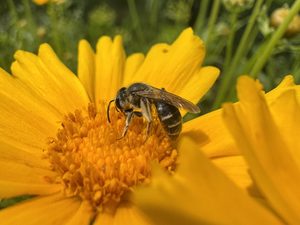
Image credit: Chelse Prather
Urban bee pollinators prefer native plants
Author contact: Chelse Prather (chelse.prather@gmail.com)
Urban farms depend on bees and other insect pollinators to help produce crops, yet maintaining healthy pollinator populations in developed areas with limited vegetation can be challenging. To address this conundrum, researchers surveyed farmers and monitored pollinator activity at 18 working farms in and around Dayton, Ohio, to identify the practices that best support bees. While reducing mowing and insecticide use, installing bee hotels and restoring prairie habitat appeared to provide benefits when combined with other pollinator-friendly measures, the only strategy that consistently increased both the number of bee visits to flowers and the variety of bee species present was providing abundant floral resources, especially native flowering plants. Surprisingly, the presence of honeybee hives had little effect on visits by either nonnative honeybees or native bee species, indicating that simply installing hives is unlikely to boost crop pollination. The findings highlight the outsized importance of native flowering plants for attracting pollinators to urban farms and suggest that combining multiple habitat-supporting practices may provide additional benefits.
Read the article: Stewarding pollination in urban agriculture: Evidence from working farms
###
The Ecological Society of America, founded in 1915, is the world’s largest community of professional ecologists and a trusted source of ecological knowledge, committed to advancing the understanding of life on Earth. The 8,000 member Society publishes six journals and a membership bulletin and broadly shares ecological information through policy, media outreach and education initiatives. The Society’s Annual Meeting attracts 4,000 attendees and features the most recent advances in ecological science. Visit the ESA website at https://www.esa.org
Follow ESA on social media:
X/Twitter – @esa_org
Bluesky – @ecologicalsociety.bsky.social
Instagram – @ecologicalsociety
Facebook – @esa.org