Scorpions a clue to restoring ecosystems
Researchers from La Trobe University have found that, in the absence of natural predators such as bilbies, native scorpions are thriving in Australia’s damaged sandy landscape.
Researchers studying the chemical defenses of a neotropical shrub at La Selva Biological Station in Costa Rica have discovered 10 previously undocumented alkenylphenol compounds.
University of Exeter researchers surveyed UK cat owners and found they ranged from “conscientious caretakers” concerned about cats’ impact on wildlife and who feel some responsibility, to “freedom defenders” who opposed restrictions on cat behaviour altogether.
Current forest management in northern temperate regions like the Centre-du-Quebec is not suitable to maintain the resilience of the forest under future climate change, shows a study published in Ecological Applications.
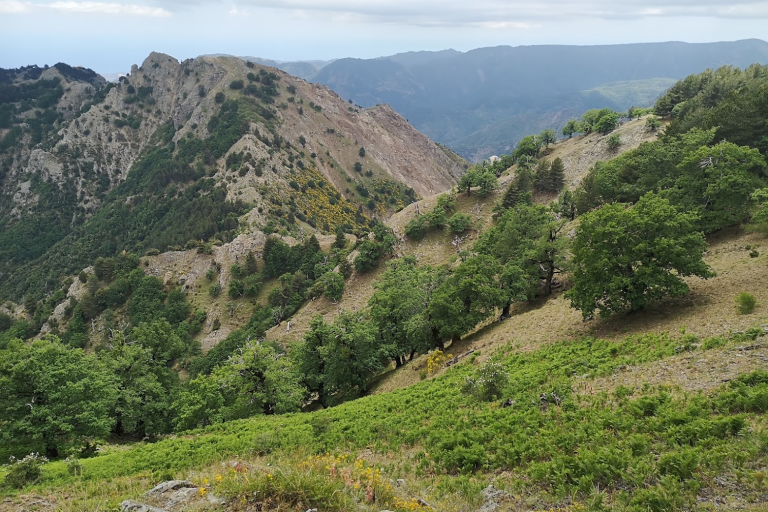
Radiocarbon dating of five large and potentially old sessile oaks from Aspromonte National Parks revealed a long lifespan ranging from 934 ± 65 to 570 ± 45 years.
Meals are typically family affairs for zebras, gazelles, cape buffalo and other grazing species in the African Serengeti, but in one of the first studies of its kind, ecologists have found grazing species can be more willing to share meals in areas frequented by lions.
A new study suggests that future reductions in seasonal snowpack as a result of climate change may negatively influence forest growth in semi-arid climates, but less so in wetter climates.
As the Discovery Channel hosts its traditional summer Shark Week (Aug. 9-16) about innovative shark research and insights on shark species, CSUF marine scientists and their students are working on research projects to learn more about these misunderstood predators of the seas.
In a new study investigating human impacts on resource fish biomass on the island of Hawaii, researchers from the Arizona State University Center for Global Discovery and Conservation Science and Hawaii Division of Aquatic Resources observed an alarming 45% decrease in fish biomass over a decade of surveys.
Climate change has increased the productivity of forests, according to a new study that synthesizes hundreds of thousands of carbon observations collected over the last quarter century at the Harvard Forest Long-Term Ecological Research site.
Arctic mosquito populations appear to be driven by food quality rather than predator density, according to a study published in Ecology.
Researchers at the National Wildlife Research Center found the use of a rear-facing LED light bar resulted in fewer dangerous deer-vehicle interactions. The reduction in dangerous interactions appeared to be driven by fewer instances of immobility or “freezing” behavior by deer when the light bar was used.
by Battelle/NEON 7/30/2020 Read this release at Battelle: https://www.battelle.org/newsroom/press-releases/press-releases-detail/national-ecological-observatory-network-(neon)-to-have-large-virtual-presence-at-ecological-society-of-america-s-2020-annual-meeting BOULDER, Colorado (July 30, 2020)—At the 2020 ESA Virtual Meeting, NEON scientists will be joining and hosting virtual sessions to present their latest ecological developments and provide insights on new avenues of research that empower scientists to more capably address complex questions and pressing issues in ecology. The 2020 ESA Meeting, “Harnessing the Ecological Data Revolution,” is focused on the massive…
by the LTER Network 7/30/2020 Read this release at LTER: https://lternet.edu/stories/lter-at-esa-2020/ The year 2020 is the 40th anniversary of the Long Term Ecological Research (LTER) Network and we were looking forward to grand celebration at the Ecological Society of America’s 2020 Meeting. While we cannot share our enthusiasm in person this year, meeting participants will find a cornucopia of pre-recorded…
by USA National Phenology Network 7/20/2020 Read this release at USA NPN: https://www.usanpn.org/ESA2020 USA National Phenology Network staff and partners will be attending the Ecological Society of America’s virtual meeting from August 3-6, 2020. Find us at the following sessions: SYMP 4: Indigenous Phenology: New Mindsets for Working Among Worldviews (17264) Alyssa H. Rosemartin1,2, Valerie Small3,4, Katie Jones5,6, (1)National Coordinating Office, USA National Phenology…
by USGS 7/20/2020 Read this release at USGS: https://www.usgs.gov/center-news/casc-presentations-2020-ecological-society-america-esa-meeting 2020 Ecological Society of America meeting (August 3- August 6, 2020) Session Information Salt Lake City, UT Participating in the2020 Ecological Society of America (ESA) virtual meeting (August 3- August 6, 2020)? Check out these presentations from leadership, staff, and affiliates of the Climate Adaptation Science Centers! The theme for this year’s meeting…
by Utah State University 7/20/2020 The Ecological Society of America (ESA) will be holding its first ever completely virtual annual meeting on Aug. 3-6, 2020. Utah State University has impressive representation, with 60 scheduled talks and posters from over 50 student, post-doctoral and faculty researchers. This year’s meeting format makes participation easy. All talks and posters will be available online beginning Monday,…
The presentations listed here discuss some of the latest research relating to insect conservation: trends, threats and known impacts. All will be presented at the Ecological Society of America’s upcoming virtual annual meeting, August 3–6, 2020, and will be available on-demand to registered attendees.
A new study published in Frontiers in Ecology and the Environment describes how increasing availability of LED flashlights changes human hunting patterns and highlights the importance of community management of resources.
These presentations, available on-demand to registered attendees of the Ecological Society of America’s upcoming virtual meeting, August 3-6, 2020, describe efforts to apply ecological theory and tools to the fight against zoonotic diseases.