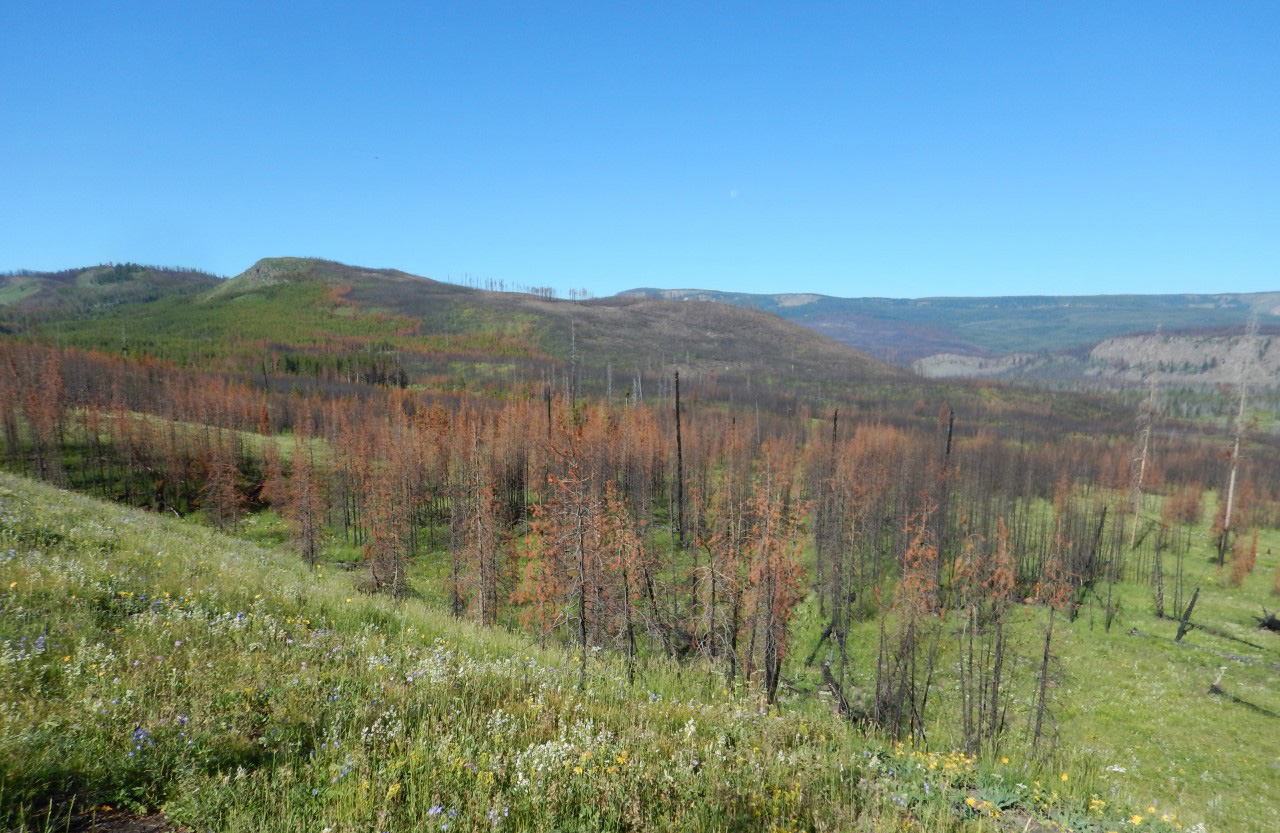
How aspen genetics determine success in a changing climate
New findings show how genetics, environmental conditions, and their interactions affect tree mortality and regeneration.
Clarkson Biology Assistant Professor Andrew David was recently elected to a 2-year term as Secretary of the Invasion Ecology section of the Ecological Society of America.
Erika Zavaleta, professor of ecology and evolutionary biology at UC Santa Cruz, has been selected as one of four ESA Excellence in Ecology Scholars in the first cohort of this new initiative.
New research provides information on an appropriate level of polar bear harvest that meets cultural needs, while accounting for both climate warming and the health of the Chukchi Sea polar bear population.
New research finds that landscaping and yard management decisions can increase wild bird habitat and influence bird biodiversity at the neighborhood and city scale.
(October 27, 2021) – The latest research from ESA’s journals: Tallying tropical vertebrates – Animal personalities – Deep-sea ecosystems – And more
Researchers quantified the percentage of terrestrial vertebrates that call tropical forests home, demonstrating the importance of protecting these ecosystems.
In a new study researchers demonstrated that eelgrass restoration efforts can lead to rapid expansion of restored plots and recovery of ecosystem functions.
(October 20, 2021) – The latest research from ESA’s journals: Tropical versus temperate fruits – Carnivorous cattle – Forecasting the future of Yellowstone and U.S. wilderness – And more
Researchers gathered data on watering hole communities over the course of two years to investigate how herbivore activity affects vegetation on the savannas of central Kenya.
A team of international scientists has gained new insights into the diet, population density and social interactions of a group of Brazilian jaguars.
The Galápagos’ simulated future is a warmer and wetter one, which could have cascading ramifications for the archipelago and its inhabitants.
After suffering mass mortality for years due to infection with a deadly chytrid fungus, some frog populations in Panama now seem to be co-existing with the pathogen.
Early fall wildfires in the western states and the smoke they generate pose a risk to birds migrating in the Pacific Flyway, according to a new study.
According to a study published in the journal Frontiers in Ecology and the Environment, there isn’t a widespread upswing of harmful algae blooms in North American lakes.
Domestic cats that regularly catch wild animals still get most of their nutrition from food provided at home, new research shows.
Scientists have discovered that milkweed butterflies harass, subdue, and subsequently feed on live, dead, and dying caterpillars belonging to other milkweed butterflies.
A series of recent research papers from a McGill-led team has found that the herbicide glyphosate—commonly sold under the label Roundup—can alter the structure of natural freshwater bacterial and zooplankton communities.
New research finds evidence of paternal care in a cephalopod, with male bigfin reef squids helping female squids find a suitable place to lay their eggs.
New research shows how the body condition of endangered Southern Resident killer whales reflects changes in Chinook salmon numbers in the Fraser River and the Salish Sea.