
Abundance of salmon key to feeding ‘underdog’ stream fishes: SFU research
Researchers from Simon Fraser University’s Salmon Watershed Lab have found when salmon returns are high, smaller and less dominant fishes get a chance to feast on their eggs.
Researchers from Simon Fraser University’s Salmon Watershed Lab have found when salmon returns are high, smaller and less dominant fishes get a chance to feast on their eggs.

A team of researchers led by Imperial College London and the National University of Singapore studied 19 streams in Borneo, in an area with a variety of land uses, and found that top predators were disproportionally affected by deforestation, with fewer predator links in the food chain in oil palm plantation streams.

Wallace will become the second editor-in-chief of Frontiers since the journal was first launched in 2003.

Biology graduate student Alexandra Gulick, with co-authors from the National Park Service and the UF Archie Carr Center for Sea Turtle Research, recently published a paper in Ecology. Results of the study show that grazing by recovering green turtle populations stimulates seagrass productivity, and that grazing intensity has a relevant role in regulating the productivity of Caribbean seagrass meadows.

Assistant Professor Scott Stark in the Department of Forestry at Michigan State University is tackling a worldwide environmental concern: what’s happening in the Amazon?

Environmental conditions such as sea surface temperature and the occurrence of cold water upwelling events drive the structure of interaction networks in marine intertidal communities via their effects on species richness, according to new research.

Researchers from La Trobe University have found that, in the absence of natural predators such as bilbies, native scorpions are thriving in Australia’s damaged sandy landscape.

Several members of the Ecological Society of America with expertise on hurricane impacts and related issues are available for comment and to respond to questions and inquiries.

Researchers studying the chemical defenses of a neotropical shrub at La Selva Biological Station in Costa Rica have discovered 10 previously undocumented alkenylphenol compounds.

University of Exeter researchers surveyed UK cat owners and found they ranged from “conscientious caretakers” concerned about cats’ impact on wildlife and who feel some responsibility, to “freedom defenders” who opposed restrictions on cat behaviour altogether.

Current forest management in northern temperate regions like the Centre-du-Quebec is not suitable to maintain the resilience of the forest under future climate change, shows a study published in Ecological Applications.
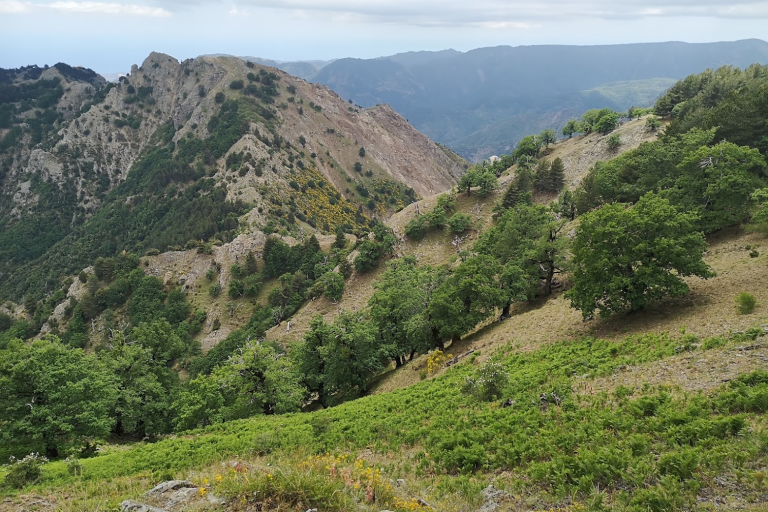
Radiocarbon dating of five large and potentially old sessile oaks from Aspromonte National Parks revealed a long lifespan ranging from 934 ± 65 to 570 ± 45 years.

The diverse mix of tree species in North America’s rugged Border Lakes region has shielded it from severe outbreaks of forest tent caterpillars, says a new study published in the Ecological Society of America’s open-access journal Ecosphere.

A new paper published in Ecology explores the complexity of the relationship between sharksuckers and their hosts.

Meals are typically family affairs for zebras, gazelles, cape buffalo and other grazing species in the African Serengeti, but in one of the first studies of its kind, ecologists have found grazing species can be more willing to share meals in areas frequented by lions.

A new study suggests that future reductions in seasonal snowpack as a result of climate change may negatively influence forest growth in semi-arid climates, but less so in wetter climates.

As the Discovery Channel hosts its traditional summer Shark Week (Aug. 9-16) about innovative shark research and insights on shark species, CSUF marine scientists and their students are working on research projects to learn more about these misunderstood predators of the seas.

In a new study investigating human impacts on resource fish biomass on the island of Hawaii, researchers from the Arizona State University Center for Global Discovery and Conservation Science and Hawaii Division of Aquatic Resources observed an alarming 45% decrease in fish biomass over a decade of surveys.

Climate change has increased the productivity of forests, according to a new study that synthesizes hundreds of thousands of carbon observations collected over the last quarter century at the Harvard Forest Long-Term Ecological Research site.

Arctic mosquito populations appear to be driven by food quality rather than predator density, according to a study published in Ecology.