
Research: Moths are flying later in the year than a century ago
Old datasets show changes in flight patterns and missing moth species in Ithaca, N.Y.
Old datasets show changes in flight patterns and missing moth species in Ithaca, N.Y.

A new study by the University of Würzburg shows which areas in rural settlements are particularly rich in insects – and where there is still room for improvement.
Marine biologists trace progression of decline over at least seven generations of giant kelp with potentially widespread consequences.
By coupling GPS tracking with satellite images, a Danish rewilding study demonstrates how large herbivores are the key to a bright, open and varied landscape.

The flowering lupine has become a familiar feature along Swedish roads – a new study survey of the invasive species’ occurrence in Sweden.
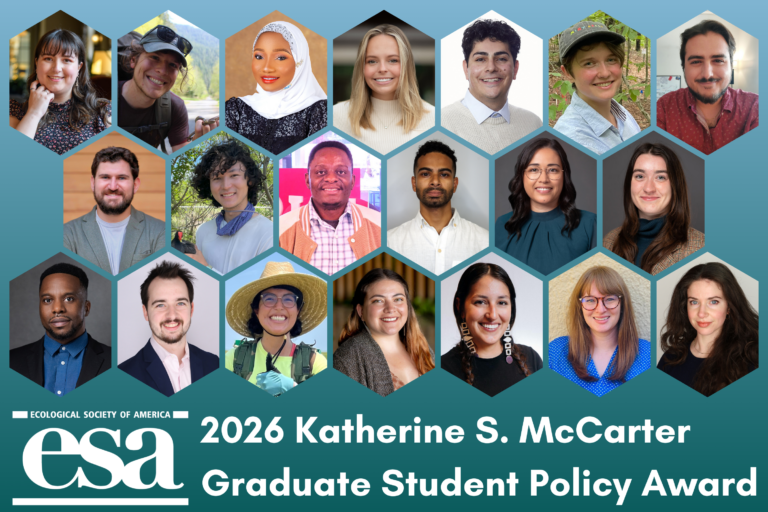
Koa Grabar, of the University of Hawaiʻi at Mānoa, has been named a recipient of the 2026 Katherine S. McCarter Graduate Student Policy Award.
Fish-eating killer whales in southern Alaska have a diverse, seasonally changing diet featuring salmon and groundfish, according to a new study.
Lily Olmo, a Ph.D. student in Fisheries, Wildlife, and Conservation Sciences at Oregon State University, is one of 20 recipients of the Ecological Society of America’s 2026 Katherine S. McCarter Graduate Student Policy Award.
Olabisis Atofarati and Chukwudi Ikegwu are recipients of the Ecological Society of America’s 2026 Graduate Student Policy Award.
A doctoral student from the Ohio State University’s Department of Evolution, Ecology and Organismal Biology was recently named the recipient of the Ecological Society of America’s 2026 Katherine S. McCarter Graduate Student Policy Award.
Doctoral candidate Sikander Khare has been selected for the 2026 Katherine S. McCarter Graduate Student Policy Award by the Ecological Society of American, one of the nation’s leading organizations dedicated to advancing ecological science.
New research finds that different farming practices influence whether uncultivated areas next to fields help or hinder farmers.
Twenty graduate students make up this year’s cohort of Katherine S. McCarter Graduate Student Policy Awardees.

Temperature Affects the Quality of Male Frogs’ Mating Calls. Females Hear the Difference.
New research shows that oyster filter feeding can significantly reduce the spread of a common blue crab parasite.

Adrienne Sponberg will be ESA’s next executive director, bringing over 25 years of executive-level association experience to the role.
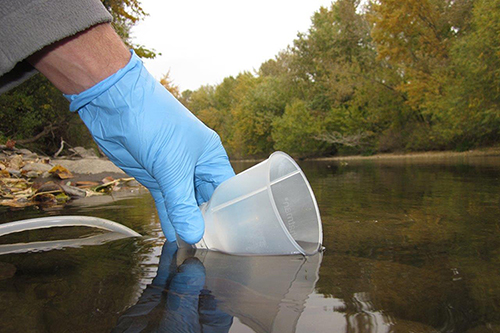
How rainstorms reshape the trail of environmental DNA in streams, how newcomers to an ecosystem do not always gain an edge from escaping their old enemies and more from ESA’s journals.
If habitat must be destroyed, sacrificing many small natural areas is more damaging to plant diversity than losing fewer larger ones.
In a warming world, research that informs forest management actions and forest resilience are more important than ever.
Scientists use microbes in bread dough to test a simple way to understand how species live together in nature.