
Woodcock charge deer to defend nests, UMaine researchers find
Researchers captured what may be the first recorded evidence of nesting birds aggressively driving away deer.
Researchers captured what may be the first recorded evidence of nesting birds aggressively driving away deer.
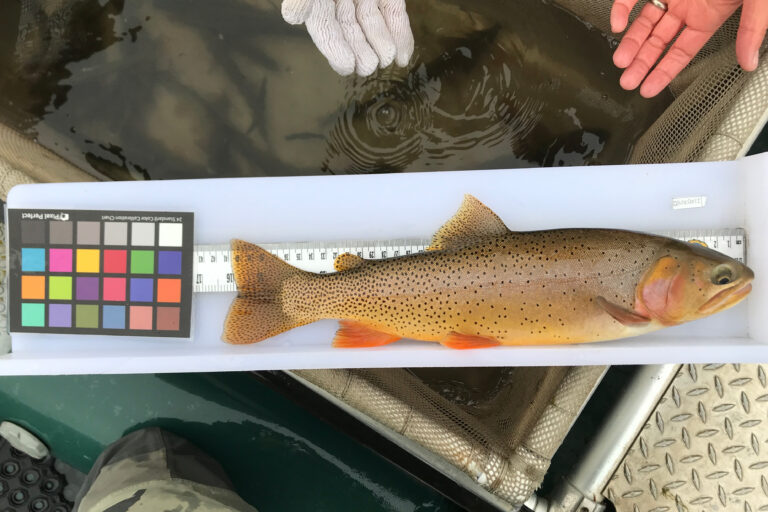
The origins of Snake River trout, a simple means of improving prairie restoration and more from ESA’s journals.

At the ESA Annual Meeting in Salt Lake City, presentations across the program will examine how ecologists are adapting AI technologies for use in the study and stewardship of natural systems.
As scientists gather in Salt Lake City for this year’s ESA Annual Meeting, many presentations will focus on the ecological challenges and opportunities facing the Intermountain West.

New research has found that some kelp forests around Vancouver Island were disappearing far earlier than previously thought.

SFI External Professor Brian Enquist (University of Arizona) has been awarded the Ecological Society of America’s prestigious Robert H. MacArthur Award, which celebrates a mid-career ecologist.

The use of historical art to see ecosystems of the past, owls as a pest-control strategy and more from ESA’s journals.
A global study shows a strong positive impact of agroforestry on biodiversity—but restoration measures are not a substitute for forest conservation.
Susana Wadgymar, a professor at Davidson College, was recently honored by the Ecological Society of America for her research that sheds light on plants’ ability to weather climate change.

Three students recently represented Kalamazoo College at the 2026 meeting of the Great Lakes Chapter of the Ecological Society of America, where two of them swept the top undergraduate honors for their research presentations.
As large swaths of Maine’s kelp forests transition into a new state, a study by Bigelow Laboratory scientists reveals what’s driving the northward progression of turf algae and the loss of kelp forests.
The Ecological Society of America is convening July 26-31 for its 2026 Annual Meeting in Salt Lake City, Utah.
Rocky Mountain Biological Laboratory scientists Jill Anderson and Ian Breckheimer have received the 2026 W.S. Cooper Award from the Ecological Society of America.

After a short, low intensity burn that scorches leaves and chars stems, at least some invading species resprout and grow back.
Scientists use microphones to identify how birds respond to predators.
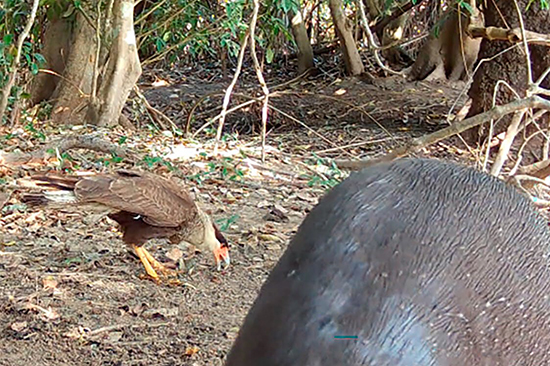
Modeling airplane-bird collisions, visitors to giant otter latrines in Brazil and more from ESA’s journals.
Kenneth Klemow, professor emeritus of biology and earth systems science at Wilkes University, has been chosen to receive the Ecological Society of America’s 2026 Distinguished Lifetime Service Award.
UTEP doctoral student Parikrama Sapkota is the 2026 recipient of the E. Lucy Braun Award from the Ecological Society of America.
The award celebrates Weigel’s sustained, outstanding work in ecology education.

Professors of ecology and evolutionary biology Roxanne Beltran and Erika Zavaleta partner on research that bridges ecology, inclusive education, and field-based learning.