2026 Candidate Phillip Levin
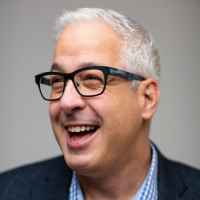
Phillip Levin (CV)
Research Professor
University of Washington
Candidate for: ESA President-Elect
Phillip Levin is a Research Professor and Interim Executive Director of EarthLab at the University of Washington and Director of The Nature Record, a national assessment of nature and nature’s benefits to people in the US. Previously, he served in the White House Office of Science and Technology Policy as Director of the National Nature Assessment, helping establish a national effort to synthesize knowledge about nature and its importance to society. He has also held leadership positions at The Nature Conservancy and NOAA Fisheries, including Director of Ecosystem Science at the Northwest Fisheries Science Center. He received his B.A. in zoology from the University of Texas and a Ph.D. in zoology from the University of New Hampshire.
A marine ecologist and conservation scientist by training and practice, Levin’s work focuses on understanding and managing social-ecological systems and connecting ecological knowledge to decision-making. His research has spanned marine, freshwater, and terrestrial ecosystems and has advanced ecosystem-based management, climate adaptation, biodiversity conservation, and the relationships between nature and human well-being. He has published more than 230 scientific papers, books, government white papers, and has led numerous interdisciplinary initiatives that bring together scientists, communities, policymakers, and resource managers. Much of his work has focused on developing practical approaches to integrating ecological, social, economic, and cultural considerations into environmental decision-making and improving the use of science in support of sustainability.
Levin is particularly interested in how ecological science can better serve society through community engagement, diverse knowledge systems, and creative partnerships. His recent work explores environmental justice, Indigenous stewardship, benefits of nature for human health, and the role of storytelling and the arts in fostering deeper relationships with the natural world. He is also an active mentor, teacher, and public communicator who believes that science is most powerful when it is connected to the communities and people it seeks to serve.
How Would You Support ESA’s Mission?
Throughout my career, I have sought to bring ecological science into conversation with the communities, decisions, and challenges that shape people’s lives. As President-Elect, I would work to advance ESA’s mission by supporting excellence in ecology while ensuring that our science remains relevant, accessible, and welcoming to all who contribute to it.
I believe ESA’s greatest strength is its community. I would build on the Society’s long-standing commitments to mentoring, professional development, and broad participation by supporting ecologists across career stages and sectors. I am particularly committed to helping early-career scientists thrive, strengthening connections among researchers, practitioners, educators, and policymakers, and fostering an environment where diverse perspectives and ways of knowing are valued. Scientific societies are at their best when they create spaces where people can learn from one another, collaborate across disciplines, and find opportunities to contribute in ways that align with their interests and aspirations.
I also see opportunities to deepen community-engaged science, strengthen relationships with Tribal scholars and Indigenous knowledge systems, and encourage collaborations that connect ecology with the arts and humanities. I believe ecology has an essential role to play in helping society navigate a rapidly changing world, and that ESA can continue to serve as a trusted source of scientific knowledge and a welcoming intellectual home. Throughout my service, I would strive to ensure that ESA remains a vibrant and inclusive community and a trusted voice for ecological science that serves society and endures regardless of changing political winds.